
Last updated November 23, 2026
 Whole-home duct cleaning
 Dryer vent cleaning
 Camera inspection
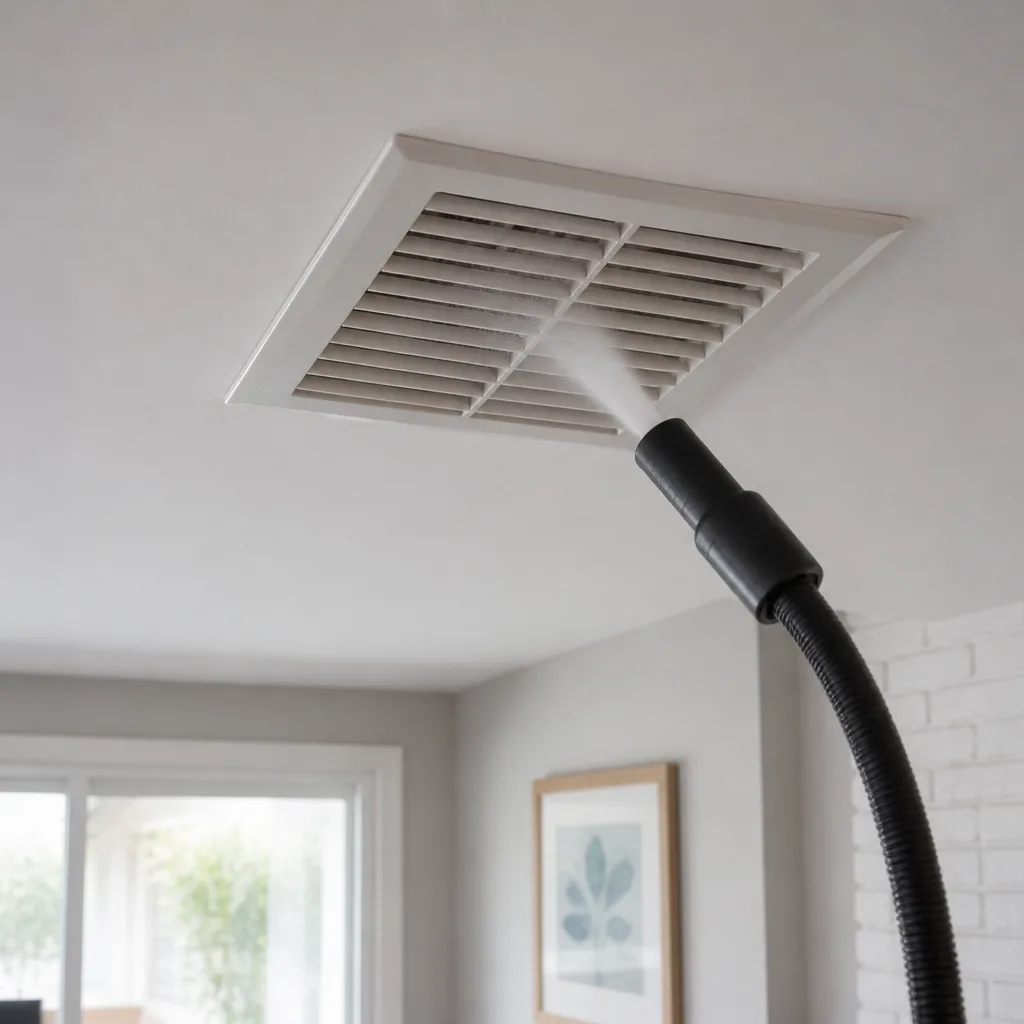 Sanitizing & deodorizing
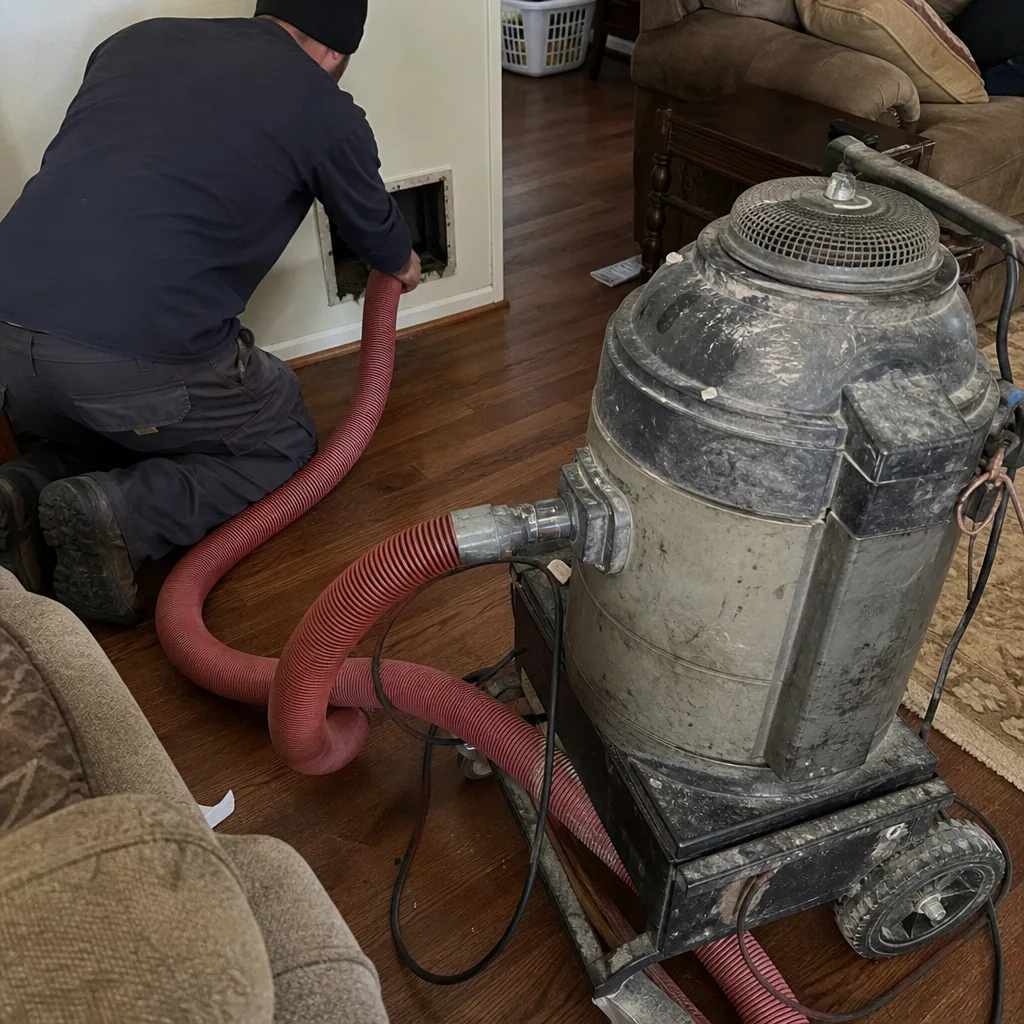
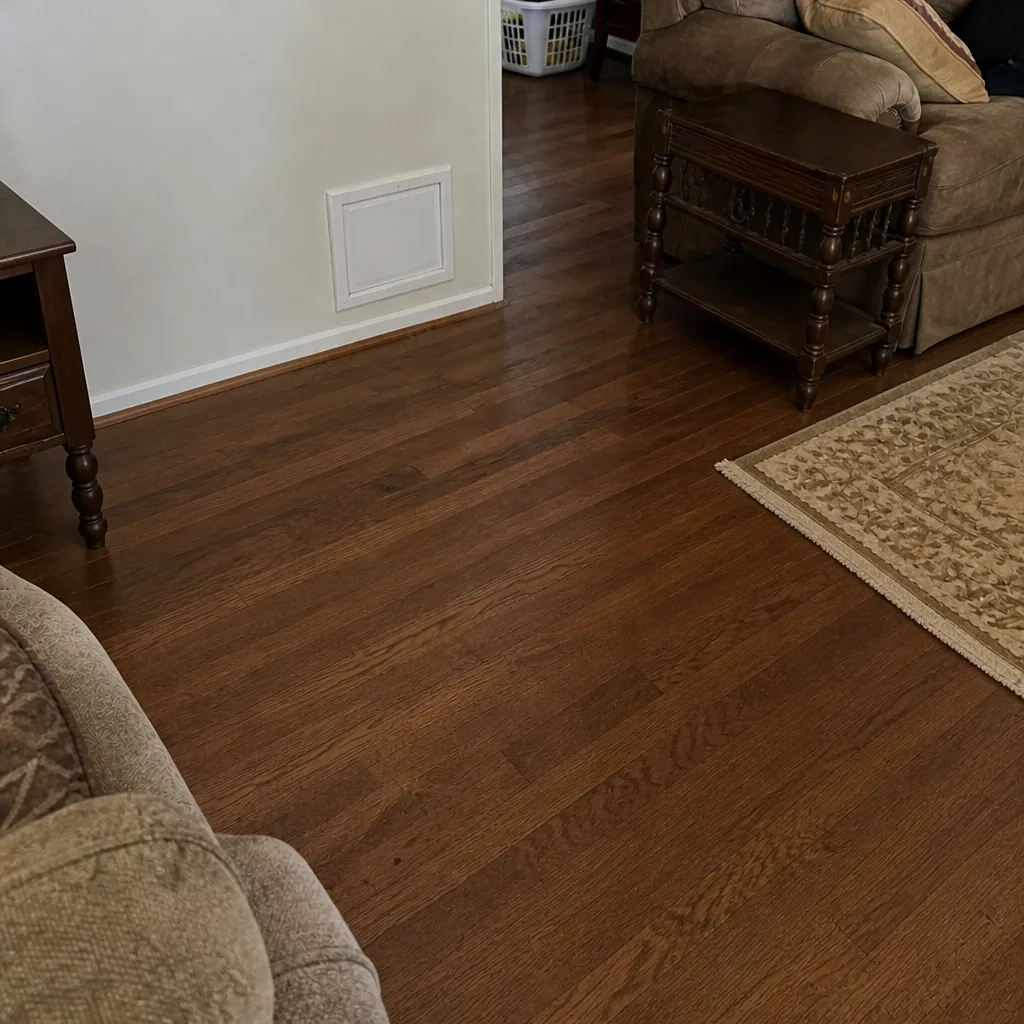
Whole-system duct and dryer vent check with before-and-after photos - you see exactly what came out of your vents
That "$99 whole-house special" is a bait ad - the real number appears once they are in your hallway, or the "clean" is a shop-vac at the register. We photograph the inside of your ducts before and after instead.
The Complete Guide to Air Duct Cleaning in Hamilton Lakes
A truck-mounted vacuum and a $99 coupon have almost nothing in common with a professional duct cleaning – yet plenty of homeowners can’t tell the difference until they’re already paying for work that never happened. The gap isn’t intelligence. It’s information. Nobody teaches you what negative pressure means, why brush contact matters, or what a real before-and-after photo should show. This guide closes that gap. We’ll walk through the exact equipment a legitimate job requires, the sequence a technician should follow, how Hamilton Lakes’ mix of 1990s subdivisions and newer builds changes the method, and what documentation to demand before you sign anything.
Quick Answer
Professional air duct cleaning in Hamilton Lakes means removing debris at the source using negative-pressure containment, contact tools like a Rotobrush rotary brush system, and HEPA-rated filtration – not just blowing air through a register. A complete job covers supply and return sides, the plenum, and the air handler coil, with pre- and post-cleaning photos and airflow verification as proof. If a quote doesn’t include those elements, it isn’t the same service, regardless of what the invoice calls it.
Styles & brands we work with
- Whole-home duct cleaning
- Dryer vent cleaning
- Camera inspection
- Sanitizing & deodorizing
Table of Contents
- What Does Professional Air Duct Cleaning Actually Involve?
- The Step-by-Step Process of a Real Duct Cleaning Job
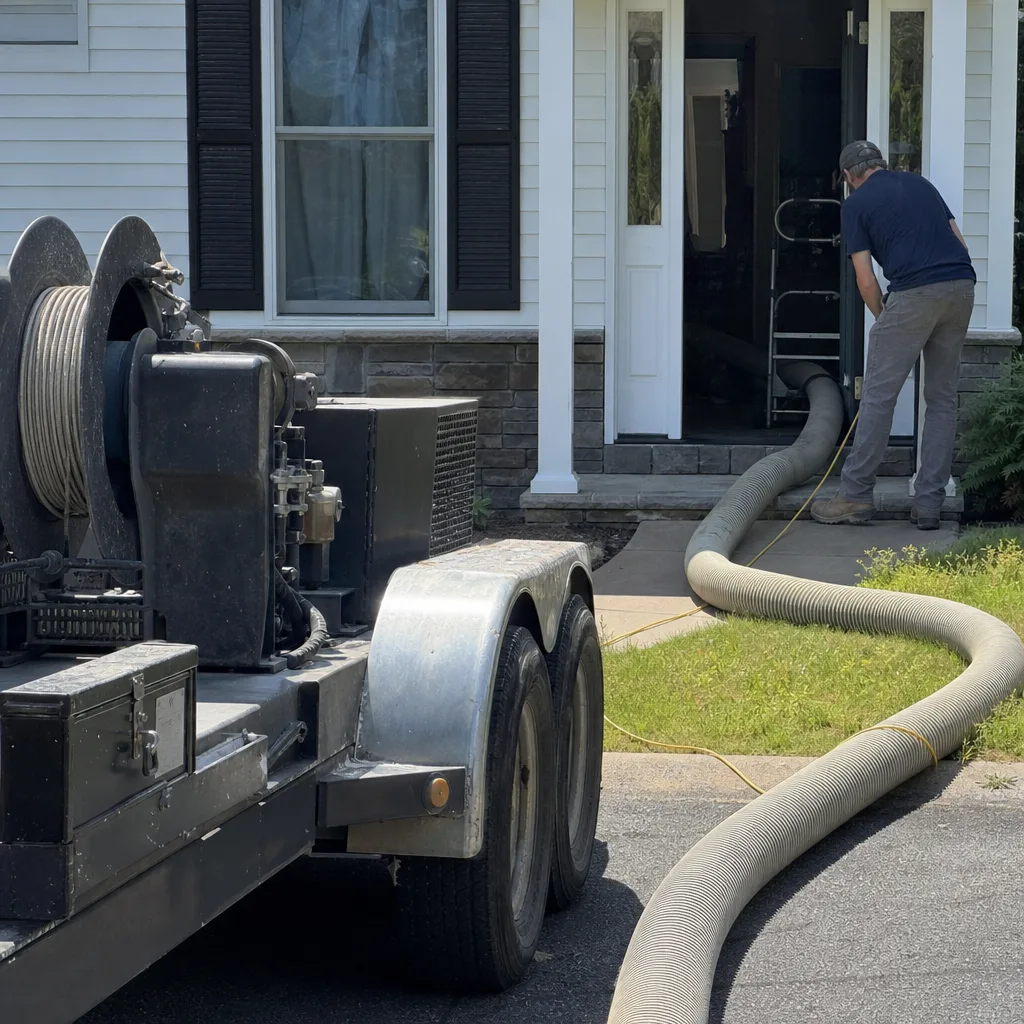
- Equipment You Can Verify: What to Look For on the Truck
- How Hamilton Lakes’ Housing Stock Affects Your Ducts
- What Documentation Should You Get at Job Completion?
- Duct Sealing and Sanitizing: Evaluation, Not Upselling
- How Often Do Hamilton Lakes Ducts Really Need Cleaning?
- Common Mistakes to Avoid
- When to Call a Professional
- Frequently Asked Questions
What Does Professional Air Duct Cleaning Actually Involve?
Professional duct cleaning is source removal: physically dislodging debris from the interior surfaces of the ductwork while a vacuum system holds the whole assembly under negative pressure so nothing escapes into your living space. That’s the entire definition, and it’s worth memorizing because it’s the dividing line between real work and theater. A technician who pushes a hose into one register and lets a shop-vac hum for twenty minutes is moving air, not cleaning surfaces.
Three elements have to be present at the same time for the method to work:
- Negative pressure. A high-volume vacuum unit connected to the system creates a pressure differential. Debris dislodged inside the ducts gets pulled toward the collection unit instead of drifting out through supply registers into your rooms.
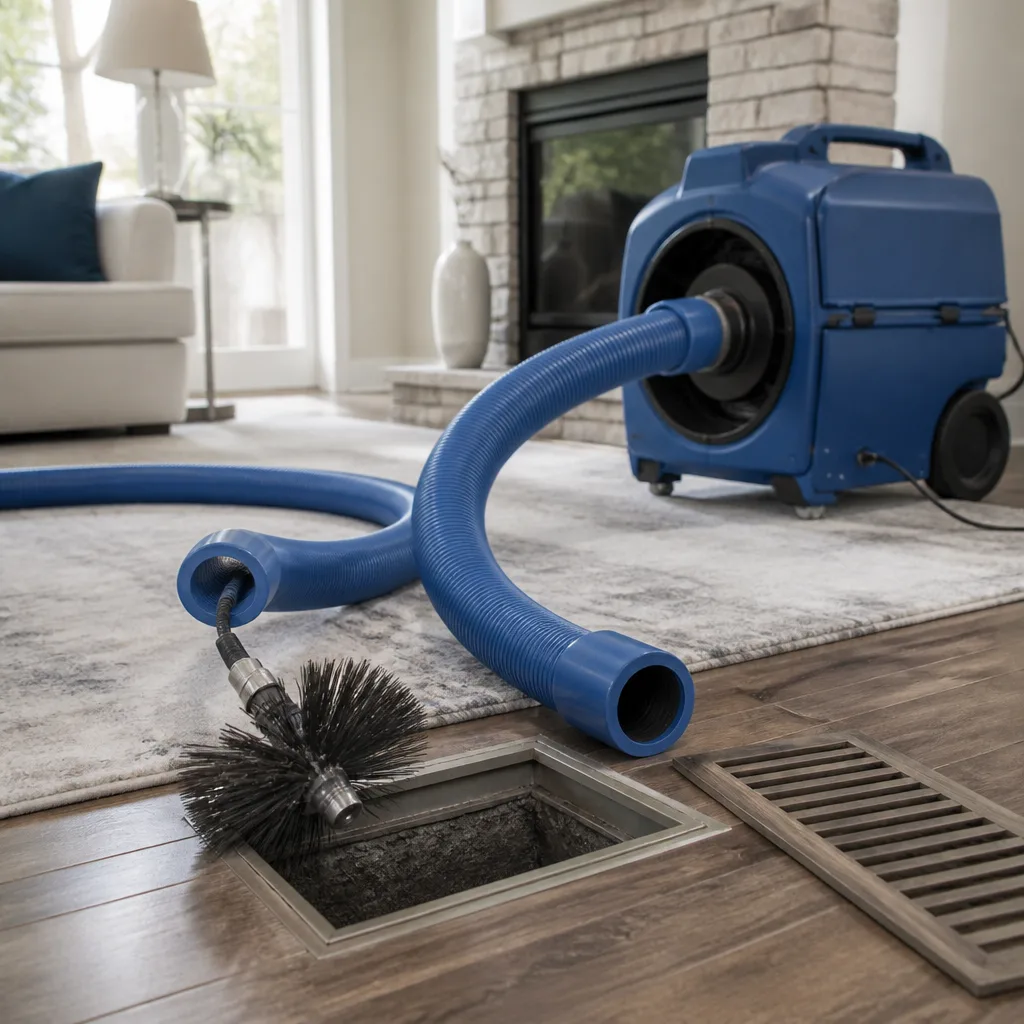
- Contact cleaning. Air movement alone doesn’t dislodge adhered dust, construction debris, or biological growth from duct walls. Rotary brush systems and air whips physically agitate the surfaces so the debris enters the airstream.
- HEPA filtration. The exhaust side of the vacuum passes through HEPA-rated filters so fine particulate – the fraction small enough to reach deep lung tissue – gets captured rather than recirculated.
Skip any one of the three and you have a lesser service wearing the same name. When we talk with homeowners across Hamilton Lakes about air duct cleaning, the first question we answer is usually about method, not price – because method determines what you’re actually buying.
The Step-by-Step Process of a Real Duct Cleaning Job
A legitimate duct cleaning follows a fixed sequence. The order matters because it prevents cross-contamination – cleaning the supply side after the return side has dumped debris into the system would undo the work. Here’s what that sequence looks like in practice:
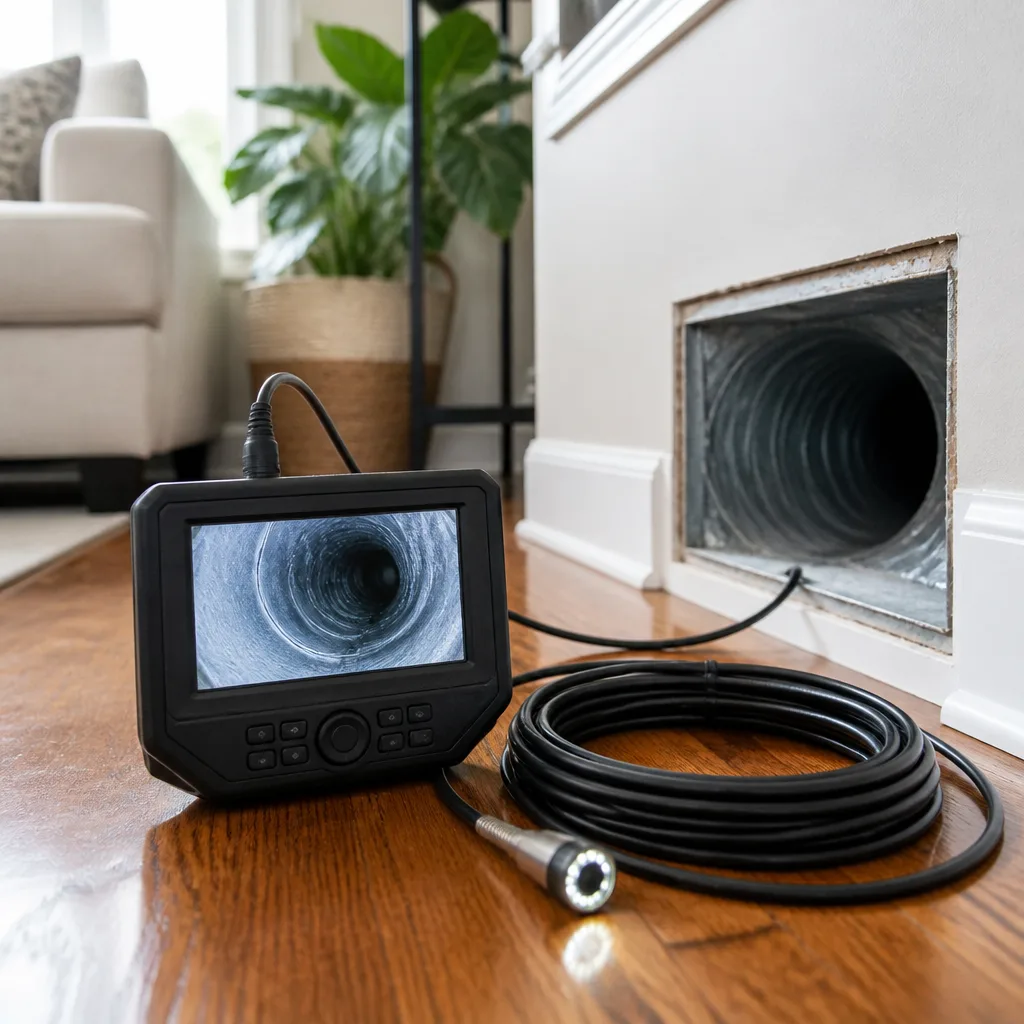
- System inspection. Before any equipment runs, the technician walks the ductwork, identifies the number and location of supply and return runs, checks access points, and looks for existing damage – disconnected joints, crushed flex duct, water staining. This determines method, not price.
- Negative pressure setup. A high-volume vacuum unit connects to the main trunk through a temporary access port. The system is sealed so the entire duct assembly sits under negative pressure for the duration of the job.
- Supply-side cleaning. Each supply run is cleaned from a register back toward the trunk using rotary brush tools sized to the duct’s interior dimensions. This is where contact cleaning does its work.
- Return-side cleaning. The return ducts typically carry the heaviest debris load. In our experience, this is where construction dust from a past renovation or pet hair accumulates most heavily, and where the brush work takes longest.
- Plenum cleaning. The plenum – the large box connecting the air handler to the trunk line – is a common collection point for debris that never makes it further into the system. It needs its own pass with the brush and vacuum.
- Air handler coil check. The evaporator coil sits at the heart of the system. A dirty coil restricts airflow and drives up energy use regardless of how clean the ducts are. The technician inspects it and reports condition – cleaning it falls under HVAC cleaning, which we handle under the same scope.
- Post-cleaning airflow verification. With the system reassembled and running, the technician checks that each register has adequate airflow and that nothing is blocked. This is also when pre- and post-cleaning photographs get taken.
Skipping steps 1, 6, or 7 is the surest sign of a cut-rate job. It’s also why the estimate should be written per system, not per vent – the number of registers doesn’t change the process, only the labor time.
Equipment You Can Verify: What to Look For on the Truck
Ask what equipment the crew is bringing. If the answer doesn’t include brand names, that’s information. Professional duct cleaning uses industrial equipment from manufacturers that serve commercial and remediation markets – not consumer vacuums with a hose adapter. Here’s what you should expect to see:
- Rotobrush rotary brush systems. The industry standard for contact cleaning inside residential ducts. Brush heads are sized to the duct dimensions and rotate to scrub the interior surface as they travel the run.
- Nikro HEPA-rated vacuum units. High-filtration collection equipment that traps fine particulate on the exhaust side. Nikro units are common in both duct cleaning and restoration work because the filtration is verifiable, not marketing copy.
- Abatement Technologies negative-air equipment. Machines designed to hold work areas under controlled negative pressure – the kind used in remediation projects where airborne containment actually matters. This is what prevents dislodged debris from redistributing into your living spaces.
You’re allowed to ask. Equipment you can verify is equipment you can look up – Rotobrush, Nikro, and Abatement Technologies all publish equipment specs and application guidance on their own websites. If a contractor can’t name the equipment they run, the question isn’t whether the work will be thorough. It’s whether there’s any process to speak of.
This equipment distinction matters in Houston too – homeowners there ask the same questions about professional duct cleaning as Hamilton Lakes residents do, because the equipment standards are the same nationwide.
How Hamilton Lakes’ Housing Stock Affects Your Ducts
Hamilton Lakes has grown in waves, and the ductwork inside each wave looks different. That matters because the right cleaning method depends on the duct material, the routing, and how the system was originally installed. A one-size-fits-all approach works for nobody.
Homes built in the 1990s subdivisions around Hamilton Lakes typically have rigid galvanized sheet-metal trunk lines with flex duct branches feeding individual registers. Flex duct is corrugated – its ridges trap debris that a straight brush pass won’t fully dislodge – so the brush head and the vacuum time both need to be adjusted. The sheet-metal trunks in these homes are generally durable and can be cleaned aggressively.
The newer builds – more recent construction in and around Hamilton Lakes – often use longer flex runs with fewer hard elbows, which changes the pressure dynamics inside the system. A technician cleaning a newer home may need a different vacuum setting to maintain negative pressure all the way to the farthest register. Ignore that adjustment and the final register on the run doesn’t get the same cleaning as the first.
Humidity also plays a role. Hamilton Lakes summers run hot and humid, which means duct interiors in unconditioned or semi-conditioned spaces can develop condensation issues that promote biological growth. That’s a different problem than dust, and it needs a different response – mechanical cleaning first, then evaluation for sanitizing or a filtration upgrade. If a crew quotes you a flat per-vent price without asking about duct material or humidity exposure, they haven’t inspected anything.
For comparison, our neighbors in Raleigh air duct cleaning deal with similar humidity dynamics, though the housing stock and duct materials differ. The lesson is the same: method follows the house.
What Documentation Should You Get at Job Completion?
Ask a simple question: after the job, what proof will you have that it happened? Professional duct cleaning produces verifiable records; a quick vacuum pass produces an invoice. Ask for these four items before the job starts so there’s no ambiguity at the end:
- Pre- and post-cleaning photographs. Each duct run, the plenum, and the air handler coil area should be photographed before the brush goes in and after the final pass. The photos should be dated and identify which run they show – generic “after” shots of clean metal prove nothing.
- Airflow readings. A simple airflow measurement at a representative sample of supply registers, taken before and after, gives you a data point rather than a promise. The change won’t always be dramatic, but the reading shows the technician actually checked.
- Written scope of work. A page showing the number of supply runs, number of return runs, whether the plenum was included, whether the coil was inspected and cleaned, and what the total price was. This is your copy to keep, not a napkin note.
- Findings from the inspection. If the technician found a disconnected flex joint, a crushed section, or an obvious leak point, that should appear in writing. Findings are what justify – or don’t justify – a repair recommendation.
If a contractor can’t produce any of this, the question to ask is why not. A crew serious about the work keeps records because records are how you know what happened. For homeowners in Hamilton Lakes, having documentation also matters at resale – a future buyer or inspector asking about the duct system gets a paper trail instead of a memory.
Duct Sealing and Sanitizing: Evaluation, Not Upselling
Duct cleaning removes what’s inside the ducts. It doesn’t fix leaks, and it doesn’t neutralize biological growth that’s already established. Those are separate problems needing separate evaluation – not automatic add-ons stapled to every invoice. The right approach: finish the mechanical cleaning, inspect the ducts, then recommend only what the inspection actually shows.
What to look for on the sealing side:
- Disconnected or loose joints. Visible separation at flex duct connections or trunk joints. These leak conditioned air into unconditioned spaces, which drives up energy costs and introduces unfiltered air into the duct system.
- Crushed or kinked flex duct. Restricts airflow to specific registers, which the airflow verification step at the end of a job will expose.
- Visible gaps at the plenum or air handler transitions. Common leak points that a visual inspection with the system running can confirm.
Duct Repair & Sealing is a distinct capability, and it’s one most duct-cleaning-only companies don’t offer. Finding a leak and handing you a business card for someone else to fix it is one way to handle that. Doing the cleaning and the sealing in the same visit is another.
Sanitizing works the same way. If the inspection shows mold growth, water staining, or persistent odor from biological sources – likely in higher-humidity Hamilton Lakes homes – a Guardsman-brand sanitizing treatment applied after mechanical cleaning addresses the organisms the brush can’t reach. If the inspection shows clean metal and normal dust, sanitizing isn’t indicated. When it’s warranted, we use recognized brands because the chemistry and application method can be verified – Aprilaire and Honeywell product familiarity on the filtration side works the same way.
How Often Do Hamilton Lakes Ducts Really Need Cleaning?
There’s no universal schedule. The right interval depends on the house – environmental conditions, occupants, pets, renovation history, and how well the filtration system is working. The honest answer is: inspect, then decide. That said, some conditions make cleaning worth doing sooner:
- Recent renovation or new construction. Drywall dust, sawdust, and construction debris get pulled into the return ducts during and after the work. Cleaning once renovation dust has settled is a reasonable step.
- New home purchase. You don’t know what the previous occupants did to the system or when it was last cleaned. An inspection with cleaning if warranted gives you a baseline.
- Allergy or asthma sensitivities in the household. Reduced particulate loading in the ducts reduces what the return system has to handle.
- Persistent dust or odor from registers. A sign the system is carrying debris it shouldn’t be.
- Initial cleaning hasn’t been done in many years. If you genuinely can’t remember when the ducts were cleaned, an inspection is worth the free estimate.
What you don’t want is a fixed “every two years, guaranteed” schedule pitched regardless of your home’s situation. That’s a sales cycle, not a maintenance recommendation. We look at each home’s duct system and occupant conditions before recommending a cleaning interval – and if you don’t need one yet, that’s the answer.
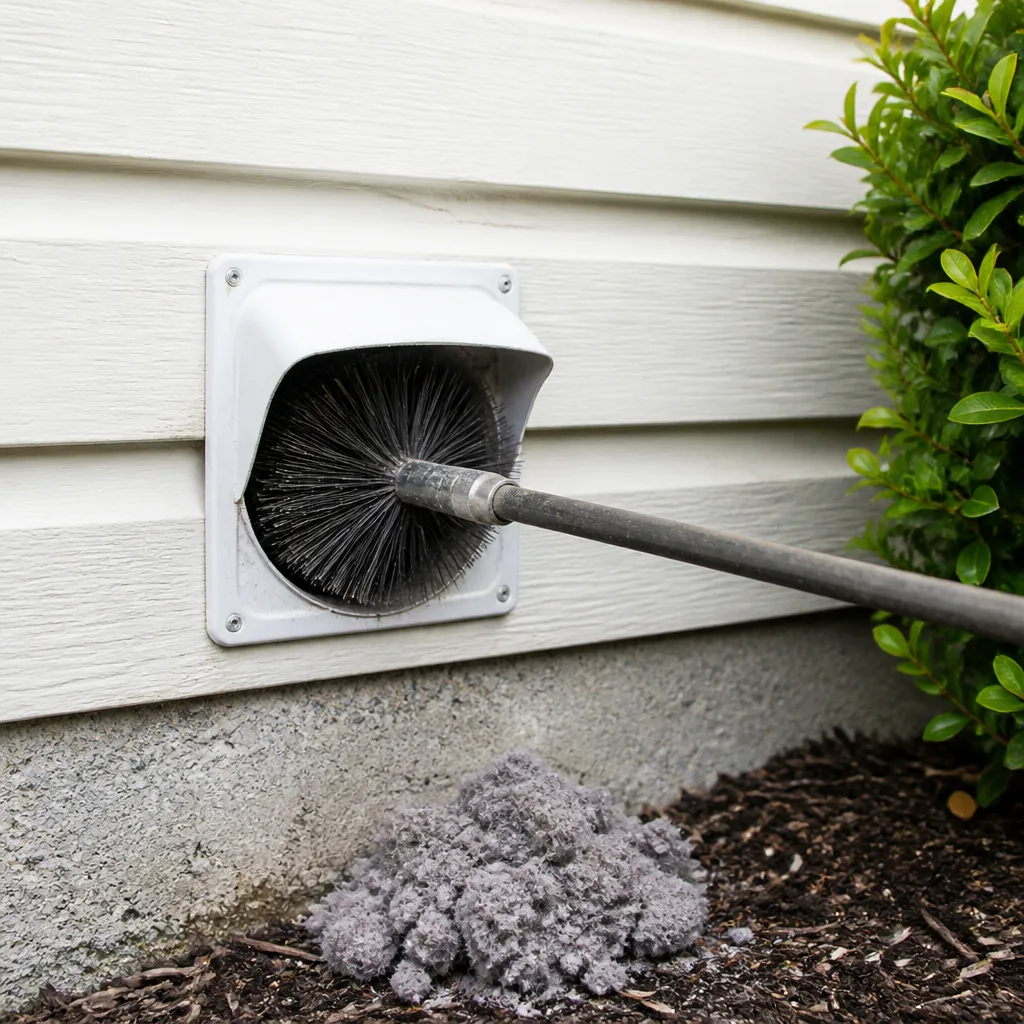
Dryer vents follow different rules. Dryer vent cleaning in any Hamilton Lakes home – or in our dryer vent cleaning pages – is driven by fire risk more than performance. Lint accumulates on the exhaust path regardless of how carefully you clean your clothes dryer’s lint trap, and a clogged vent is a fire hazard that a duct cleaning schedule doesn’t address. That’s why they’re separate services with separate cadences.
Common Mistakes to Avoid
- Accepting a per-vent price. Duct cleaning is priced per system, not per register, because the method doesn’t change with vent count – only the labor time. A per-vent quote makes the base number look low and lets the total balloon as the technician counts more registers on-site.
- Believing a coupon price that doesn’t survive the first hour. If a quote starts at $99 and ends at $800, the $99 wasn’t the price. Ask for the flat per-system estimate in writing before work starts, and stick to it.
- Skipping the return-side cleaning. Some cut-rate jobs clean supply registers only, because returns take more time. Ask directly: “Are the returns included?” and check that the answer shows up in the written scope.
- Not asking about equipment brand. “Professional vacuum” without a brand name is meaningless. Ask for Rotobrush, Nikro, or Abatement Technologies – or any industrial brand you can look up independently.
- Assuming a shop-vac on a hose counts. Consumer vacuums can’t hold a system under negative pressure or filter exhaust to HEPA standard. Labor with consumer equipment is a lesser service at any price.
- Accepting sanitizing without inspection first. A biological treatment on clean metal is upselling. Insist on an inspection finding that justifies the sanitizer – or skip the sanitizer and spend that budget on a filtration upgrade.
- Forgetting the dryer vent. It’s a separate exhaust path and a separate fire risk. A duct cleaning that doesn’t include dryer vent inspection leaves the leading residential fire hazard unaddressed.
When to Call a Professional
You need a professional look when dust from registers is a recurring problem regardless of how often you clean the house, when the return register shows visible debris, or when a renovation has just finished and construction dust is still present. It’s also the right call after a home purchase if you don’t know the last cleaning date, or if a suspected leak in the ducts is being masked by higher energy bills. And if the dryer has been taking longer to dry clothes while the lint trap stays clean, the vent needs inspection before that becomes a fire issue.
Air Duct Cleaning Hamilton Lakes offers free estimates in Hamilton Lakes – call (877) 792-7445. We answer 24/7. Fast dispatch from 7am to 7pm, Sunday through Friday. One flat price per system agreed before work starts, before-and-after photos of your own ducts when we’re done, and a satisfaction guarantee on the work.
Frequently Asked Questions
Whole-system duct cleaning in Hamilton Lakes typically runs between roughly $300 and $700, depending on the number of supply and return runs, whether the plenum is included, and whether the air handler coil needs attention. That’s a flat per-system price, not a per-vent price – and if a quote starts well below that range, the difference usually shows up later in the visit. Call (877) 792-7445 for an exact quote – estimates are free.
Cheap quotes are usually cheap for one of three reasons: the job is priced per vent so the base number grows once the technician counts registers on-site, the return side is excluded from the scope, or the equipment is a consumer vacuum rather than industrial gear holding the system under negative pressure. A $99 coupon is a lead-in price, not a total. Call (877) 792-7445 for a written flat price per system.
You should have pre- and post-cleaning photographs of each duct run, the plenum, and the coil area; airflow readings before and after; and a written scope of work listing what was cleaned and what the final price was. These are the standard deliverables of a legitimate job. If a contractor can’t provide them, ask why. Call (877) 792-7445 and we’ll send you a sample of what we turn over.
There’s no fixed interval that applies to every home – it depends on renovation history, pets, allergy sensitivities, humidity exposure, and filtration condition. Most homes don’t need cleaning on a strict two-year cycle; inspect first, then clean when the inspection shows it’s warranted. Air Duct Cleaning Hamilton Lakes provides free inspection estimates in Hamilton Lakes – call (877) 792-7445.
Reducing particulate in ductwork reduces what the return system carries back into your living space, which can be a meaningful piece of the puzzle for someone with sensitivities. It’s not a substitute for filtration, humidity control, or medical advice, but it’s a reasonable step alongside those measures. If allergies are the driver, ask about a Honeywell or Aprilaire filtration upgrade in the same visit – call (877) 792-7445.
No. Sanitizing is warranted when the inspection shows biological growth, water staining, or persistent odor from the ducts, and it’s unnecessary on clean, dry metal. A Guardsman-brand sanitzing treatment after mechanical cleaning is the sequence that makes sense; a sanitizer pitched without inspection findings isn’t. Call (877) 792-7445 to schedule an inspection and get an honest answer about whether you need it.
The Bottom Line
The test for legitimate duct cleaning isn’t the price or the coupon or the reviews – it’s whether the method holds up to three questions: negative pressure, contact cleaning, HEPA filtration. Ask what equipment the crew runs. Ask whether the return side, plenum, and coil check are included. Ask what photographs and airflow readings you’ll receive at the end. If the answers are specific, you’re talking to a professional. If they’re vague, you’re not. Everything else in this guide flows from that single principle.
We run professional-grade equipment – Rotobrush rotary brushes, Nikro HEPA-rated vacuums, Abatement Technologies negative-air units – because the equipment is the process. We handle duct cleaning, dryer vent cleaning, HVAC cleaning, duct repair and sealing, and air quality sanitizing under one scope, and our technicians have up to 11 years of experience. If you want a duct system you can actually verify was cleaned, call (877) 792-7445 for a free estimate in Hamilton Lakes.
Written by the team at Air Duct Cleaning Hamilton Lakes.
See the difference
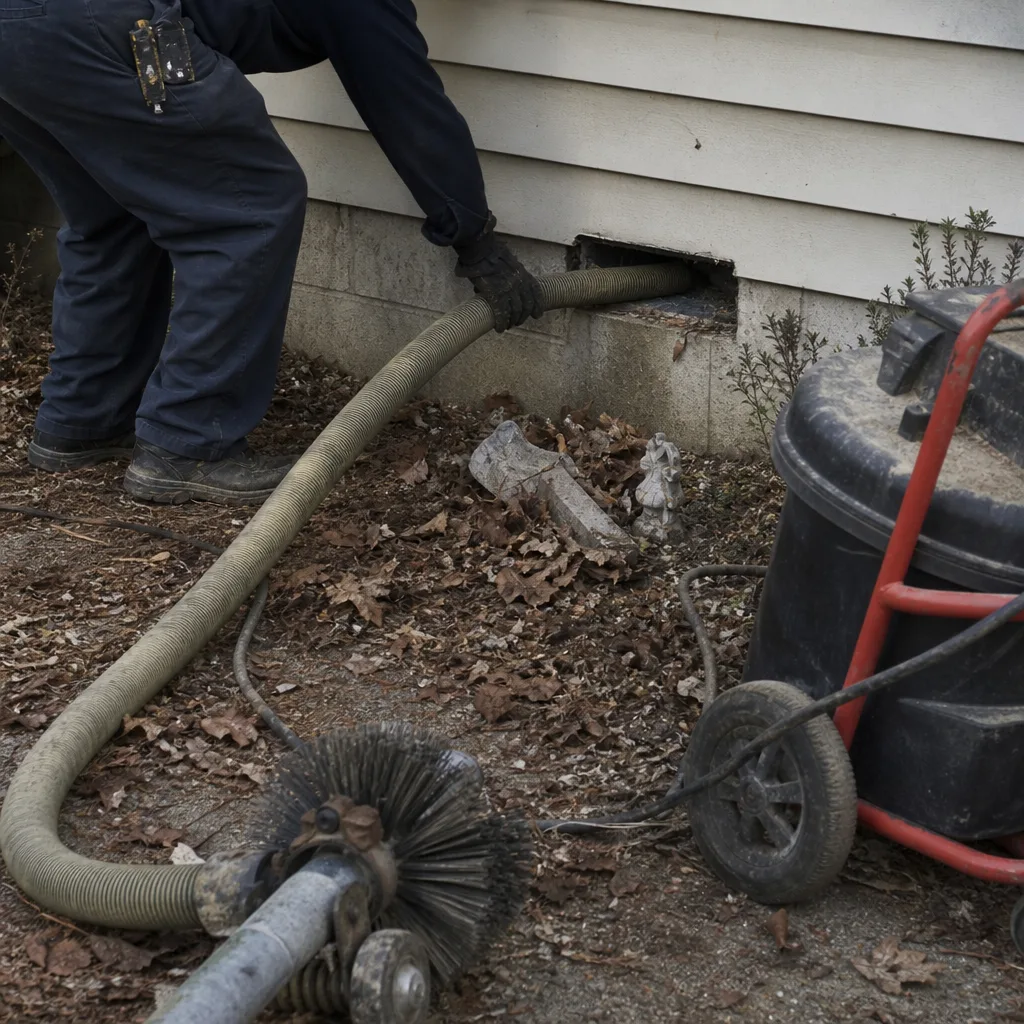 Before
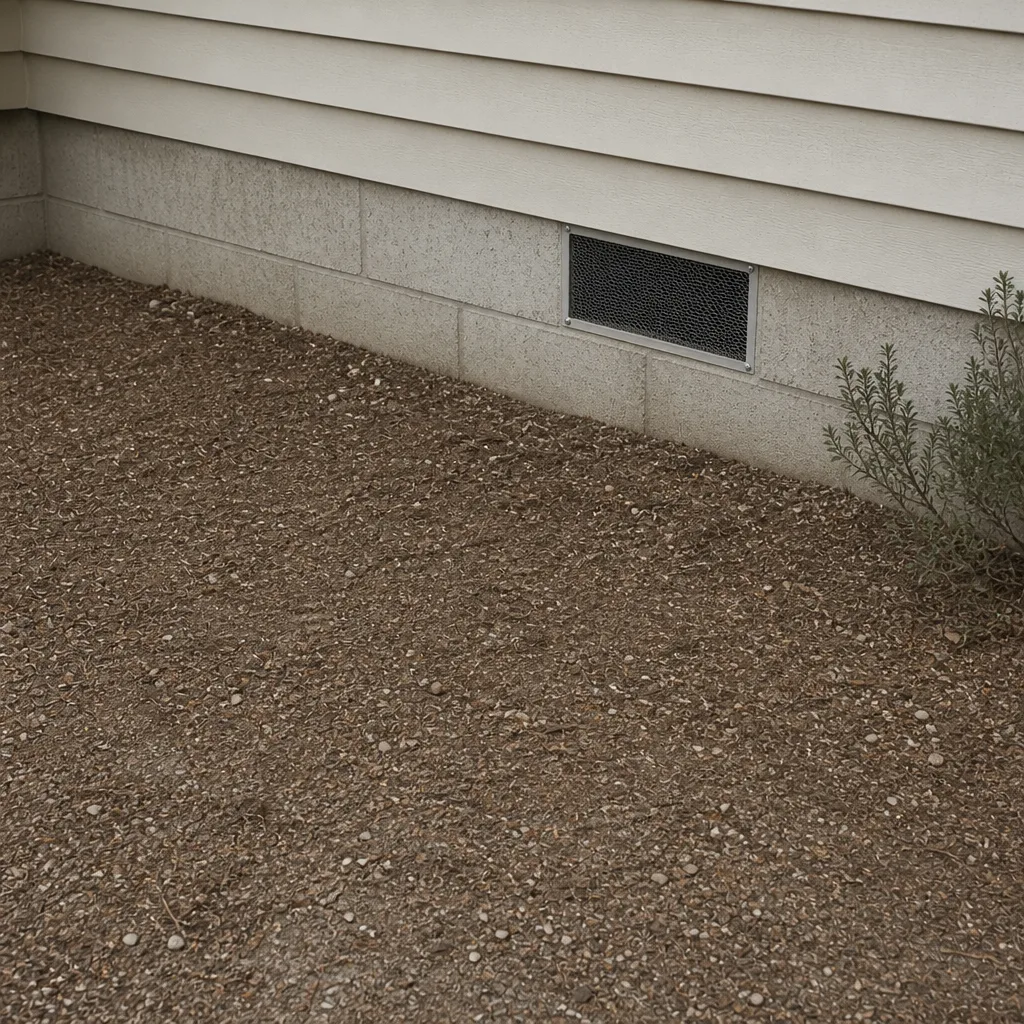 After
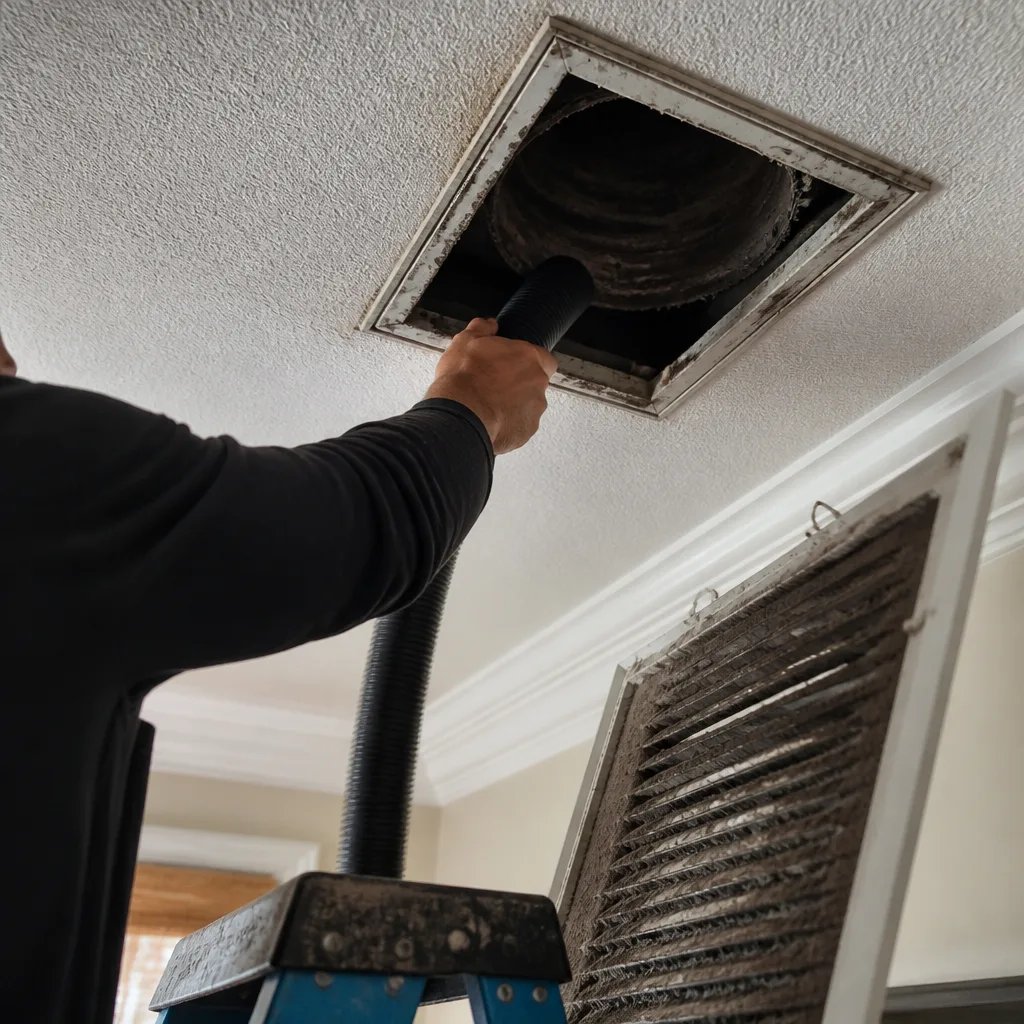 Before
 After
 Before
 After