
Last updated November 23, 2026
 Whole-home duct cleaning
 Dryer vent cleaning
 Camera inspection
 Sanitizing & deodorizing
Whole-system duct and dryer vent check with before-and-after photos - you see exactly what came out of your vents
That "$99 whole-house special" is a bait ad - the real number appears once they are in your hallway, or the "clean" is a shop-vac at the register. We photograph the inside of your ducts before and after instead.
Air Duct Cleaning Permits, Codes & Inspections in Hamilton Lakes, NC: What You Need to Know
Here’s the part most homeowners get wrong: the duct cleaning itself almost never needs a permit, but the fixes that come up during a cleaning often do. That’s the trap. A crew opens a return chase, finds sagging duct board or a moldy interior liner, and offers to “just replace that while we’re here.” It sounds helpful. Two years later, a buyer’s home inspector flags unpermitted mechanical work, and the seller is the one paying to make it right. In Hamilton Lakes, NC, where a lot of homes have had their HVAC systems modified more than once, that scenario plays out more than it should. This guide draws a clear line between what a duct cleaner can legally do and where North Carolina licensing law takes over, so you know exactly what to ask for before anyone touches your ductwork.
Quick Answer
In North Carolina, routine air duct cleaning and sanitizing do not require a permit, but any change to the ductwork itself, including sealing, replacing duct board, rerouting runs, or resizing returns, is mechanical work that generally falls under a licensed HVAC contractor and a Forsyth County mechanical permit. Mold remediation found during cleaning is regulated separately under NC statute and requires a licensed mold remediation contractor. Ask any contractor which category their work falls into before they start, and keep the paperwork.
Styles & brands we work with
- Whole-home duct cleaning
- Dryer vent cleaning
- Camera inspection
- Sanitizing & deodorizing
Table of Contents
- Where Duct Cleaning Ends and Regulated Work Begins
- What North Carolina Law Says About Ductwork and HVAC Licensing
- When Mold Found During Cleaning Triggers Remediation Requirements
- Forsyth County Mechanical Permits: What Actually Requires One
- How to Protect Yourself When Extra Work Is Recommended
- What an Inspection Actually Looks At
- Documents to Keep for a Future Home Sale
- Common Mistakes to Avoid
Where Duct Cleaning Ends and Regulated Work Begins
Cleaning is a maintenance activity. It removes accumulated dust, debris, and biological growth from surfaces that are already there. It doesn’t change the shape, size, routing, or material of your duct system. That distinction matters, because North Carolina regulators draw a firm line between maintenance and mechanical alteration, and the second category is where licensing and permits come in.
Here’s how to think about it. Anything that removes material from inside your ducts is cleaning. Anything that adds material, cuts material, or changes how the system moves air is mechanical work.
Stays in cleaning territory:
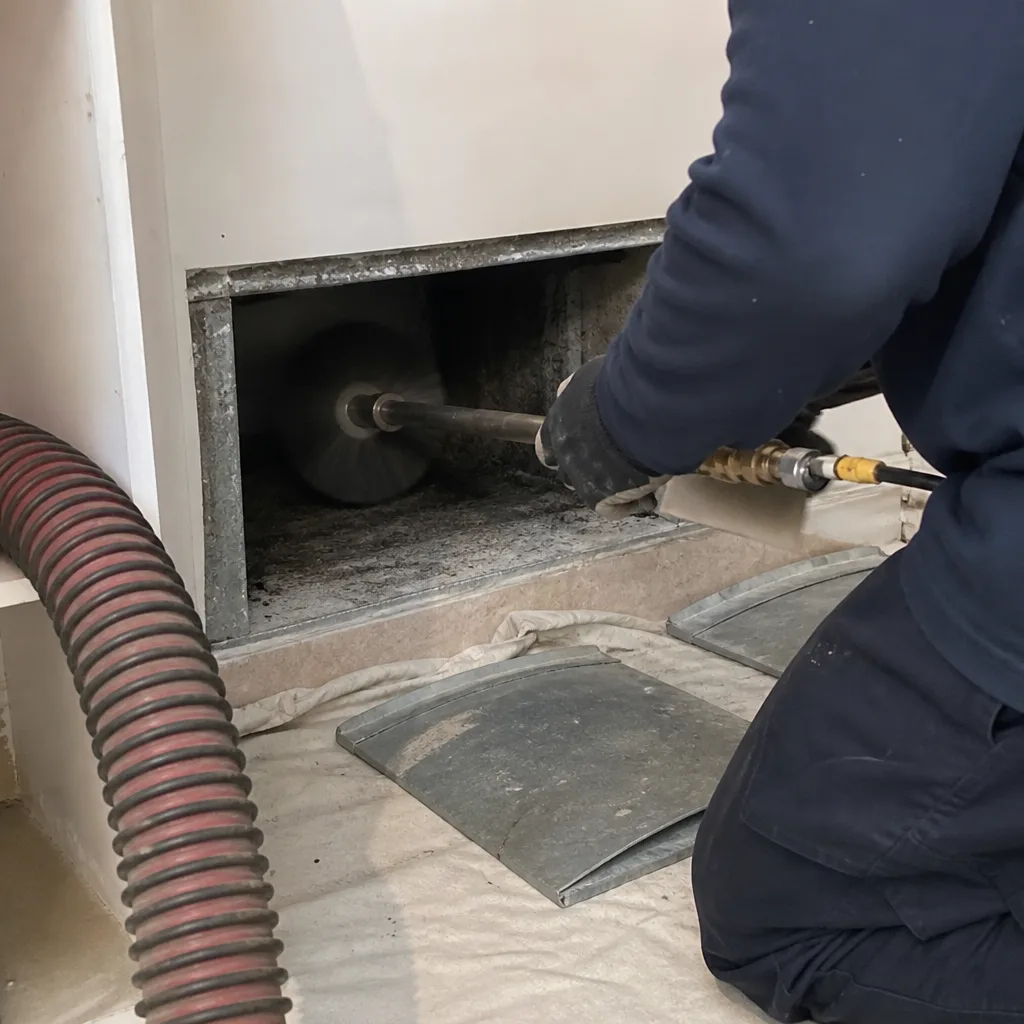
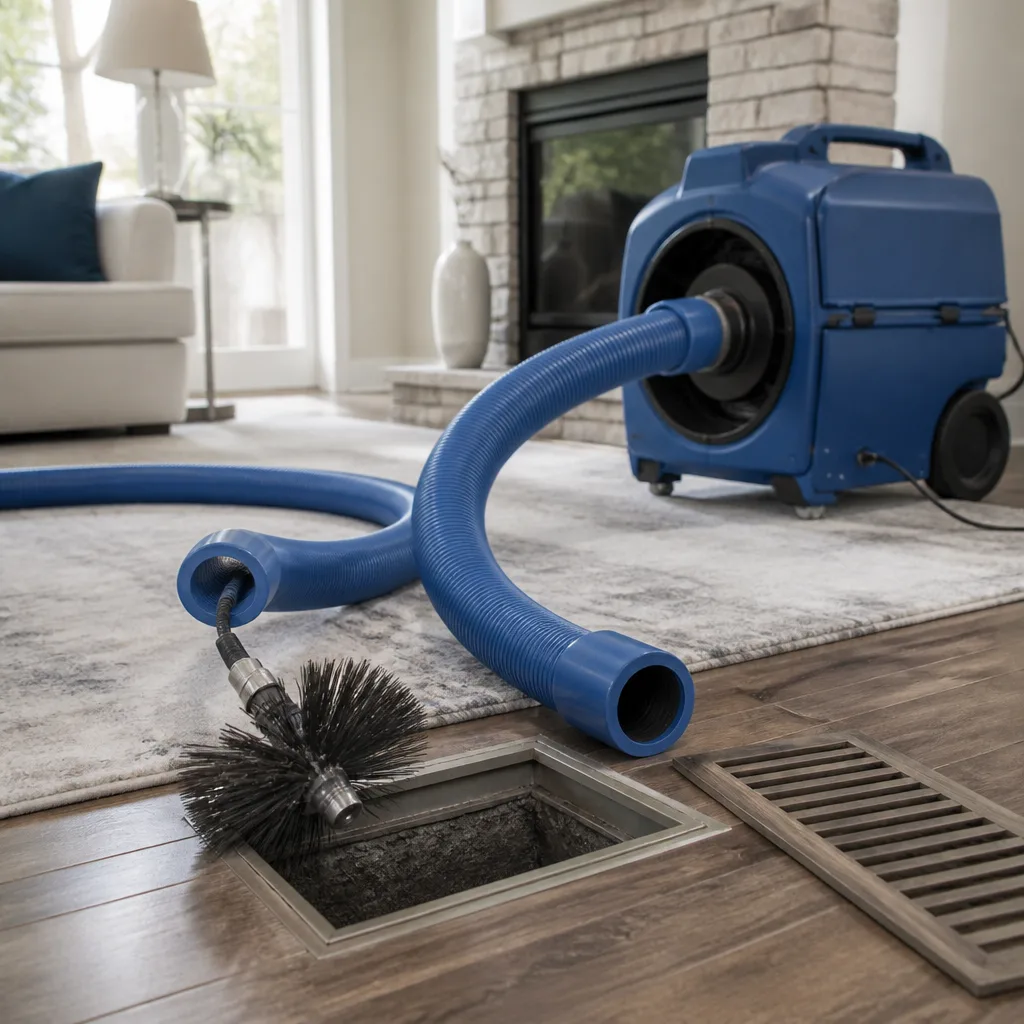
- Contact vacuuming of duct interiors with a rotary brush system
- HEPA filtration of dislodged debris using negative-air equipment
- Surface sanitizing with a registered product after mechanical cleaning
- Cleaning of registers, grilles, and diffusers
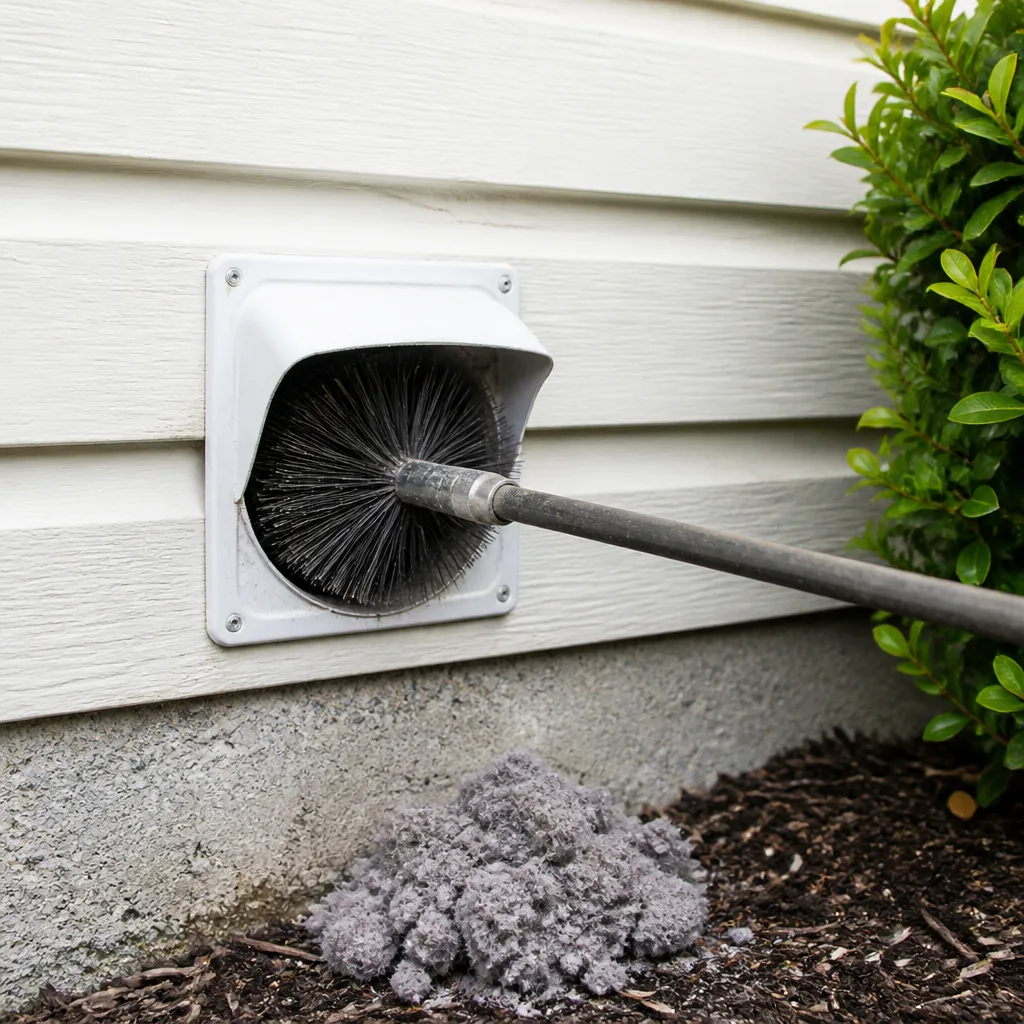
- Dryer vent cleaning, which is maintenance of an appliance vent, not a structural change
Crosses into licensed HVAC or remediation territory:
- Replacing damaged or deteriorating duct board
- Sealing leaks with mastic, tape, or aerosol sealant
- Adding, removing, or rerouting a duct run
- Resizing a return or supply
- Removing mold growth beyond surface treatment
- Modifying anything connected to the air handler cabinet itself
That second list is where a Hamilton Lakes homeowner can get into trouble without realizing it. A cleaner who offers to “seal up a few leaks while we’re in there” is doing mechanical work on your HVAC system. In most cases that requires a licensed HVAC contractor and, depending on scope, a permit. It’s not that the work is wrong; it’s that the paperwork has to match it. If you want to understand what cleaning alone actually involves in this area, our page on air duct cleaning walks through the process step by step.
What North Carolina Law Says About Ductwork and HVAC Licensing
North Carolina regulates heating, ventilating, and air conditioning contracting under state statute through the North Carolina State Board of Examiners of Plumbing, Heating and Fire Sprinkler Contractors. The practical effect for homeowners is straightforward: anyone performing HVAC contracting work for pay in this state is expected to hold the appropriate license, and ductwork that’s part of an HVAC system sits within that scope.
Two things follow from that.
- Cleaning companies are not automatically licensed HVAC contractors. Many are not, and they don’t need to be for cleaning. The moment they start replacing duct board or resealing a trunk line, the question of licensing becomes relevant.
- Licensing and permitting are separate questions. A licensed contractor can still perform work that requires a permit without pulling one. Licensing establishes who is qualified; permitting establishes that the local authority reviewed the specific job.
For Hamilton Lakes homeowners, the useful habit is to ask two questions before any duct-adjacent repair: “Are you licensed for this specific work?” and “Will this require a permit from Forsyth County?” A contractor who can answer both without hesitating is a contractor who understands the boundary. One who waves the questions off is telling you something.
The same licensing logic applies to the broader system. If a cleaning reveals that the air handler itself needs service, that’s HVAC cleaning and component work, and it needs to be handled by someone qualified to do it. We draw that line clearly on every job rather than blurring it.
When Mold Found During Cleaning Triggers Remediation Requirements
This is the single most misunderstood area in duct cleaning, so it’s worth being precise. North Carolina regulates mold remediation under statute, and the state has specific requirements for contractors who perform remediation work above certain thresholds. A duct cleaner applying a sanitizing product to a surface is not doing remediation. A duct cleaner removing colonized mold growth from duct liner is doing something different, and that something is regulated.
The line generally comes down to the scope of growth and whether materials have to be removed.
- Surface sanitizing after cleaning: applying a registered antimicrobial product to duct surfaces that have been mechanically cleaned. This is standard practice and falls within cleaning.
- Remediation: removing porous materials that are colonized with mold, containing the work area, and verifying clearance afterward. This is regulated work.
What a homeowner should watch for is a cleaner who finds “mold” and immediately offers to handle it all. Sometimes the growth is light surface contamination that a proper cleaning and sanitizing treatment resolves. Sometimes it’s genuine colonization of duct board that has to come out. Those are different jobs with different legal requirements, and a contractor who treats them the same way is either uninformed or cutting corners.
Our approach is to clean mechanically first, then treat with a product from a recognized line like Guardsman if biological contamination is present, and to tell you plainly when what we’re seeing is beyond sanitizing and needs a licensed remediation contractor. That’s not us being cautious for its own sake. It’s us keeping you out of a code problem down the road.
Forsyth County Mechanical Permits: What Actually Requires One
Permitting for mechanical work in Forsyth County runs through the county’s inspections division, and the rules follow the North Carolina State Building Code. The code doesn’t list every possible duct scenario, so the practical test is whether the work constitutes an alteration or repair of a mechanical system. Replacement of ductwork generally does. Cleaning generally doesn’t.
Here’s a working list of what typically requires a mechanical permit in this county:
- Replacing a section of ductwork with new material
- Installing ductwork where none existed before
- Changing the size or routing of a trunk line or major run
- Replacing an air handler, furnace, or condensing unit
- Adding a new return air path
- Sealing ductwork as part of a larger mechanical alteration (the sealing rides along with the permit)
What typically does not:
- Cleaning ducts, registers, and grilles
- Sanitizing duct surfaces
- Cleaning a dryer vent
- Replacing a filter or a filter housing
If you’re ever unsure, call Forsyth County’s inspections office and describe the work in plain terms. They’ll tell you whether a permit is needed. It takes five minutes and it’s the cheapest insurance you’ll ever buy on a home improvement project. Hamilton Lakes sits within Forsyth County, so this is the office that governs permits for most homes in the neighborhood.
How to Protect Yourself When Extra Work Is Recommended
A recommendation for additional work isn’t automatically a red flag. Duct systems do degrade, and a cleaning is often when problems surface. What matters is how the recommendation is handled. A contractor who’s honest about the licensing boundary will tell you what they found and then tell you who needs to fix it. A contractor who wants to do everything themselves is asking you to trust that they’re licensed for all of it, and often they’re not.
Here’s a simple protocol to follow:
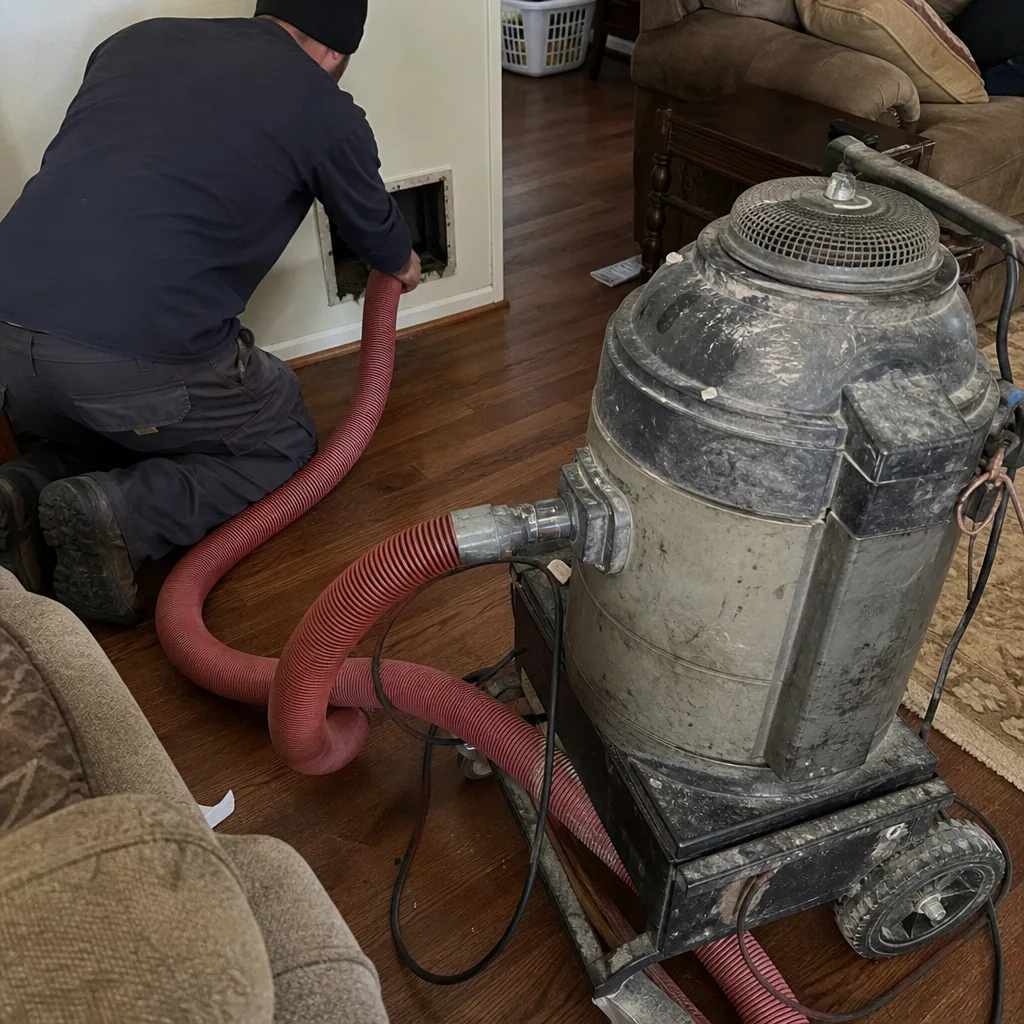
- Ask for the finding in writing. A photo of the damaged section, a description of what’s wrong, and where in the system it is. Before-and-after photos of your own ducts are standard practice for a serious cleaning company and should be provided regardless.
- Ask what category the fix falls into. Cleaning, sealing, replacement, or remediation. The category determines who should do it.
- For anything beyond cleaning and sanitizing, get a separate written estimate from a licensed contractor. Don’t accept a verbal add-on to the original job.
- If a permit is required, confirm it will be pulled in your name. The permit record should list your address and the scope of work.
- Never let a cleaning crew open up an air handler cabinet or reroute ductwork on the spot. That’s a scheduled job with a permit, not an improvisation.
We handle duct repair and sealing ourselves as one of our five core services, and we’re clear about which parts of a job we do and which require a different licensed trade. The full scope of what we handle, from dryer vent cleaning to air quality treatment, is laid out on our main page if you want the whole picture.
What an Inspection Actually Looks At
A duct cleaning inspection and a code inspection are two different things, and homeowners often conflate them. Here’s the difference.
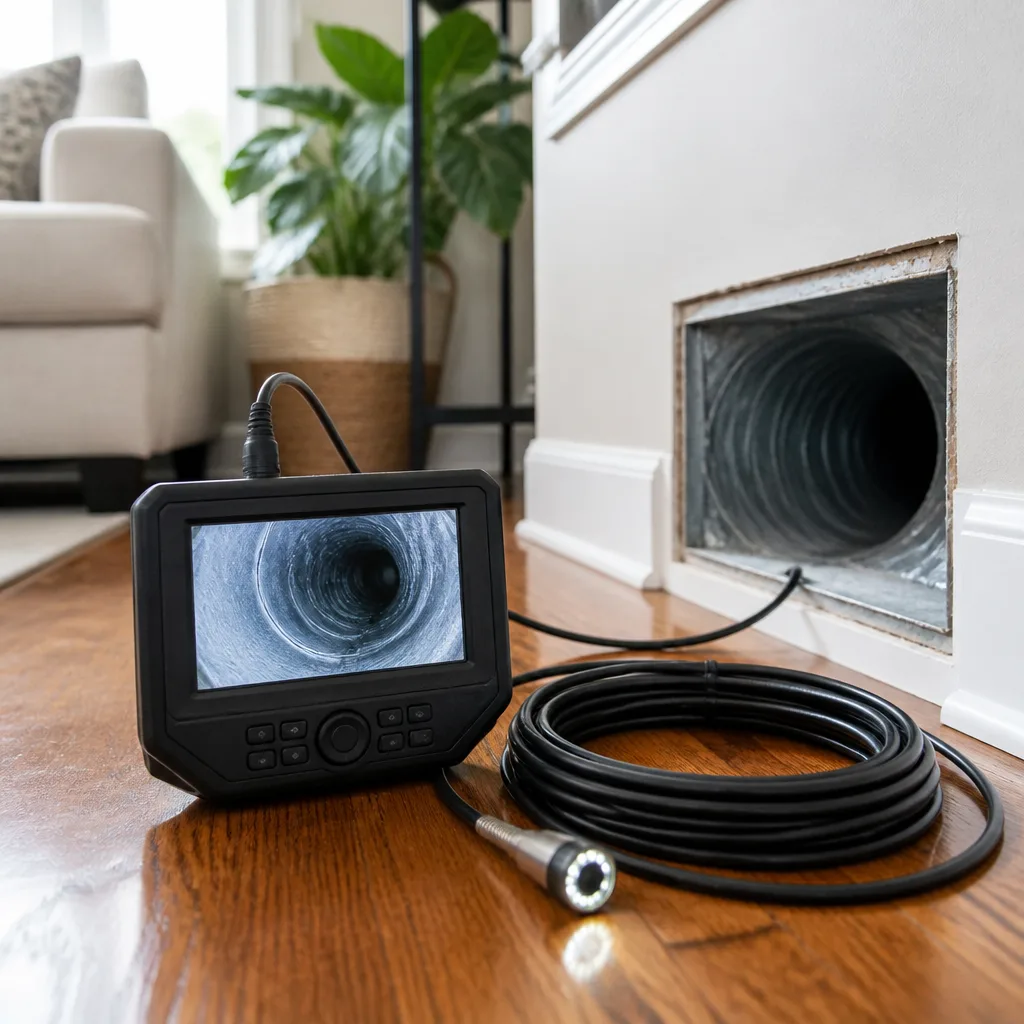
A cleaning inspection is what a duct cleaning company does before and after the work. It’s a visual assessment of the duct interiors, typically with a camera, to document what’s there and confirm what’s been removed. Serious companies do this as a matter of course. If someone offers to clean your ducts without showing you what they’re starting with or what they finished with, that’s a problem.
A code inspection is what a county inspector does after permitted mechanical work. They’re verifying that the installation matches the permitted scope and meets the state building code. They’re not evaluating cleanliness. They’re checking structure, connections, and compliance.
During a home sale, a third type comes into play. A home inspector will typically note visible ductwork condition, look for disconnected or unsealed joints, and check whether mechanical work appears to have been done without a permit. Unpermitted work is one of the most common findings in older homes, and it’s often the result of well-intentioned repairs that were never documented.
For a Hamilton Lakes home that’s had ductwork touched at any point, the safest practice is to have the permit records pulled before listing. Forsyth County maintains a permit history by address, and it’s a public record. If work was done without a permit, it’s far better to discover that before a buyer’s inspector does.
Documents to Keep for a Future Home Sale
This is the part nobody thinks about until they’re selling. If any duct-adjacent work was performed on your home, the paperwork has value. Keep it in a single folder, physical or digital, and hand it to the next owner.
What’s worth keeping:
- The invoice or receipt from any duct cleaning, with the date and the scope of work described
- Before-and-after photos of your duct interiors
- Any sanitizing product information, including the product name and the areas treated
- Permit numbers and inspection sign-offs for any mechanical work
- The licensed contractor’s name and license information for any repair or replacement
- If remediation was performed, the clearance documentation from the remediation contractor
None of this is legally required for a routine cleaning. But when a buyer asks “has the ductwork ever been modified?” and you can hand over a folder that answers the question, that’s worth more than a verbal reassurance. It’s also the difference between a smooth closing and a renegotiation.
Common Mistakes to Avoid
- Assuming a cleaning company is licensed for repairs. Cleaning and mechanical work are different categories, and the licensing requirements differ. Ask before you agree to anything beyond cleaning.
- Letting a crew do “a little extra” without a written scope. Any work beyond the agreed cleaning should be described in writing before it starts, with a separate price. Verbal add-ons are how unpermitted work happens.
- Confusing sanitizing with remediation. A spray treatment after cleaning is not the same as removing colonized materials. If the growth is significant, a licensed remediation contractor should be involved.
- Skipping the permit because the work “seemed small.” Forsyth County requires permits based on scope, not on how quick the job was. Unpermitted work is unpermitted regardless of size.
- Not keeping the photos. Before-and-after photos are your record that the work was done and how. Store them somewhere you’ll find them in two years.
- Assuming the county will catch it. Inspections only happen when a permit is pulled. Work done without one is invisible until someone looks, usually a buyer’s inspector.
- Hiring on price alone. A quote that undercuts everyone else is often a quote that skips the documentation, the camera inspection, or the licensing question entirely. Pay for the process, not just the visit.
See the difference
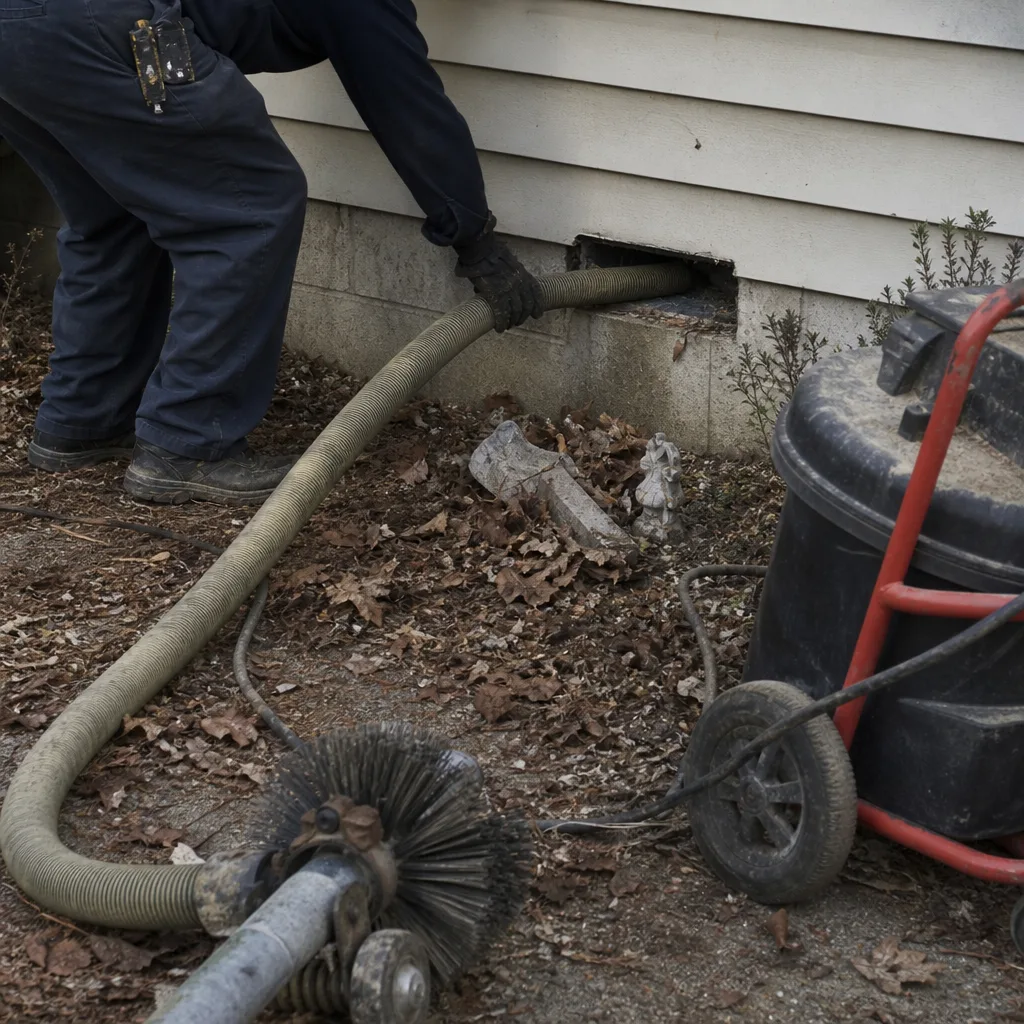 Before
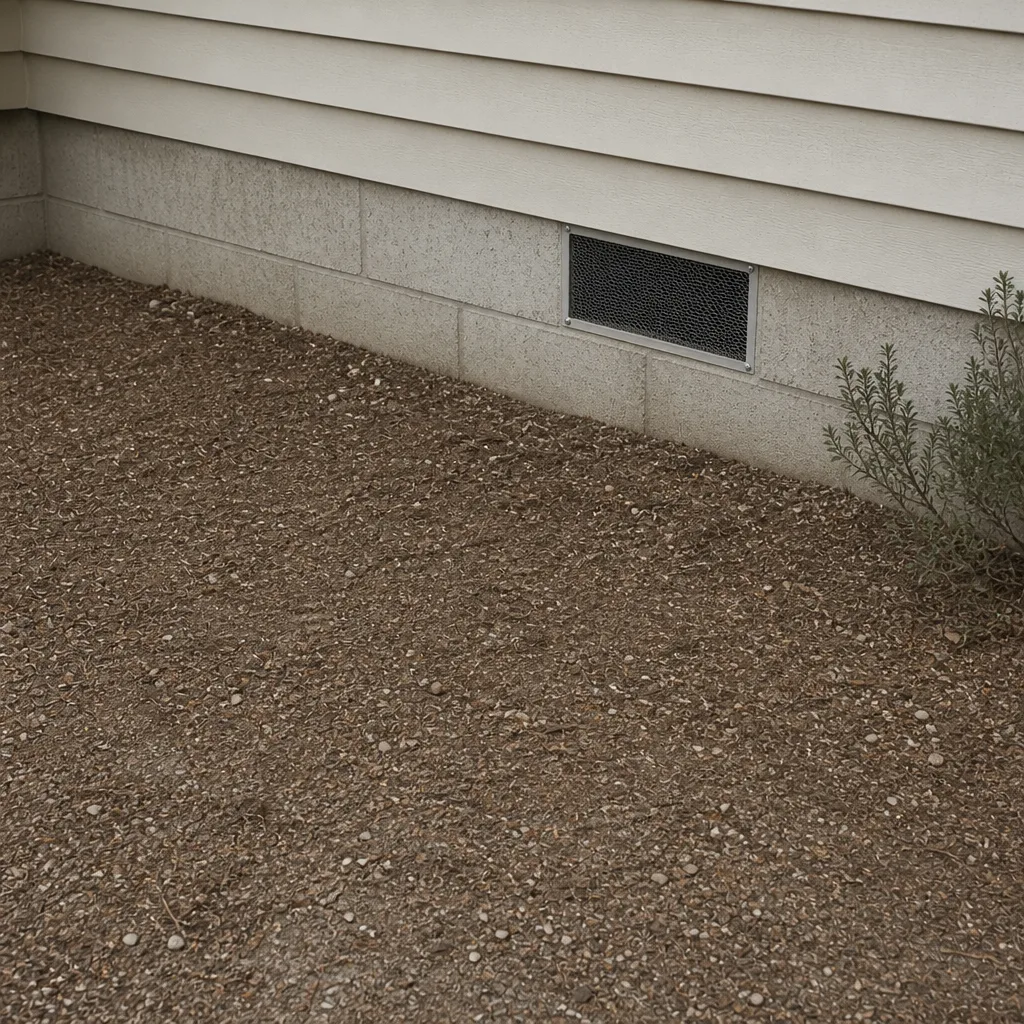 After
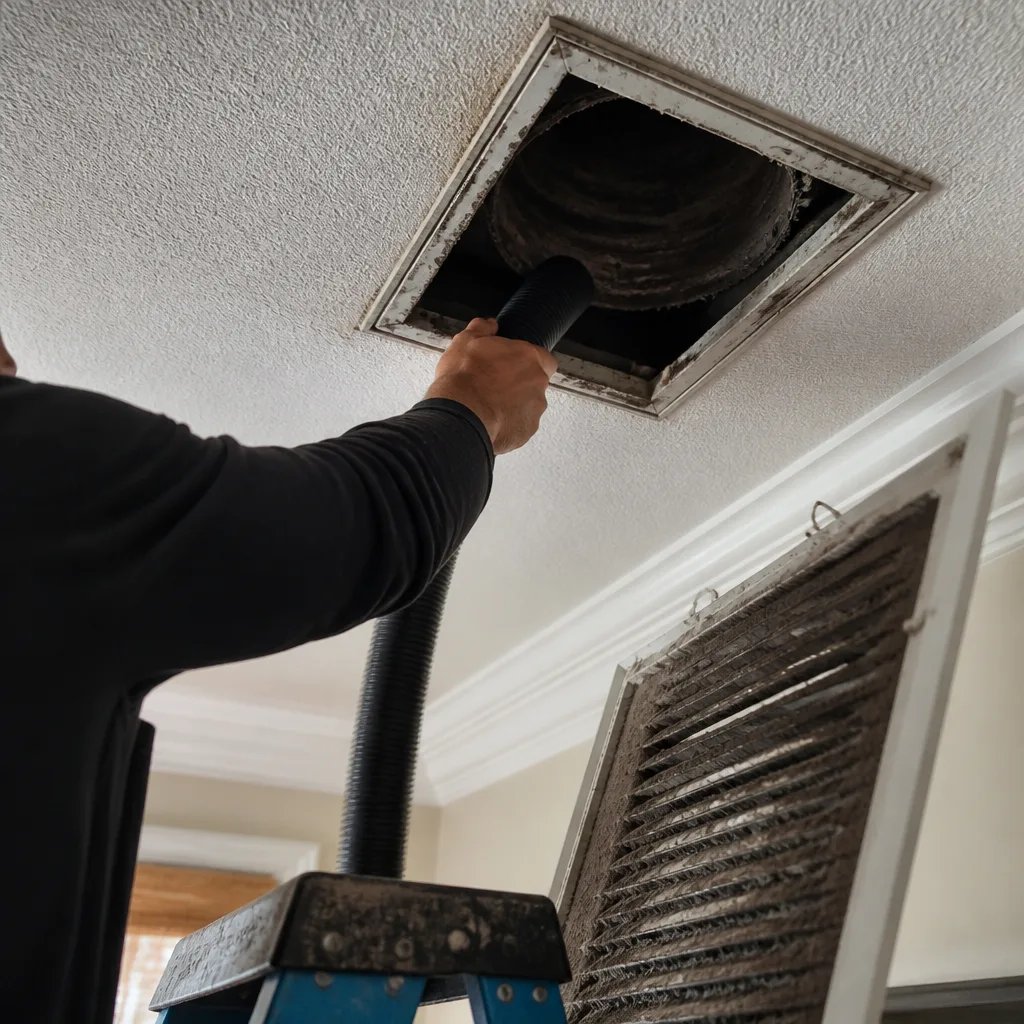 Before
 After
 Before
 After
When to Call a Professional
Call a professional when you’re seeing visible dust blowing from registers after a cleaning, when a dryer is taking noticeably longer to dry a load, when you’ve just finished a renovation and want the construction dust removed, or when you’re buying a home and want to know what’s in the ducts before you close. Call when anyone has told you the ductwork needs repair, so you can get a second opinion on whether that repair is cleaning-adjacent or truly mechanical work that requires a permit.
Air Duct Cleaning Hamilton Lakes offers free estimates in Hamilton Lakes. Call (877) 792-7445. We answer 24/7. Fast dispatch from 7am to 7pm, Sunday through Friday. Our technicians have up to 11 years of experience, and we use Rotobrush and Nikro equipment because we want to be able to show you exactly what we removed.
Frequently Asked Questions
No. Routine air duct cleaning and sanitizing do not require a permit in North Carolina because they’re maintenance activities that don’t alter the mechanical system. The moment the work involves replacing duct material, rerouting runs, or sealing as part of a larger alteration, a Forsyth County mechanical permit generally applies. Call (877) 792-7445 for an exact quote on cleaning, and we’ll tell you plainly if what you need is beyond our scope.
Ductwork repair that involves replacing or modifying materials is mechanical work and generally falls to a licensed HVAC contractor operating under a Forsyth County permit. Cleaning and surface sanitizing can be done by a duct cleaning company without that license. We handle duct repair and sealing ourselves as one of our core services, and we’re clear about which parts of a job require a separate licensed trade.
It depends on the extent. Light surface growth can typically be resolved with mechanical cleaning followed by a sanitizing treatment, and we use Guardsman products for that. Colonized porous materials that have to be removed fall under North Carolina’s mold remediation statute and require a licensed remediation contractor. We tell you which situation you’re in before recommending anything.
Often, yes. A buyer’s home inspector will typically flag visible duct modifications that don’t have a corresponding permit record. Forsyth County maintains permit history by address as a public record, so the buyer’s side can verify. If you’ve had duct-adjacent work done, keeping the invoice, photos, and any permit numbers is the simplest way to avoid a problem at closing.
Pricing depends on the size and configuration of your system, the number of runs, and the condition we find. We don’t quote per-vent prices because that model is what leads to surprise invoices once the crew is on site. We give one flat price per system, agreed before work starts, based on a written estimate. Call (877) 792-7445 for a free estimate.
Usually because something is being left out: the camera inspection, the negative-air containment, the HEPA filtration, or the licensing question. A low quote that becomes a larger invoice once a technician is on site is the pattern this industry is known for. We price the whole system up front, show before-and-after photos of your own ducts, and don’t add work without a written scope. Call (877) 792-7445 to talk through what your system actually needs.
The Bottom Line
Duct cleaning itself sits outside the permit system in North Carolina. What follows it sometimes doesn’t. Duct board replacement, rerouting, sealing as part of an alteration, and mold remediation all cross into licensed and permitted territory, and in Forsyth County that means a mechanical permit through the county inspections office and a contractor licensed for the specific work. The practical rule for Hamilton Lakes homeowners is simple: know what category the work falls into before you agree to it, get it in writing, and keep the documentation. A clean duct system is a good thing. A clean duct system with a paper trail is a better one.
If you want a straight answer about what your ducts need and what falls within a cleaning scope, we’re glad to look. Call (877) 792-7445 for a free estimate. We answer 24/7. Fast dispatch from 7am to 7pm, Sunday through Friday. Equipment you can verify, photos you can keep, and a clear line between what we do and what needs a licensed trade.
For the broader picture of how cleaning, sealing, and air quality work fit together, start with air duct cleaning in Hamilton Lakes and we’ll point you to the right page.
Written by the team at Air Duct Cleaning Hamilton Lakes.