
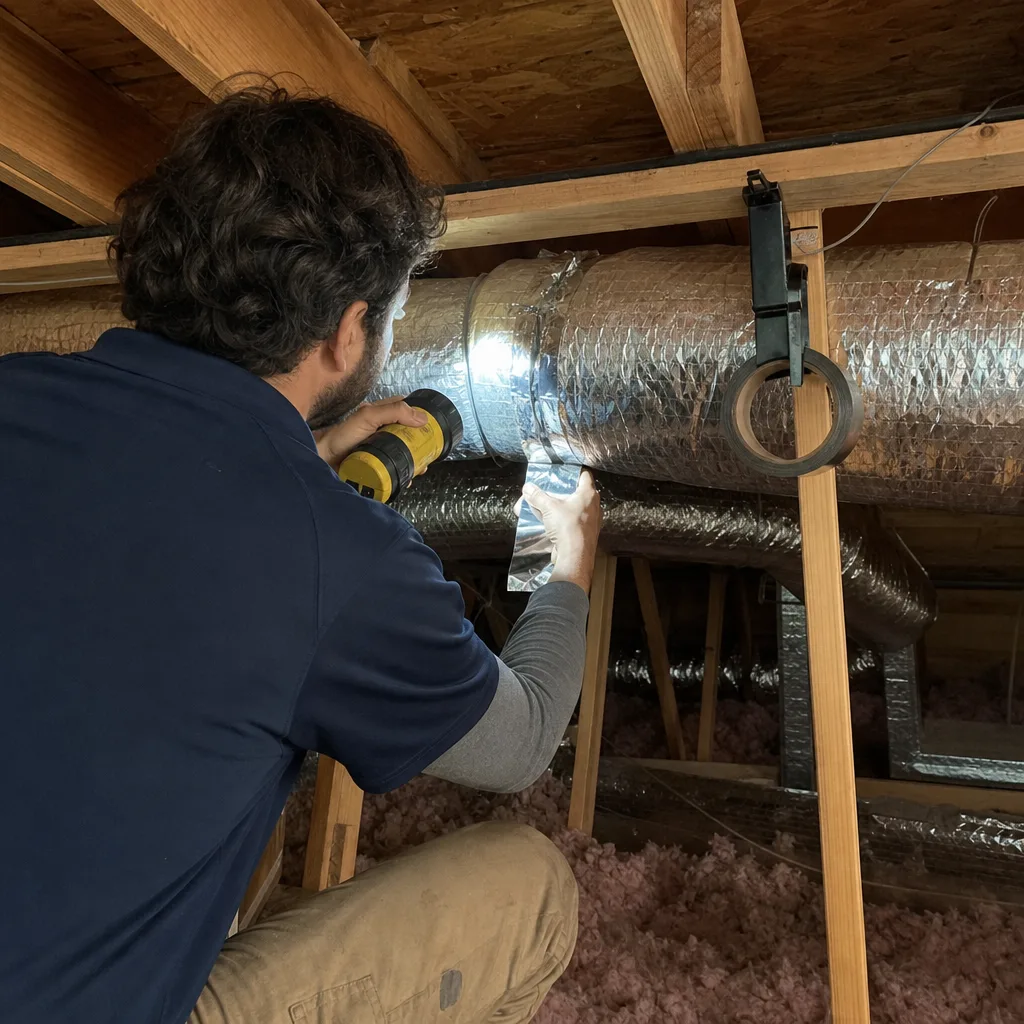
Last updated November 23, 2026
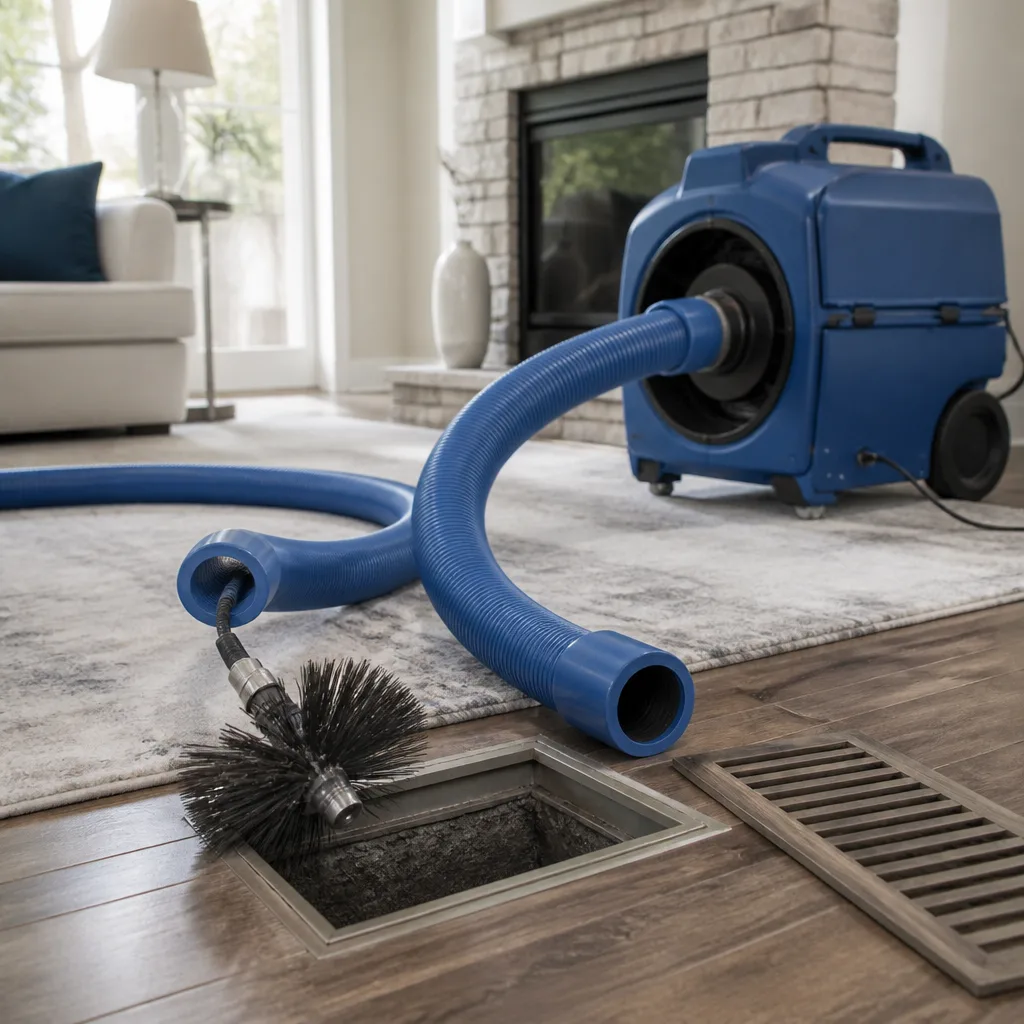 Whole-home duct cleaning
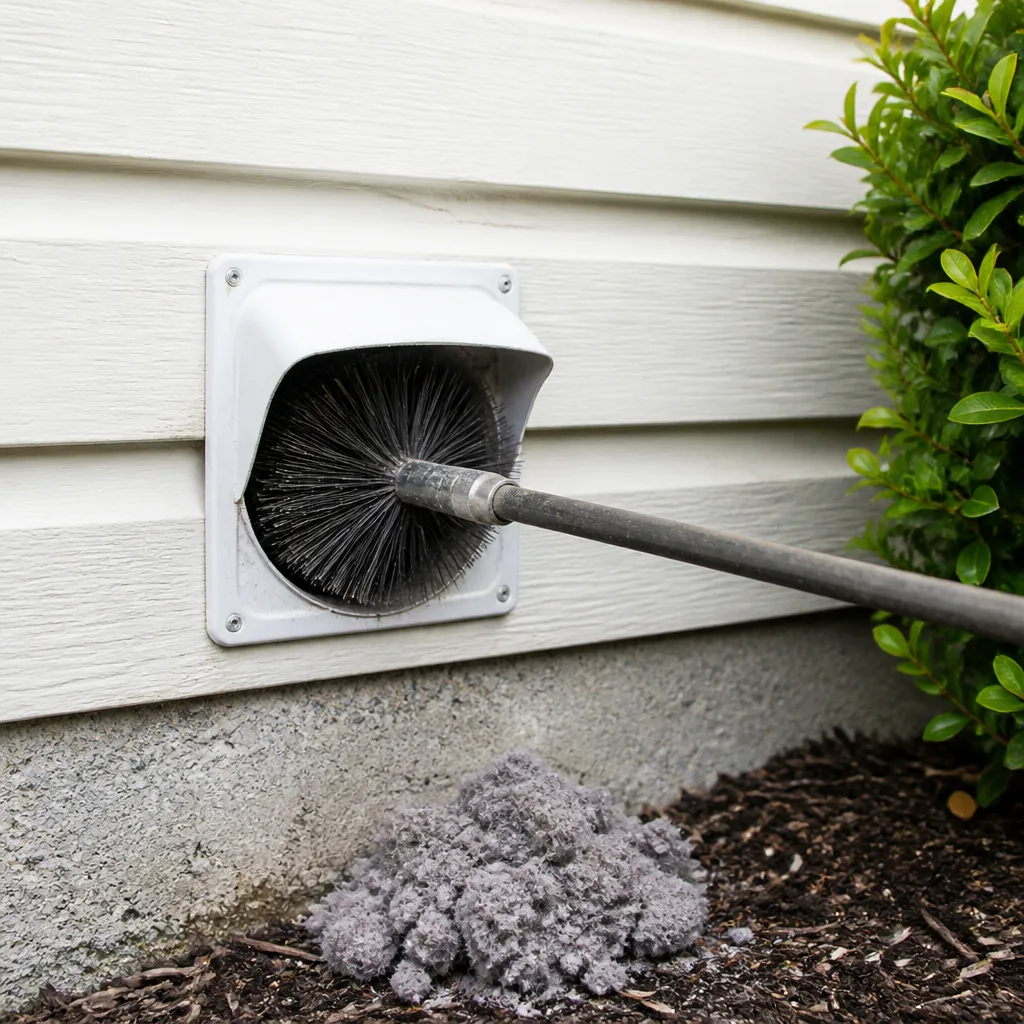 Dryer vent cleaning
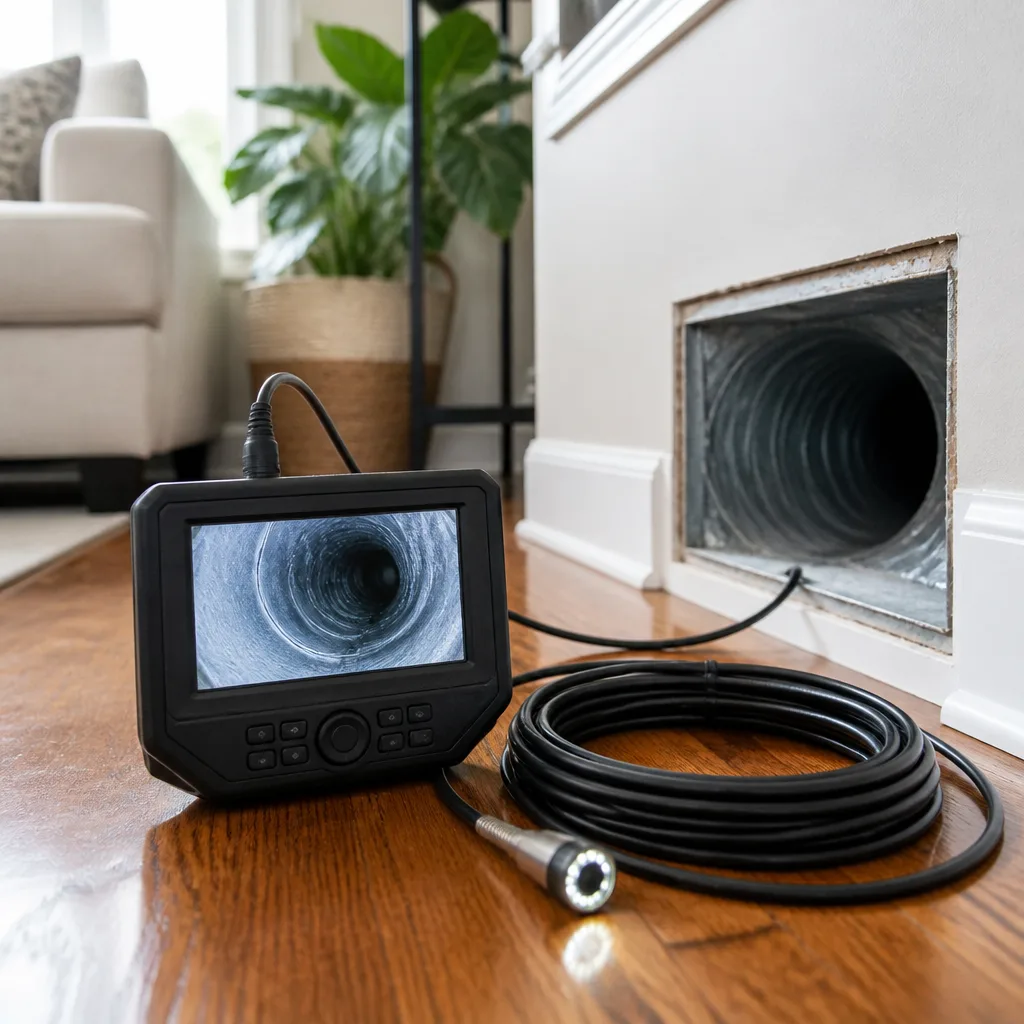 Camera inspection
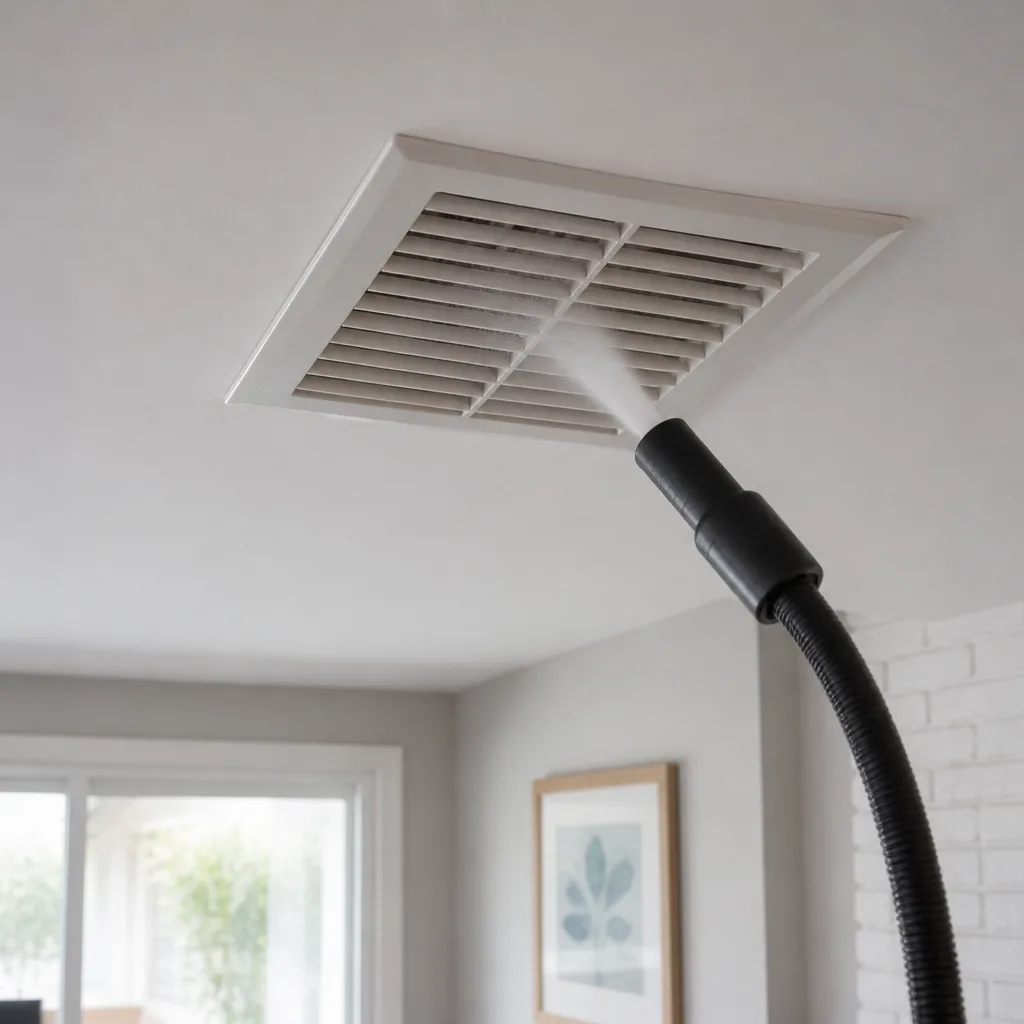 Sanitizing & deodorizing
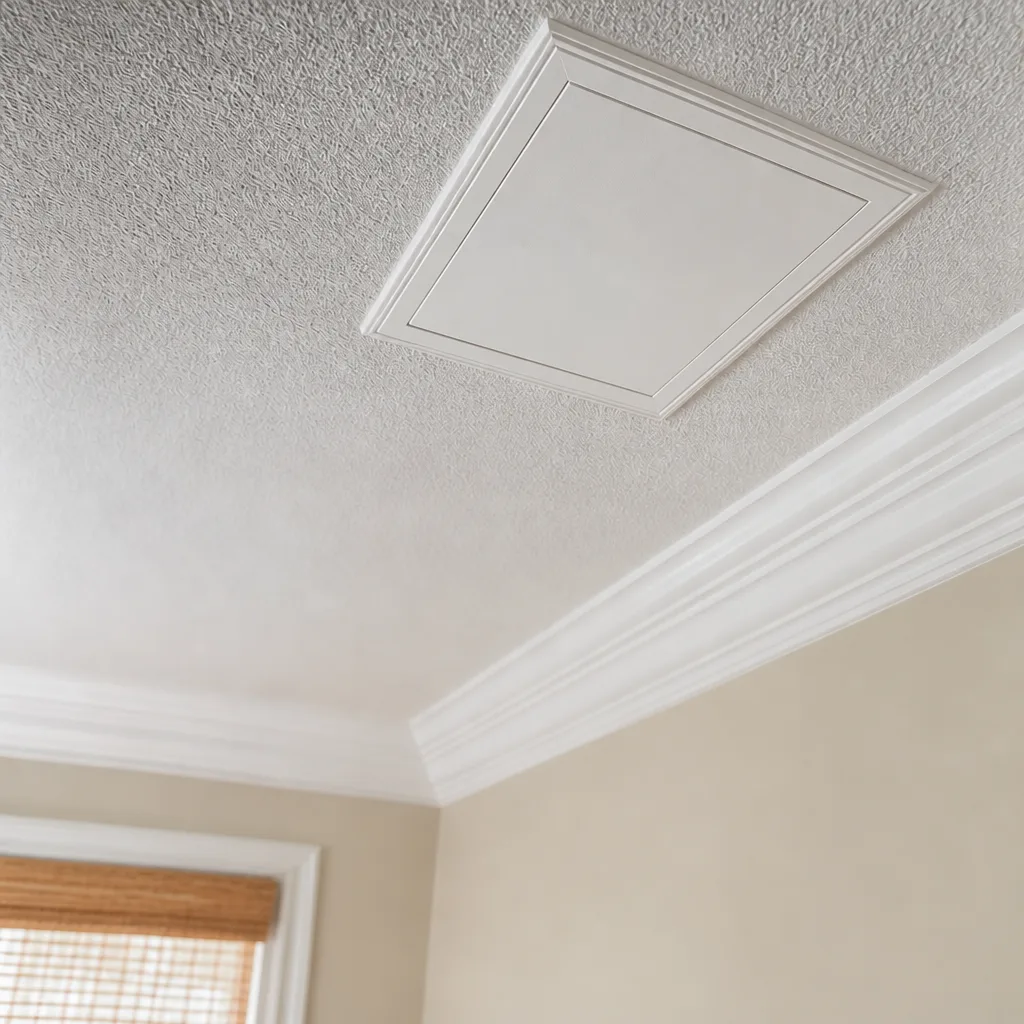
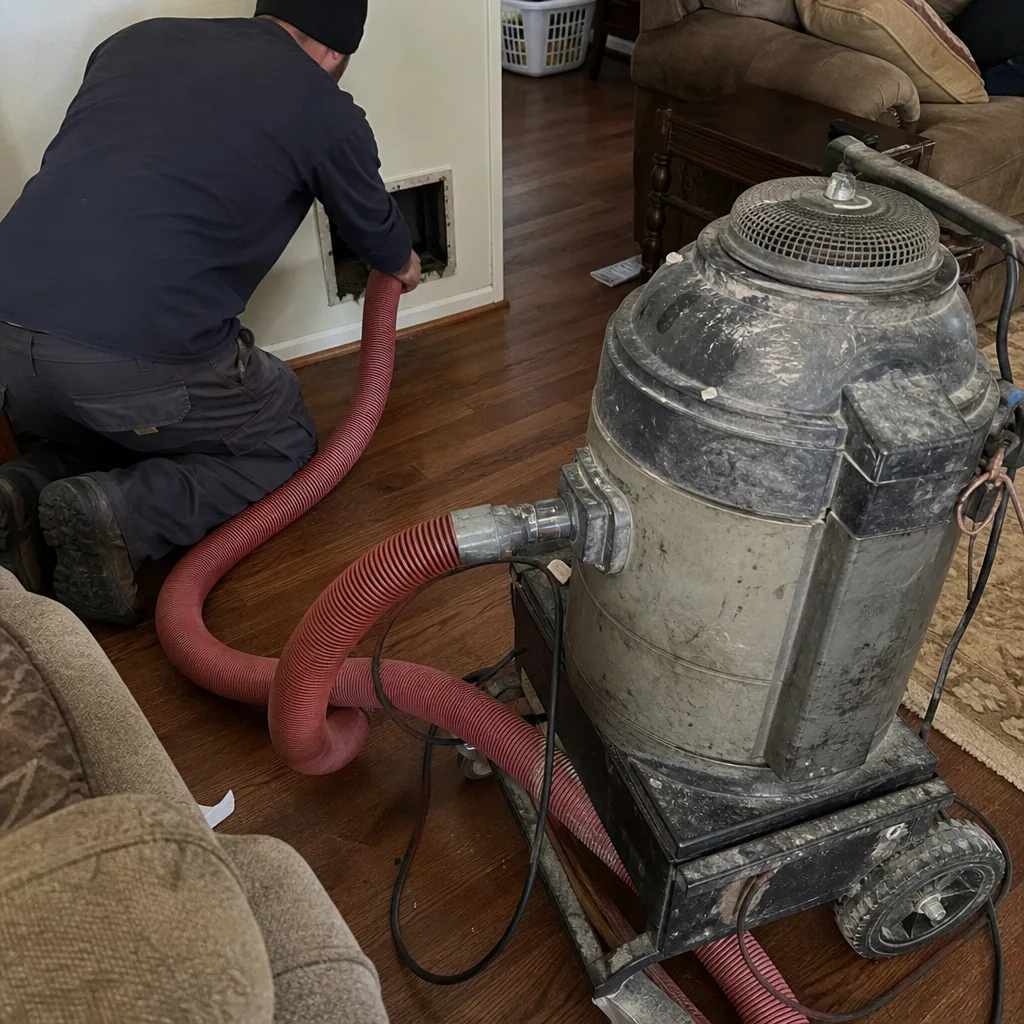
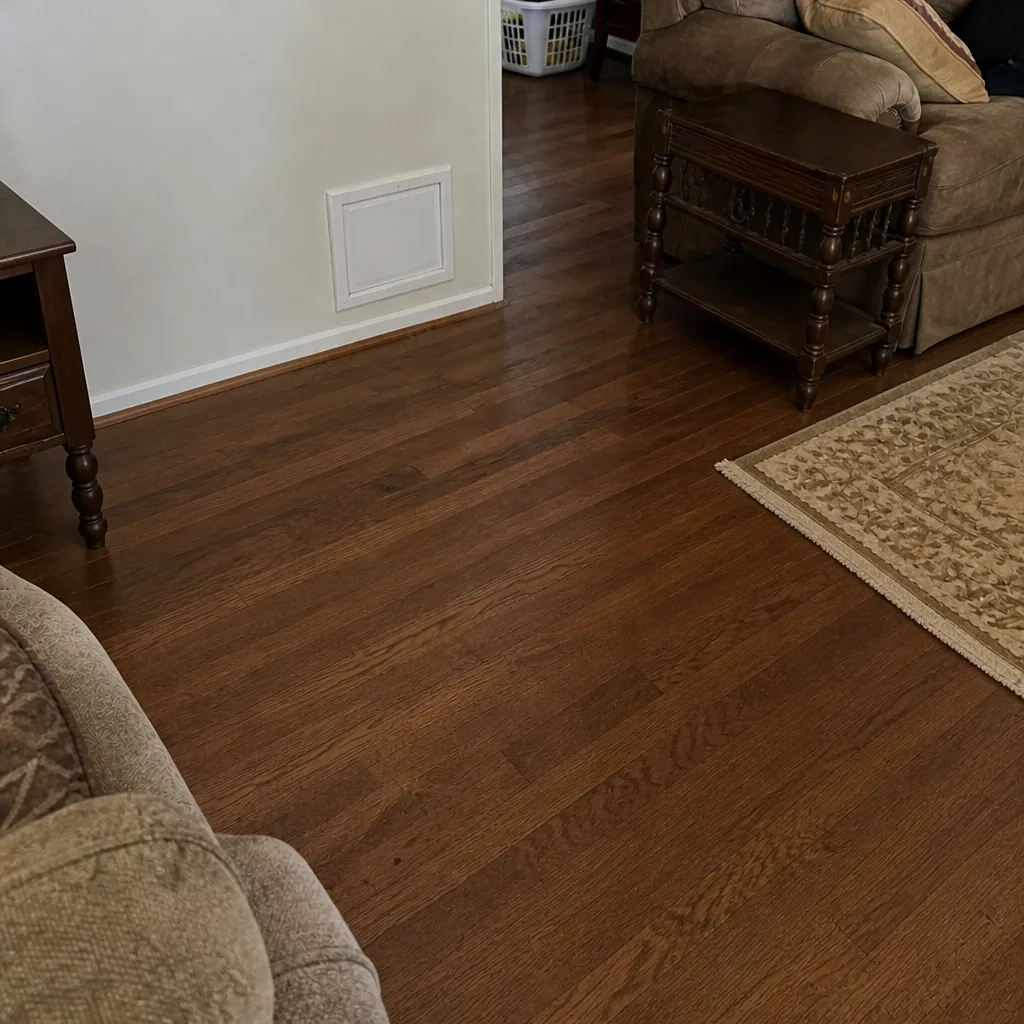
Whole-system duct and dryer vent check with before-and-after photos - you see exactly what came out of your vents
That "$99 whole-house special" is a bait ad - the real number appears once they are in your hallway, or the "clean" is a shop-vac at the register. We photograph the inside of your ducts before and after instead.
Air Duct Cleaning Emergency Preparedness Guide for Hamilton Lakes Homes
Most homeowners treat duct cleaning as routine maintenance, something you get to eventually. That framing falls apart the moment water, fire, or wind gets into the system. Running your HVAC after a basement flood before the ductwork is inspected doesn’t just spread moisture. It aerosolizes whatever biological growth has started in your return air system and delivers it to every room in the house. The same logic applies after smoke damage, storm debris, or a renovation gone sideways. This guide covers the emergency scenarios where ductwork stops being a maintenance item and becomes an active hazard, what a technician actually checks, and how to document it all for an insurance claim. If you live in Hamilton Lakes, the specifics here are written for the housing and weather you deal with.
Quick Answer
After a flood, fire, storm, or major renovation, ductwork should be inspected before the HVAC system runs again. Contaminants inside the ducts – moisture and biological growth, soot and combustion byproducts, debris and pests – get blown into every room once air starts moving. A professional assessment determines whether cleaning, sanitizing, repair, or in some cases replacement is the right response. For Hamilton Lakes homes, that assessment is free and worth scheduling the week the damage happens. Call (877) 792-7445 to book one.
Styles & brands we work with
- Whole-home duct cleaning
- Dryer vent cleaning
- Camera inspection
- Sanitizing & deodorizing
Why Emergency Duct Scenarios Are Different From Routine Cleaning
Routine duct cleaning removes accumulated dust, dander, and settled particulate. Emergency duct work deals with active contamination that is still spreading. The difference matters because the wrong response can make things worse. Rushing to restart the HVAC after water intrusion pushes moisture and any growth that’s begun into the whole house. Skipping duct evaluation after a fire spreads soot odor back through rooms that were already cleaned. Ignoring exterior terminations after a wind event leaves an open door for debris and pests that keeps feeding the problem.
In our experience, the emergencies Hamilton Lakes homeowners face fall into four categories: water intrusion from a failed sump, burst pipe, or storm-driven flooding; fire and smoke damage from a kitchen, chimney, or electrical fire; wind-driven debris and pest infiltration after a severe storm; and construction dust from a renovation where registers weren’t sealed. Each has its own protocol, and each one benefits from knowing what to check before the system runs again.
It’s also worth understanding what your system does when it’s running. Your return air ducts are the intake side of the system, pulling air from the rooms and delivering it to the air handler. Whatever is sitting in those return runs gets drawn across the blower and pushed back out through the supply side. That loop is exactly why a compromised return air system is the first thing a technician inspects after any water, smoke, or debris event.
Post-Flood Protocol: When Duct Inspection Becomes Mandatory
Duct inspection becomes mandatory the moment standing water, high humidity, or wet building materials in the HVAC path are present. The return air system is the priority because moisture collects there first. A technician looks for three specific things: visible moisture or staining inside the duct runs, any sign of biological growth on duct interior surfaces or the air handler cabinet, and compromised duct connections or insulation where water has weakened the assembly.
The order of operations matters. Here’s how a post-flood duct assessment should run:
- Do not run the HVAC system, the furnace fan, or any air handler until the ducts are inspected. Running it recirculates moisture and any growth into every room.
- Photograph and document the water line, the affected rooms, and any visible moisture in registers or duct openings before anything is moved or dried.
- Have the duct system inspected with the HVAC system off – visual inspection of the return runs, the air handler plenum, and any accessible duct interior.
- Clean and sanitize mechanically before interior surfaces are disturbed any further. This is where HEPA-rated equipment matters; a shop vacuum will redistribute what it pulls loose.
- Dry the system thoroughly and verify moisture readings before the HVAC is restarted.
- Repair or replace any duct sections that stayed wet long enough to lose structural integrity or insulation value.
That fifth step is where a lot of rushed jobs go wrong. A duct system that looks dry to the touch can hold moisture inside flex duct insulation for days. If a contractor wants to restart the HVAC before moisture readings are taken, that’s a red flag. For Hamilton Lakes homes with basement or crawlspace duct runs, this is the scenario you’re most likely to face. Professional-grade equipment matters here: Nikro HEPA-rated vacuum units and Abatement Technologies negative-air machines keep dislodged material contained instead of blowing it into the living space.
Fire and Smoke Damage: What Soot Does Inside Ductwork
Fire produces two distinct problems inside a duct system. Soot – fine carbon particulate – coats duct interior surfaces and holds odor. Combustion byproducts, including acidic residues and volatile organic compounds from burned plastics, adhesives, and synthetic materials, leave a residue layer that standard dust cleaning won’t remove. Odor that returns a few days after the fire department leaves is usually coming from the ducts and the air handler, not the rooms that were cleaned.
How soot behaves depends on the fire. Fast, hot fires tend to produce dry, powdery soot that travels farther into the system. Smoldering fires leave oily, sticky residue that adheres to duct walls and requires a different removal approach. A technician assessing fire-damaged ductwork will check:
- The return air grilles and the return duct runs, which usually take the heaviest soot load.
- The air handler cabinet and blower wheel, where soot collects and can throw the blower out of balance.
- Any flexible duct sections, where soot embeds into the inner liner and can’t be fully removed by cleaning.
- Odor presence at each supply register after cleaning, which tells you whether residual contamination remains.
When cleaning isn’t enough: if flexible duct sections are saturated with soot or oil residue, if the duct interior shows heat damage or melting, or if odor returns after a proper mechanical cleaning and sanitizing treatment, replacement of the affected runs is the right call. Repairing and sealing compromised sections is often part of the same visit. Because we handle duct repair and sealing alongside cleaning, we can make that call and complete the work without handing the job to a second contractor. For a deeper look at the cleaning process itself, see our page on air duct cleaning.
Storm Debris Infiltration: Checking Exterior Duct Terminations
After any major wind event in Hamilton Lakes, exterior duct terminations should be inspected within the first week. Strong wind drives debris – leaves, pine straw, roofing granules, insulation fragments – into any open termination, and it also loosens vent caps and grilles that were holding pests out. A compromised termination means the problem is ongoing every time the system runs.
Here’s a simple exterior check you can do yourself after the storm has passed and it’s safe to go outside:
- Walk the exterior of the home and locate every duct termination – the dryer vent, any fresh-air intake, and any exterior HVAC vent cap.
- Look for missing, cracked, or bent caps and grilles. A cap that’s dangling or gone is an open entry point.
- Look inside the termination for visible debris blocking the opening or insect or rodent activity around the edges.
- Check for any pest entry points – gaps, torn screens, or nesting material.
- Note anything you find; a technician will confirm the interior condition of the duct run.
What entry of debris actually looks like on the inside is different from the outside. Debris that’s entered the system creates airflow restriction, which shows up as weak airflow at specific registers or a system that seems to strain. Pests that have entered leave droppings, nesting material, or chewed duct liner, all of which contaminate the air path. If you’ve had any kind of rodent or insect activity around your vents, the ducts need cleaning and sanitizing, not just a look. Storm-triggered duct inspection is also a good moment to schedule the dryer vent cleaning you’ve been putting off, since a clogged dryer vent is a fire risk regardless of storm damage.
Construction Emergencies: When Your Renovation Compromises the Ducts
A renovation that leaves registers unsealed during demolition or drywall work fills the duct system with construction dust, drywall particulate, and insulation fibers. The immediate risk is a system full of material that’s now being distributed through the house every time the HVAC runs. The longer-term risk is that fine drywall dust settles inside the blower and evaporator coil, reducing efficiency and, over time, shortening the life of the equipment.
The protocol when a contractor has compromised the ducts:
- Ask the contractor to seal every register and return grille with plastic and tape before the next work phase begins.
- If work has already started and dust is present, keep the HVAC system off until the ducts are cleaned.
- Document the situation with photos – register openings, visible dust, any unsealed supply and return terminations.
- Do not run the HVAC system to “test it” until the ducts are cleaned. Testing pushes the dust through.
- Schedule a full duct cleaning and a blower and coil check after the renovation is finished, before the system goes back into regular use.
Ductwork that’s been compromised with drywall dust should be cleaned with equipment that captures the debris. A rotary brush system combined with a HEPA-rated vacuum – the Rotobrush and Nikro equipment we use – agitates and captures the material instead of blowing it into the room. If the renovation also disturbed flex duct or disconnected a run, repairing and sealing the compromised section is part of completing the job properly. Consider scheduling the cleaning as part of a broader HVAC cleaning so the blower, coil, and cabinet aren’t left storing what the ducts gave up.
See the difference
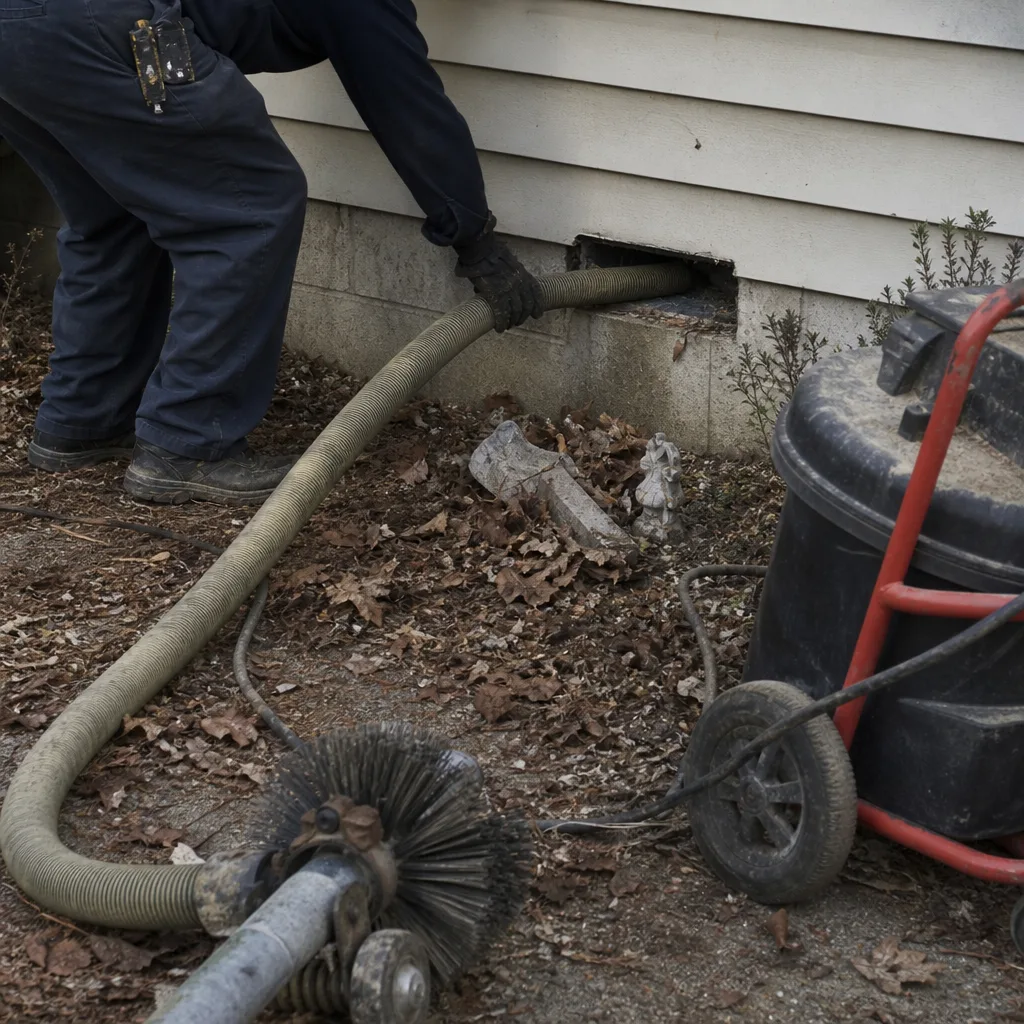 Before
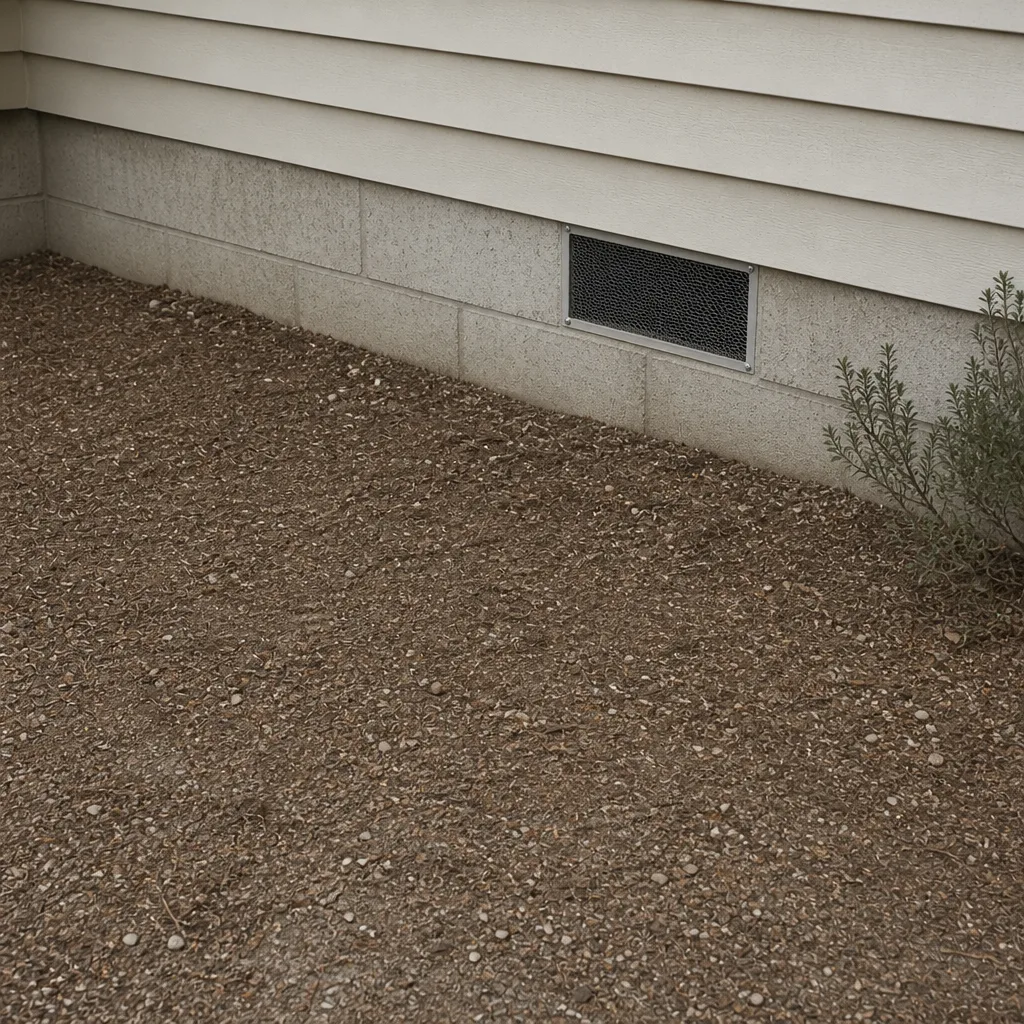 After
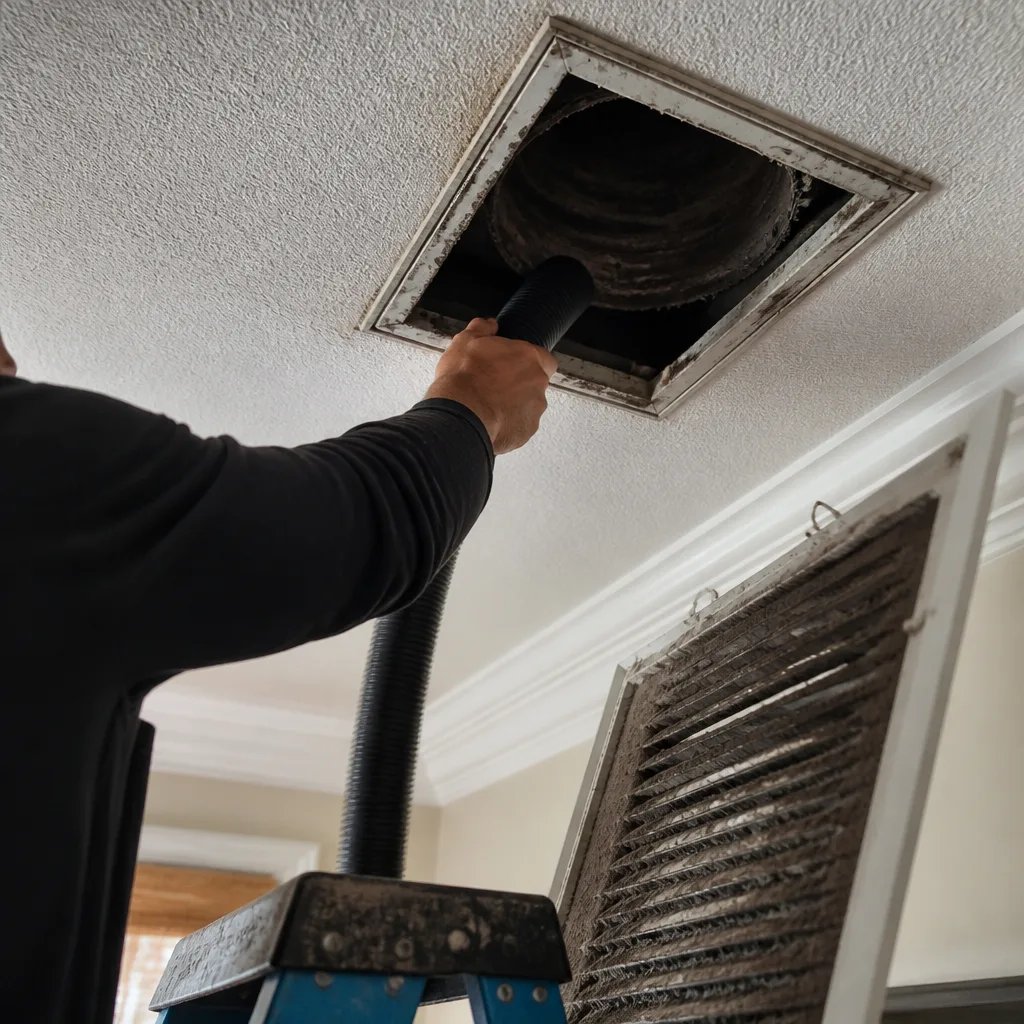 Before
 After
 Before
 After
Insurance Documentation: What to Collect When Ducts Are Part of the Claim
Most homeowner policies cover duct damage caused by a covered peril – water, fire, or wind – but the claim often stalls because the documentation is thin. Insurance adjusters need evidence that the duct system is genuinely damaged or contaminated, that cleaning or replacement is a covered necessity, and that the work was performed. Collecting the right material at the right time is the difference between a smooth claim and a frustrating one.
What to gather before, during, and after the work:
- Pre-work photos: the water line, soot staining, visible debris at registers, damaged exterior terminations, and construction dust at open registers.
- A written assessment report describing what was found – the specific duct runs affected, evidence of biological growth or soot residue, and the recommended scope of work.
- Before-and-after photographs of the duct interiors. This is standard practice with a professional cleaning, and it’s the strongest proof the work was actually done.
- The invoice and work description itemized by the specific services performed, not just a single line item.
- Any follow-up recommendations, such as sanitizing or repair work, in writing, especially if that work is part of the claim.
Keep a photo log with dates and a short note about each image. If your insurer asks for a professional assessment, that’s exactly what our free estimate visit provides – documentation of the duct condition and a written scope of work, not a sales pitch. For a broader look at the process, our page on Air Duct Cleaning Hamilton Lakes walks through what a scheduled visit involves.
Choosing the Right Equipment for Emergency Duct Work
Emergency duct cleaning is not the same job as routine maintenance, and the equipment requirement is the main difference. Consumer vacuums and light-duty shop vacs pull up visible loose material and redistribute the rest. The professional standard for any cleaning that disturbs contamination – biological growth, soot, drywall dust – is a HEPA-rated vacuum with a rotary brush system and negative-air containment.
Here’s why each piece matters in an emergency scenario:
- Rotobrush rotary brush systems agitate the duct interior surface. The brushing is what removes adhered soot, biological growth, and construction dust – a vacuum alone doesn’t.
- Nikro HEPA-rated vacuum units capture what the brush loosens. The HEPA rating is what keeps fine particulate out of the return air stream during cleaning.
- Abatement Technologies negative-air machines create a pressure differential so dislodged debris is contained instead of escaping into the room.
You can look these brands up and verify the equipment. Ask any duct cleaning contractor what they use; a company working with this kind of equipment will tell you without hesitation. After emergency cleaning, air quality sanitizing treatments – we work with Guardsman and other brands – address biological contaminants that survive mechanical cleaning. Post-cleaning filtration recommendations often involve Honeywell or Aprilaire products, since those are the systems we’re most familiar with from regular service work.
Common Mistakes to Avoid
- Restarting the HVAC before the ducts are inspected. This is the single biggest post-flood mistake and it turns a contained water problem into a house-wide air quality issue. Keep the system off until the ducts are checked.
- Using a shop vacuum to clean a contaminated duct. A shop vac pulls material up and blows the fine particulate out through the exhaust. On a Hamilton Lakes post-flood or post-fire job, that particulate is exactly what you’re trying to keep out of the air.
- Skipping exterior termination checks after a wind storm. Most homeowners check the roof and the gutters and never look at the vent caps. Missing caps and debris ingestion in the duct runs are the reason a system underperforms months after a storm.
- Letting a renovation run without sealing registers. Drywall dust in a duct system is a mess that gets distributed through the house over months. Seal the registers before demolition starts and clean afterward.
- Cleaning soot damage without sanitizing. Mechanical cleaning removes visible soot. Odor and residues on duct surfaces stay unless the system is treated with a sanitizing product, which is why so many post-fire complaints come back within a week.
- Not documenting duct damage for insurance. Photos taken after the cleanup crew has moved everything are worth much less to an adjuster than photos taken before. Take them the day of the event.
- Hiring a cleaning-only contractor when repair is also needed. If the ducts are damaged, disconnected, or crushed, the cleaning is only half the job. Look for a company that handles repair and sealing too.
When to Call a Professional
Call a professional if any of the following is true: the HVAC system was running during or after a flood event, there was a fire in the home and the ducts have not been inspected, a storm has knocked down caps or left debris visible at any exterior termination, or a renovation is underway or just finished and registers were not sealed. Also call if you’ve had pest activity in or around the vents, if you see staining or growth at any register, or if odor returns after the house has been cleaned following a fire.
Air Duct Cleaning Hamilton Lakes offers free estimates in Hamilton Lakes – call (877) 792-7445. We answer 24/7. Fast dispatch from 7am to 7pm, Sunday through Friday. Our technicians have up to 11 years of experience, and the local pro is licensed and insured as their state requires. We’ll document what we find, give you a written estimate with a flat price agreed before work starts, and show you before-and-after photos of your own ductwork when the job is done.
Frequently Asked Questions
Ducts should be inspected before the HVAC system runs again – ideally the same week the water is discovered. The reason is biological growth: moisture in the return air system creates a growth environment within days, and running the system distributes spores into every room. Keep the system off and schedule an inspection first.
No. Smoke damage leaves soot and combustion residues inside duct interiors that require mechanical agitation with a rotary brush and HEPA-rated capture. Consumer vacuums stir the residue and distribute it. The same applies to biological contamination after flooding. Call (877) 792-7445 for a free estimate.
Replacement is the right call when duct sections are heat-damaged, saturated with soot or oil residue, crushed or disconnected, or when odor returns after a proper cleaning and sanitizing treatment. A technician inspects duct interior surfaces and confirms. For most Hamilton Lakes jobs, cleaning, sanitizing, and repair-and-sealing handles it.
Most policies cover duct damage from a covered peril, but the outcome depends on documentation. Before-and-after photos, a written assessment report, and an itemized work description are what adjusters need. Ask for all three from any contractor, and keep your own photo log from the day of the event. Call (877) 792-7445 to schedule a documented assessment.
Pricing depends on the size of the system and the scope of the work – an emergency post-flood job with sanitizing costs more than a routine cleaning. We quote a flat price per system agreed before work starts, in writing, with no per-vent pricing and no teaser rates. Call (877) 792-7445 for a free estimate; the written estimate is the final price.
Ask for before-and-after photographs of your own duct interiors. That’s standard practice here, and it’s the clearest evidence your ducts were cleaned. A written scope of work and an itemized invoice back it up. If a contractor won’t show you pictures, that’s a reason for concern. Call (877) 792-7445 for an estimate.
The Bottom Line
Emergency duct work is about preventing contamination from spreading, not just removing dirt. After a flood, keep the HVAC off until the ducts are inspected – especially the return air system. After a fire, understand that mechanical cleaning alone doesn’t remove residues and odor, and replacement is sometimes the honest answer. After a storm, check your exterior terminations. After a renovation, seal the registers before the next phase and clean afterward. Document everything for insurance. And when the situation calls for it, get a professional assessment with the right equipment. That’s what protects your home in Hamilton Lakes.
Call (877) 792-7445 for a free estimate. We answer 24/7. Fast dispatch from 7am to 7pm, Sunday through Friday.
Written by the team at Air Duct Cleaning Hamilton Lakes.