
Last updated November 23, 2026
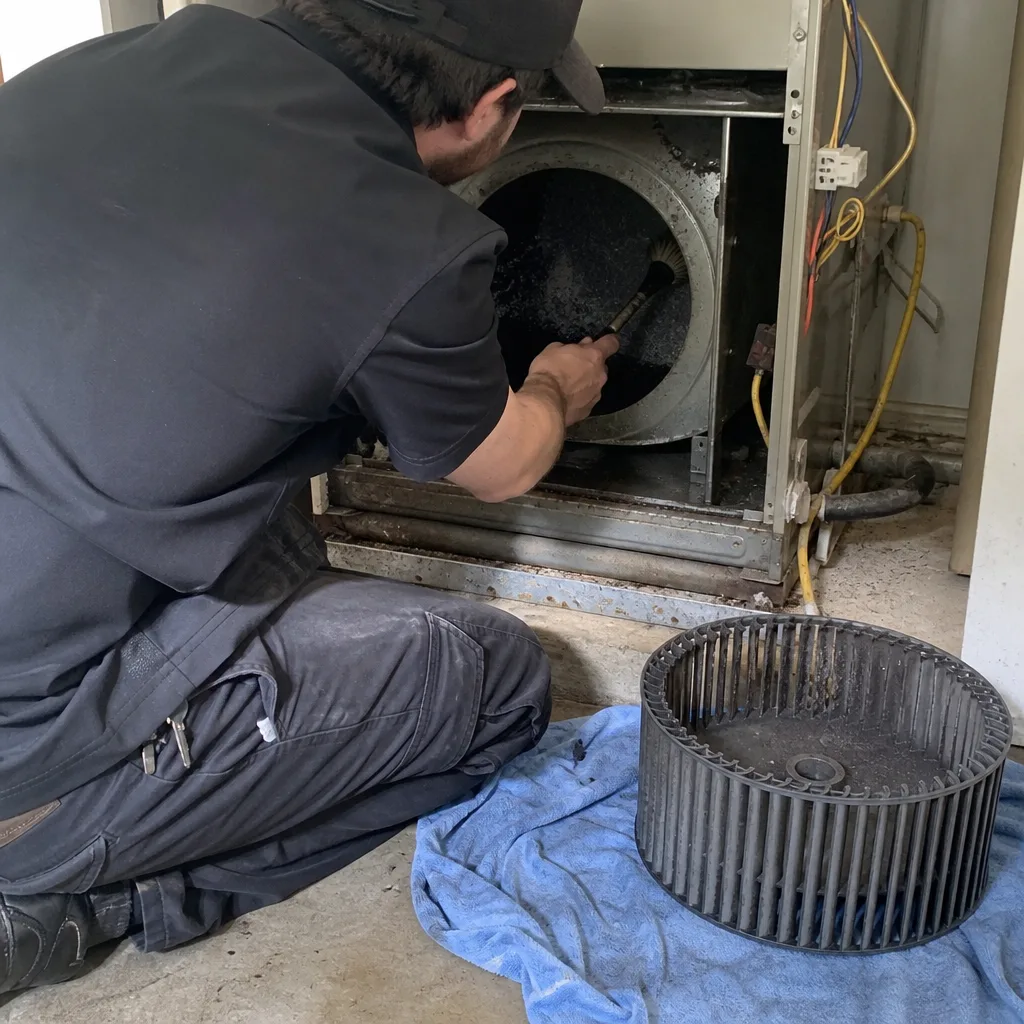
 Whole-home duct cleaning
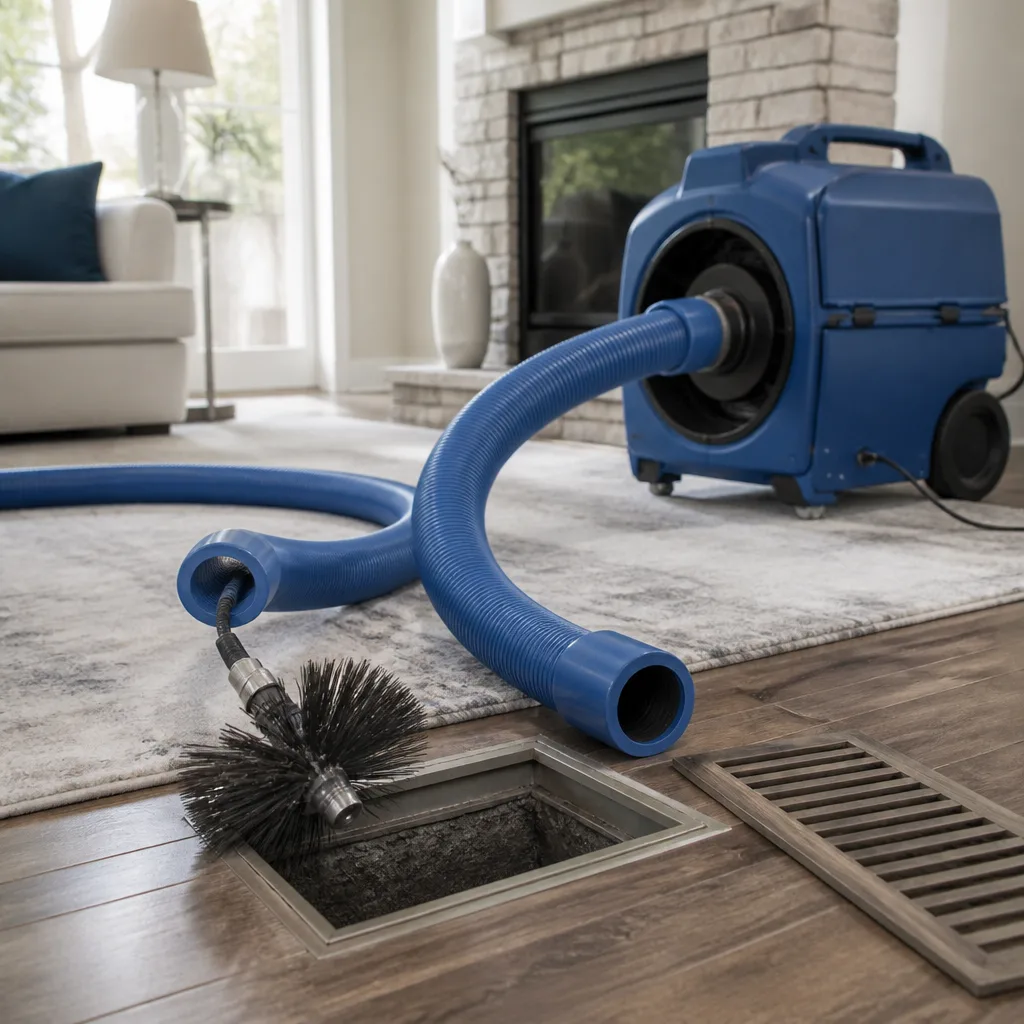
 Dryer vent cleaning
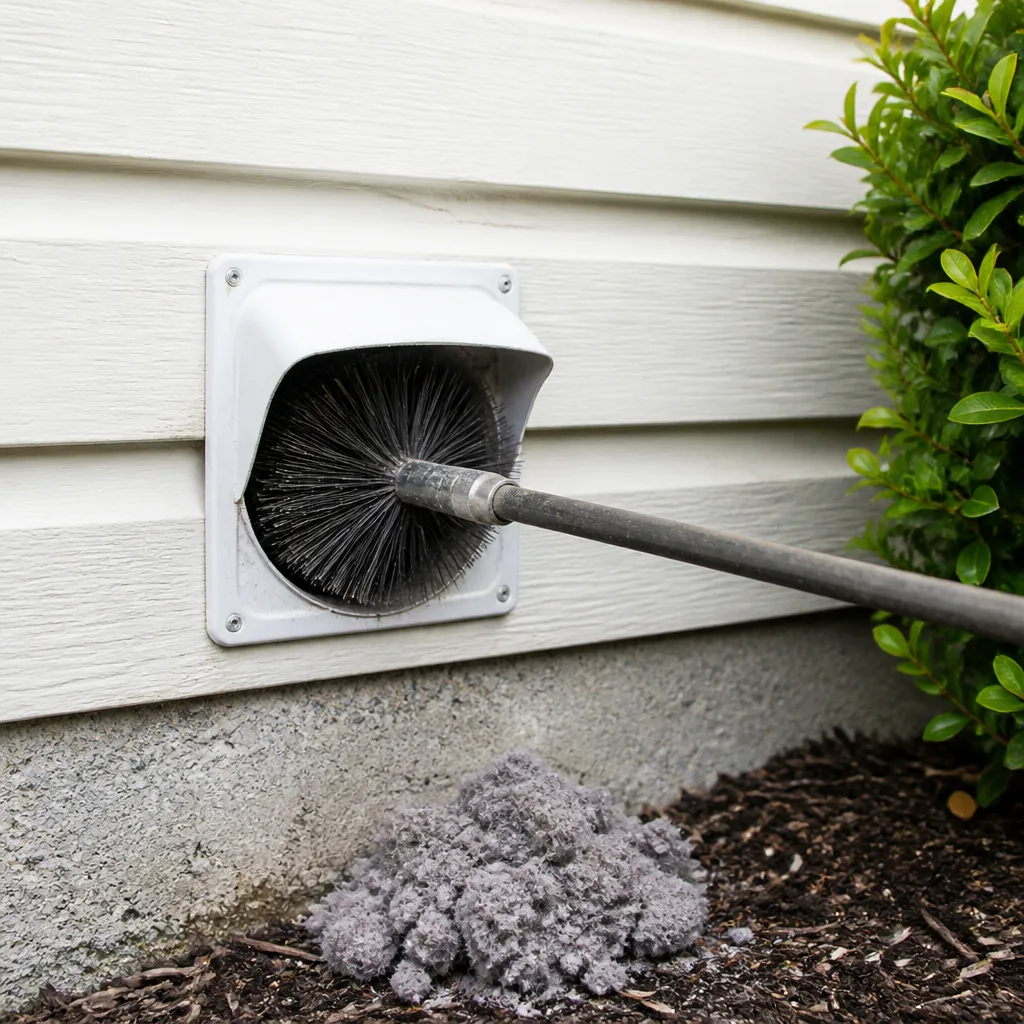
 Camera inspection
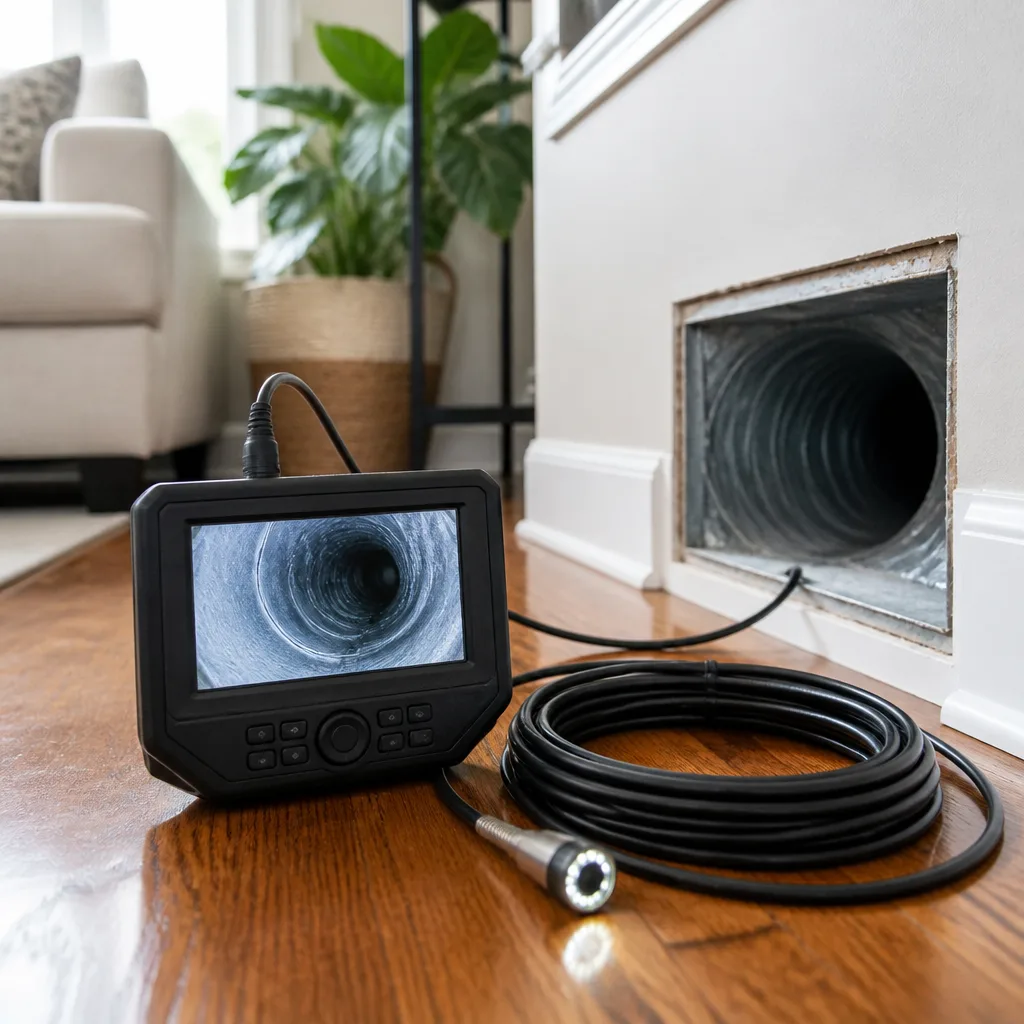
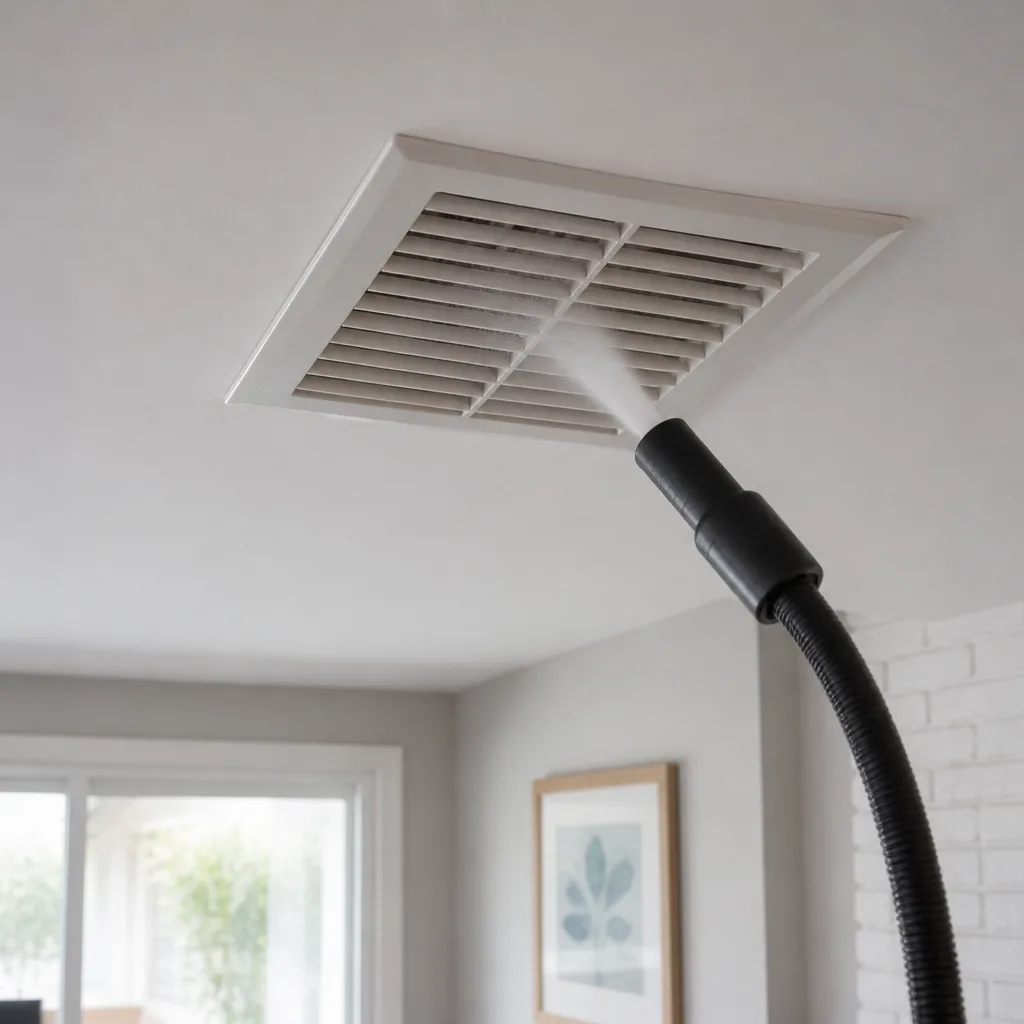 Sanitizing & deodorizing
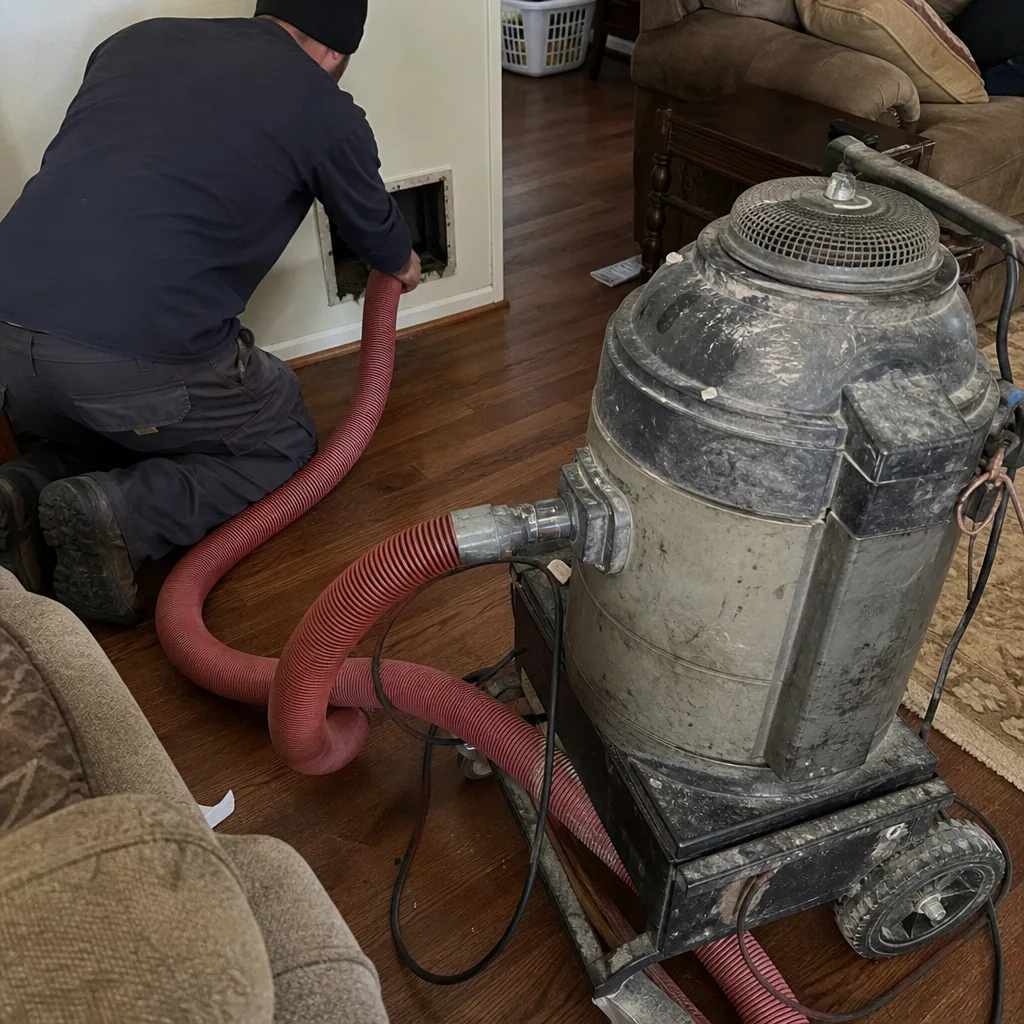
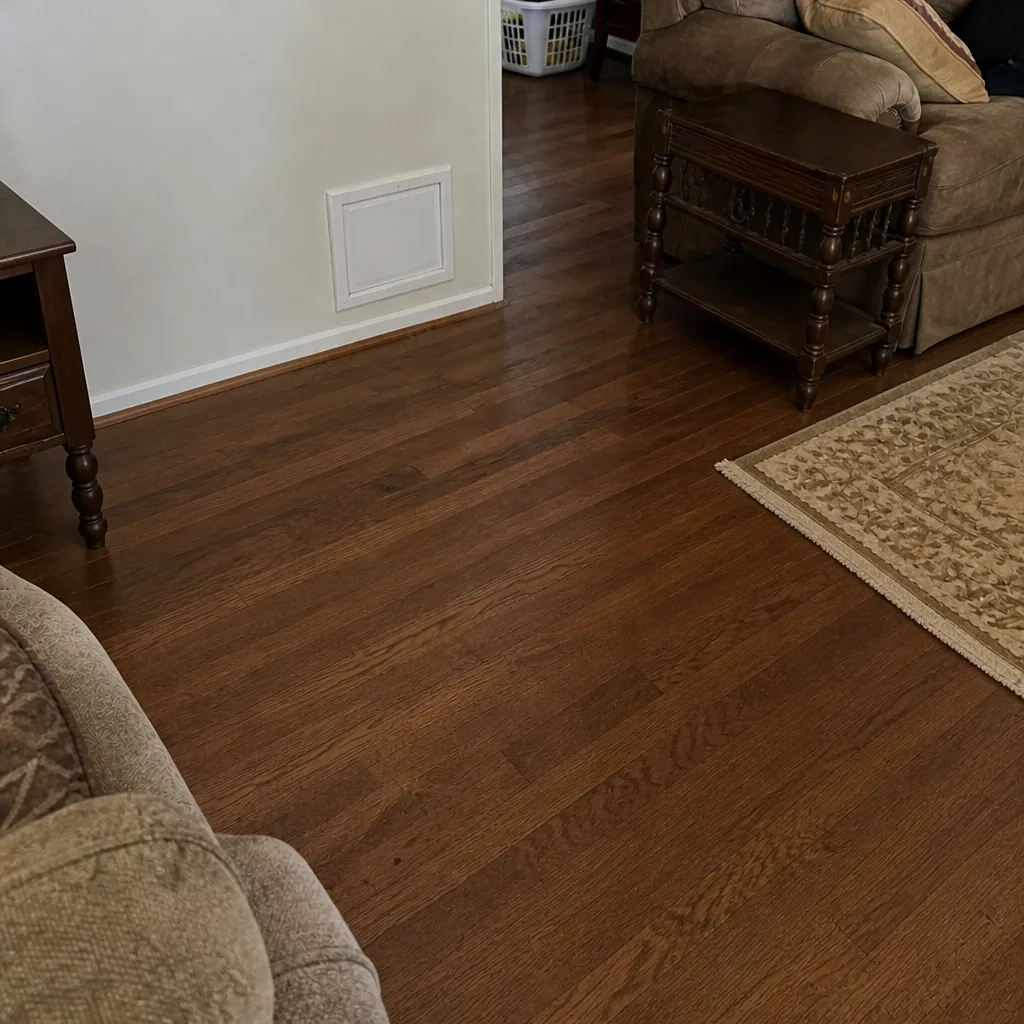
Whole-system duct and dryer vent check with before-and-after photos - you see exactly what came out of your vents
That "$99 whole-house special" is a bait ad - the real number appears once they are in your hallway, or the "clean" is a shop-vac at the register. We photograph the inside of your ducts before and after instead.
Air Duct Cleaning Cost Breakdown: The Hamilton Lakes Homeowner’s Reference for 2026
Two Hamilton Lakes homeowners in identical 2,400-square-foot houses can receive quotes of $280 and $750 for what both contractors call “duct cleaning,” and both quotes might be completely honest representations of completely different scopes of work. One crew pulls a shop vac through the accessible trunk lines and calls it done. The other runs a rotary brush through every branch run, pulls negative air on the whole system, inspects and seals what’s leaking, and cleans the dryer vent while the equipment is out. The number on the invoice tells you nothing until you understand what’s behind it. This reference breaks down every line item that drives air duct cleaning cost in the Hamilton Lakes market for 2026, so you can read a quote for what it actually covers rather than judging it by the total at the bottom.
Quick Answer
Air duct cleaning in Hamilton Lakes typically runs $280 to $750 for a whole-house system in 2026, with most single-family homes landing between $350 and $500. The range reflects real differences in duct material, system accessibility, the number of zones, and the equipment used, not arbitrary pricing. Quotes built on a per-vent model usually understate the final bill, while whole-system quotes that specify equipment and coverage give you something you can actually compare.
Styles & brands we work with
- Whole-home duct cleaning
- Dryer vent cleaning
- Camera inspection
- Sanitizing & deodorizing
Table of Contents
- What Actually Drives Air Duct Cleaning Cost in Hamilton Lakes
- 2026 Line-Item Cost Benchmarks for the Hamilton Lakes Market
- Why Per-Vent Pricing Falls Apart (And the Math That Shows It)
- Add-Ons With Real ROI vs. Add-Ons That Are Usually Upsells
- What Professional Equipment Actually Changes About the Price
- How to Compare Quotes Apples-to-Apples
- Hamilton Lakes Climate and Housing: Why Local Context Matters
- When in the Life of a Home Duct Cleaning Pays Off
What Actually Drives Air Duct Cleaning Cost in Hamilton Lakes
The price of a duct cleaning job is set by four variables that have nothing to do with the square footage of your house. Homeowners who understand these four factors can predict, within $100 or so, where a legitimate quote should land before they ever pick up the phone.
Duct Material Type
Sheet metal ductwork is the most predictable to clean and the easiest to inspect. Flex duct, which is the corrugated foil-and-wire product common in a lot of the newer construction around Hamilton Lakes, requires lower brush speeds and more careful handling because the liner can tear if a technician pushes too hard. Duct board, a rigid fiberglass product, is the most labor-intensive to clean because the interior surface is rough and holds debris. If your home was built with a mix of materials, which is common in homes that have had additions or HVAC retrofits, expect the higher end of the range.
System Accessibility
Access is the single biggest swing factor in any quote. A system with clearly marked access panels at the plenum and at each major trunk is a straightforward job. A system where the only way in is to cut new access ports, or where a finished basement ceiling means the technician has to work carefully around drywall, adds labor time. In Hamilton Lakes, homes with finished lower levels are common enough that this should be an explicit line item on any quote you receive.
Number of Zones
A single-zone system with one air handler is one scope of work. A two-zone system with separate dampers and a second trunk line is roughly double the duct length and double the brush time. If your home has a zoned system, say so when you request the estimate, and confirm that the quote addresses every zone rather than just the main one.
Equipment Used
This is where the widest quality gap sits. A consumer-grade vacuum and a hand brush will reach the surface dust in the trunk line but won’t touch the adhered debris on the duct walls. Professional contact cleaning with a rotary brush system fed through the branches, connected to a HEPA-rated negative-air unit, is a different job and priced accordingly. You’re paying for the equipment and the time it takes to use it correctly, not for the word “cleaning” on an invoice.
Understanding those four factors is the first step toward a decision you can trust. If you want to see how the full service fits together before you go further, our air duct cleaning page lays out the process from access to final inspection.
2026 Line-Item Cost Benchmarks for the Hamilton Lakes Market
These figures are typical estimated ranges for the Hamilton Lakes market in 2026, not fixed prices. Every job is quoted individually, and the written estimate you receive before work starts is the final word on what you’ll pay. Use these ranges to sanity-check a quote, not to negotiate one down.
- Base whole-house duct cleaning: $280 to $520. Includes rotary brush contact cleaning of trunk and branch runs, HEPA-filtered negative-air capture, and a pre- and post-clean photo record.
- Dryer vent cleaning add-on: $75 to $150. Often bundled into the same visit because the equipment is already on site and the labor overlaps.
- Evaporator coil inspection: included in most whole-system quotes when the air handler is accessible; a standalone inspection typically runs $75 to $150 if the unit requires partial disassembly.
- Sanitizing treatment after mechanical cleaning: $90 to $200, depending on system size and product used. This is applied after the ducts are clean, not instead of cleaning them.
- Duct repair and sealing: $150 to $450 for typical residential sealing work, quoted per job once the leaks are located and measured.
Putting the Numbers Together
For a typical single-zone Hamilton Lakes home of around 2,200 to 2,600 square feet with sheet metal trunk lines and flex branches, a realistic combined scope of base cleaning plus dryer vent cleaning lands around $400 to $550. Add sanitizing after a renovation or a moisture event and you’re closer to $550 to $700. That’s the honest shape of the market. A quote of $150 for the same scope isn’t a bargain; it’s a different, smaller job being described with the same words.
If you want the numbers checked against your own floor plan and duct layout, we’re glad to walk through it. Call (877) 792-7445. We answer 24/7, with fast dispatch from 7am to 7pm, Sunday through Friday.
Why Per-Vent Pricing Falls Apart (And the Math That Shows It)
Per-vent pricing is the industry’s favorite way to make a quote look small. It’s also the model most likely to produce a final bill you didn’t expect. Here’s why, and the arithmetic that makes it obvious.
The Math for a Typical Hamilton Lakes Home
Take a standard 2,400-square-foot Hamilton Lakes home with roughly 16 supply registers and 4 return grilles. A contractor quoting $35 per vent arrives at $560 for 16 supply vents, and then typically adds returns as a separate line at a higher rate. The final number lands near $700 for a job that a whole-system quote would price honestly at $400 to $550.
Per-Vent Pricing Has Three Structural Problems
- It prices the visible registers, not the ducts behind them. The dust in your system lives in the branch runs and trunk lines, not in the two inches of duct immediately behind a grille. A per-vent price counts grilles; it says nothing about the length of duct actually cleaned.
- It punishes bigger home layouts. A long ranch with 20 registers has more duct run than a two-story with 14 registers, but the per-vent model can’t see the difference. Two homes with identical duct volume can be quoted very differently.
- It invites the bait-and-switch. A low per-vent teaser gets the truck to the door. The upsell conversation happens after the equipment is inside. The honest alternative is a flat price agreed before work starts.
The Whole-System Alternative
A whole-system quote prices the actual job: one air handler, one trunk network, all branch runs, all returns, plus the dryer vent if you choose it. One flat price per system, agreed before work starts, no per-vent arithmetic at the end. That model has the added benefit of being the only one that requires the contractor to assess your system before quoting it, which means an on-site look rather than a phone estimate from a floor plan.
We don’t price by the vent. If you’ve been quoted per-register by another contractor, we’re happy to translate that number into the actual scope it represents. Call (877) 792-7445 for a free estimate.
Add-Ons With Real ROI vs. Add-Ons That Are Usually Upsells
The add-on menu at the end of a duct cleaning quote is where the total can quietly double. Some of those add-ons are genuinely worth the money. Others exist to move the invoice total. Here’s how to tell them apart.
Add-Ons With Clear Return
- Dryer vent cleaning. A plugging dryer vent is a real fire risk, not a performance quirk. Lint accumulation in the vent line restricts airflow, and that restricts your dryer’s efficiency and safety margin at the same time. If your dryer takes two cycles to finish a load, the vent is a legitimate job. The dryer vent cleaning page covers the full process.
- Evaporator coil inspection and cleaning. The coil sits downstream of the filter, and a fouled coil forces your blower to work harder for the same comfort. Cleaning it alongside the ducts costs a fraction of what it does as a standalone service. We fold HVAC cleaning into the same visit when the air handler is accessible.
- Duct repair and sealing. Leaky ducts waste conditioned air and pull unfiltered attic or crawlspace air into the supply stream. Sealing the leaks found during cleaning is the logical completion of the job, and it’s a capability most cleaning-only companies don’t offer.
- Sanitizing after a moisture event or renovation. Mechanical cleaning removes debris but doesn’t neutralize biological contaminants. Guardsman-brand sanitizing treatments applied after the ducts are clean address what the brush can’t reach. Worth it after water intrusion, a mold finding, or a major renovation.
Add-Ons That Are Usually Upsells
- UV light installation sold alongside a cleaning. UV lamps have a role in some air handlers, but they are not a substitute for cleaning the ducts, and their necessity is frequently overstated. Ask what specific problem the lamp is solving before you agree.
- Ozone treatment. Ozone is an irritant and shouldn’t be presented as a routine add-on to duct cleaning. If a contractor recommends it without a specific reason linked to a measured problem, that’s a red flag.
- Filtration upgrades sold as an emergency. Higher-MERV filters and cabinet upgrades from Honeywell and Aprilaire are real products with real benefits, but they should be a planned improvement, not an impulse purchase tacked onto the invoice after the brush comes out.
What Professional Equipment Actually Changes About the Price
Equipment is the least-visible line item on a duct cleaning quote and the one that most clearly separates a thorough job from a cosmetic one. When you compare prices, you’re largely comparing what the contractor brought through the door.
Rotary Brush Contact Cleaning
A rotary brush system like Rotobrush feeds a spinning brush head through the branch runs under controlled tension, scrubbing adhered debris off the duct walls. A shop vac reaches the loose dust. A rotary brush reaches what’s stuck. That difference is a large part of the labor time quoted on a legitimate job.
HEPA-Filtered Negative Air
Once debris is dislodged, it has to be captured rather than redistributed into the living space. Nikro HEPA-rated vacuum units connected to the trunk line maintain negative pressure on the system during cleaning, which is what keeps the dust from escaping into the rooms you’re trying to protect. Abatement Technologies negative-air machines do the same job for larger or more complex systems.
Why This Shows Up in the Price
- Professional equipment costs significantly more than consumer vacuums, so a crew using it has a higher cost structure per job.
- Correct use of the equipment takes more time per run than a quick pass with a hand tool.
- The process produces verifiable evidence (before-and-after photos of your own ducts) that a shop-vac job doesn’t.
When you compare quotes, ask each contractor what equipment they’ll bring into the house and whether it includes a rotary brush and a HEPA-rated negative-air unit. You can look up Rotobrush, Nikro, and Abatement Technologies yourself; the brands are searchable and widely used in commercial and remediation work, not just residential cleaning. A contractor who can’t name the equipment they use is telling you something. A contractor who names it and can show you the units on arrival is telling you something better.
How to Compare Quotes Apples-to-Apples
The only way to know whether a $280 quote and a $750 quote are describing the same job is to ask both contractors the same set of questions. Different scopes of work become obvious once you force the answers into comparable form.
The Scope Questions to Ask
- What equipment will you use, and will I see it in the house? Rotary brush and HEPA-rated vacuum are the two answers you want. Ask for brand names.
- Is this a whole-system quote or a per-vent quote? If it’s per-vent, ask for the total before work begins, in writing.
- Does the quote include all return grilles and the dryer vent, or are those extras? Returns and dryer vent are the two most common items left off a low base quote.
- Will you cut access ports if the system doesn’t have them, and is that included? Access cutting is labor, and it should be priced up front rather than discovered mid-job.
- Will you photograph the ducts before and after? A contractor who builds photo documentation into the process has nothing to hide. A contractor who pushes back on it has a reason.
- If you find leaks during cleaning, is repair priced separately or included? Duct repair and sealing is a real service and should be quoted as a distinct job, not buried in the cleaning price.
- Is the price fixed at the estimate, or can it change once the work starts? One flat price per system, agreed in writing before work begins, is the standard you should hold.
What a Good Quote Looks Like
A good quote fits on a page, names the equipment, lists what’s included and what’s not, and gives you one number for the scope described. It should be the same number whether you read it on the phone or on paper at the door. If a contractor can’t write that quote down, the price you’ll actually pay is undefined.
For additional context on what a thorough cleaning actually involves on the household side, our main Air Duct Cleaning Hamilton Lakes page covers the process in detail.
Hamilton Lakes Climate and Housing: Why Local Context Matters
The Hamilton Lakes market has a few local realities that push pricing in specific directions. None of them are dramatic, but they matter when you’re interpreting a quote.
Humidity and Cooling Season
The Piedmont climate in and around Hamilton Lakes produces a long cooling season and meaningful summer humidity. Systems run for months at a stretch, which means the evaporator coil stays wet for long stretches and the ductwork sees continuous condensation risk at the registers. A fouled, damp coil is a breeding surface, and it’s the main reason local duct cleaning jobs often fold coil inspection into the base scope. That inclusion is a sign of an honest local quote, not an upsell.
Housing Stock Mix
Hamilton Lakes has a mix of established homes and newer builds, and the duct materials often differ between them. Established homes frequently have sheet metal trunk lines with some flex branches added over time. Newer construction more often runs flex duct throughout. Flex duct takes less aggressive brush speeds, and that adds labor time. If your home was built or renovated in the last 15 to 20 years, expect a quote on the higher end of the range simply because of the material.
Seasonal Pollen Load
The Piedmont has a real pollen season, and during it, a lot of the airborne material entering a home comes in through the return air path. Homes with year-round allergy sensitivities feel the difference when the returns are clean. That connection to indoor air quality, rather than to aesthetics, is the reason local homeowners typically schedule cleaning in the spring before the pollen peaks.
When in the Life of a Home Duct Cleaning Pays Off
Duct cleaning isn’t a maintenance ritual that pays off on a fixed schedule. It pays off at specific moments in the life of a home, and knowing when to spend the money is as important as knowing what it should cost.
The Clear Triggers
- After a major renovation. Drywall dust, sawdust, and construction debris settle into every branch run. Cleaning after the dust has settled, not during, is the sensible order.
- After moving into a resale home. You don’t know how the previous occupants ran the system, and a first clean establishes a known baseline for your own maintenance from that point forward.
- After a moisture event or visible mold finding. Cleaning, sanitizing, and sealing are three separate steps here, and doing all three in sequence is what actually resolves the problem.
- When allergy or asthma symptoms track with the HVAC season. If symptoms get worse when the system runs and improve when it doesn’t, the air path is worth investigating.
- When a dryer takes two cycles to dry a load. That’s the dryer vent telling you it’s restricted. It’s a fire risk, not a performance quirk.
- When a room never heats or cools like the rest of the house. That’s often a leaking duct, not a failing furnace. Repair and sealing come before replacement.
When You Can Reasonably Wait
A recently cleaned system in a home with a maintained filter and no renovation or moisture event doesn’t need annual cleaning to stay in good shape. Duct cleaning is a targeted intervention, not a subscription. If a contractor tells you it has to be done every year on a fixed schedule, ask what evidence on your specific system suggests that. If the answer is generic, that’s your answer.
See the difference
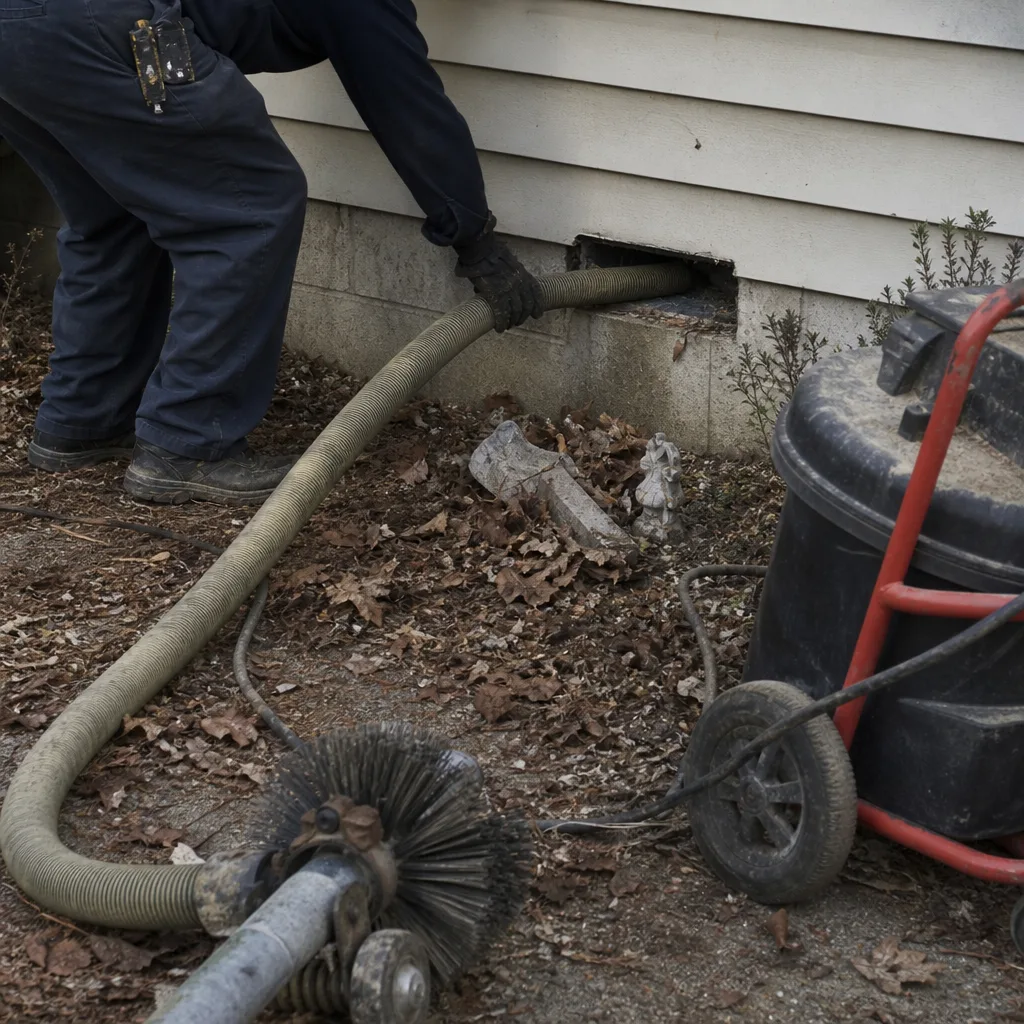 Before
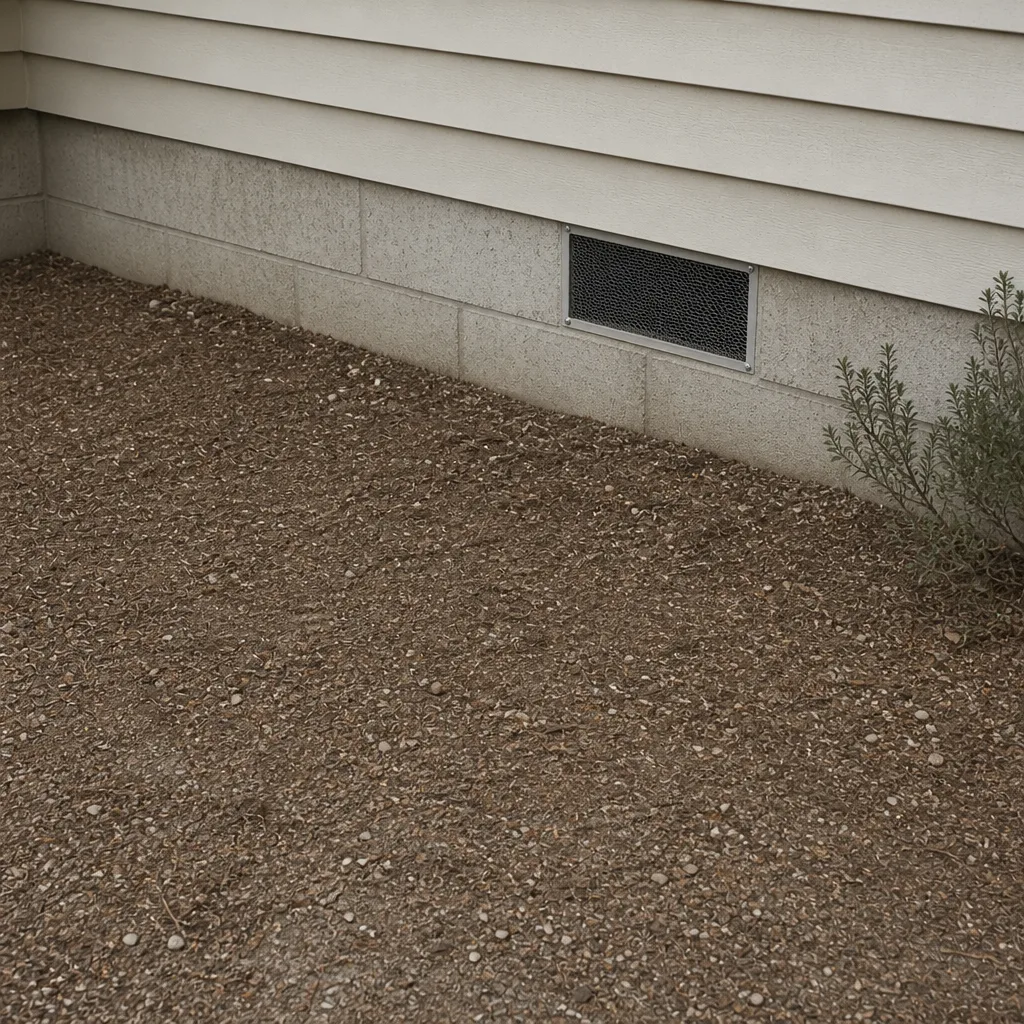 After
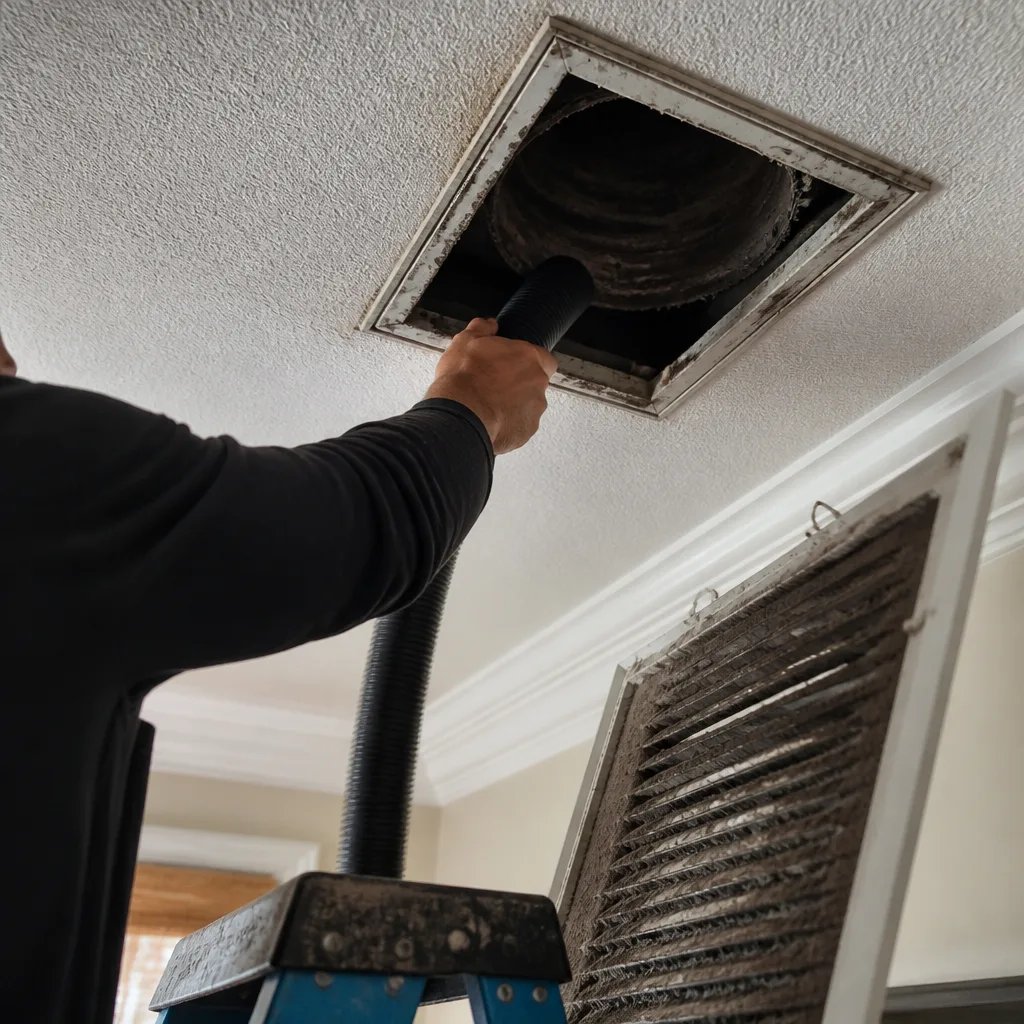 Before
 After
 Before
 After
Common Mistakes to Avoid
- Comparing prices without comparing scopes. A $280 quote and a $750 quote can describe completely different jobs. Ask for the same scope questions and compare answers, not totals.
- Accepting a per-vent teaser price. Per-vent pricing is structured to look cheap on the phone and grow on the invoice. Ask for a whole-system number in writing before any work begins.
- Leaving returns and the dryer vent out of the quote. Both get added after the truck arrives when they were never in the original quote. Confirm inclusion up front.
- Skipping the before-and-after photos. Any legitimate job can produce a photo record of the ducts before and after cleaning. A contractor who won’t offer one is a contractor you can’t verify.
- Buying sanitizing as a substitute for cleaning. Sanitizing treats biological contaminants after the ducts are mechanically clean. It doesn’t remove the debris underneath, and it’s not a shortcut around the contact cleaning step.
- Paying for UV lights or ozone treatment without a specific reason. Both have narrow roles. They should never be pitched as a routine add-on to duct cleaning without a problem they’re solving on your system.
- Ignoring leaks found during the cleaning. A contractor with duct repair capability will find leaks while cleaning. If a cleaning-only company finds leaks and leaves them, you’re paying for half the job.
When to Call a Professional
Some of the calls homeowners make to a duct cleaning company are unnecessary, and some are overdue. The line between the two is usually visible. You should call when the dryer takes two cycles to dry a load, when the system has run through a renovation or a moisture event, when a room never heats or cools like the rest of the house, or when allergy symptoms track with the HVAC season. You should also call if you’ve bought a house in the last year and want a known baseline for the air path. What you shouldn’t do is treat duct cleaning as an annual ritual with no specific trigger. Our technicians have up to 11 years of experience and can tell you plainly whether your system needs the work. Air Duct Cleaning Hamilton Lakes offers free estimates in Hamilton Lakes. Call (877) 792-7445. We answer 24/7. Fast dispatch from 7am to 7pm, Sunday through Friday.
Frequently Asked Questions
Typical whole-house air duct cleaning in Hamilton Lakes in 2026 runs $280 to $750, with most single-family homes landing between $350 and $500. The range reflects duct material, accessibility, zones, and equipment used, not a fixed market rate. Call (877) 792-7445 for a free estimate on your specific system.
A cheap quote usually describes a smaller job than a higher quote with the same label. The most common reasons are a shop vac instead of a rotary brush, no HEPA-rated negative air, returns and dryer vent left out, and per-vent pricing that grows once work starts. Compare the scope, not the total, before you decide anything. Call (877) 792-7445 to walk through a scope line by line.
Ask for before-and-after photos of your own ducts. A legitimate job produces them without hesitation because the process is photographed as it happens. If a contractor won’t document the work, that tells you what you need to know before you pay. Call (877) 792-7445 to ask what a photo record includes.
There’s no fixed annual interval. Cleaning pays off at specific triggers: after a renovation, after moving into a resale home, after a moisture event, or when symptoms track with the HVAC season. A recently clean, well-maintained system can wait years between cleanings. Call (877) 792-7445 if you’re unsure whether your system meets one of the triggers.
It depends on whether biological contaminants are actually present. Mechanical cleaning removes debris; a Guardsman-brand sanitizing treatment addresses mold spores and bacteria that the brush can’t reach. After a moisture event or a mold finding, it’s a legitimate step. As a routine add-on, it isn’t. Call (877) 792-7445 to talk through whether your situation calls for it.
Duct cleaning addresses the ductwork: trunk lines, branches, and returns. HVAC cleaning also reaches the components that move air, including the evaporator coil and the air handler interior. Many whole-system jobs include both because the coil sits directly in the air path. Call (877) 792-7445 to ask which scope your system needs.
The Bottom Line
Air duct cleaning cost in Hamilton Lakes in 2026 lands between $280 and $750 for a whole-house job, and the honest answer to “is this quote fair?” is a question of scope, not price. A quote built on a rotary brush and a HEPA-rated negative-air unit, covering trunk lines, branches, returns, and (if you choose it) the dryer vent, with before-and-after photos and one flat price per system agreed in writing, is a defensible number at any point in that range. A cheaper quote with the same label is a different job described with the same words. Read every quote for what’s behind it. The written estimate sets the final price. When you’re ready, call (877) 792-7445 for a free estimate. We answer 24/7. Fast dispatch from 7am to 7pm, Sunday through Friday.
Written by the team at Air Duct Cleaning Hamilton Lakes.