
Emergency Air Duct Cleaning Near Me: What Hamilton Lakes Homeowners Should Do First
If raw sewage has backed into your ductwork through a floor drain, running the HVAC while you search online for a cleaner pushes aerosolized pathogens into every room of the house. The first move isn’t a search bar. It’s the breaker panel. Most of what people call an “emergency” duct problem in Hamilton Lakes is really an urgency – a musty smell, a dusty register, a dryer that needs two cycles. A genuine duct emergency is narrower, and it demands a specific order of steps. Get that order wrong and the contamination spreads further before anyone arrives. If you’d rather have a specialist handle it than work through it yourself, call (877) 792-7445.
What Actually Counts as a Duct Emergency in Hamilton Lakes?
Three scenarios rise above urgency to genuine emergency: sewage intrusion into the duct system, post-fire smoke contamination, and confirmed mold with active HVAC circulation and symptoms. Each one involves contamination that is airborne, and each has its own first-hour protocol. Everything else – a light dust film, stale air after a renovation, a dryer vent running long – matters but can wait for a scheduled appointment.
Here’s the distinction that helps most:
- Sewage intrusion into ducts. This is the most serious. A floor drain backup or a sewage line failure near a return-air register can push waste into the duct path. It’s a biohazard, not a cleaning job.
- Post-fire smoke. Smoke residue settles on duct walls and inside the air handler after even a contained kitchen fire. Soot is acidic and corrosive, and it keeps circulating long after the flames are out.
- Active mold with symptoms. Not a few spots around a bathroom vent. This is visible growth inside the duct system alongside the HVAC actively moving air and household members reporting irritated eyes, congestion or coughing that eases when they leave the house.
In Hamilton Lakes, our experience is that the first two categories are rarer than the third, and the third gets missed most often because symptoms creep in slowly. If you’re weighing whether your situation qualifies, describe what you’re seeing and we’ll tell you honestly whether it’s an emergency or something we can schedule.
What Should You Do in the First 60 Minutes?
Shut the HVAC system off at the thermostat first, then at the breaker panel, and keep it off until a specialist has assessed the ductwork. That single step limits how much contamination the blower can redistribute while you make calls. After that, the protocol changes with the hazard.
Sewage intrusion:
- Kill power to the HVAC at the breaker. Not the thermostat alone – the panel.
- Stay out of the affected rooms. Don’t run fans or open windows near the registers; a box fan near a contaminated return just aerosolizes what’s inside.
- Call a professional with biohazard-capable containment equipment. Ask specifically whether they use negative-air machines.
- Document everything with photos and video before anything is cleaned. Your insurer will want it.
Post-fire smoke:
- Turn off the HVAC and leave it off.
- Don’t run a standard shop vac in the affected rooms. Consumer vacuums exhaust fine soot particles straight back into the air.
- Photograph duct openings and register faces for the insurance file.
- Book a specialist who documents before, during and after the work.
Active mold with symptoms:
- Shut the system down.
- Note when symptoms appear – that log is valuable to whoever treats the system and to your insurer.
- Don’t spray household cleaners or bleach into the ducts. You’ll add a chemical irritant to a biological one and make the assessment harder.
Why Does the HVAC Have to Stay Off Until a Specialist Arrives?
A running HVAC system turns a contained contamination into a whole-house one. The blower moves several hundred cubic feet of air per minute through the duct path, and whatever is settled on duct walls or suspended in the air handler gets pushed through every room the system serves. That circulation is the problem, not just the mess on the duct surfaces.
In a real contamination event, the airborne hazards differ by source. Sewage backup carries bacteria and other pathogens that aerosolize readily in fine droplets. Fire residue includes soot particles and combustion byproducts. Active mold growth releases spores, and for a household member with asthma or allergies, that’s the trigger that matters. Negative pressure is what keeps dislodged material captured rather than blown back into the rooms. That’s why professional crews work with Abatement Technologies negative-air equipment instead of just vacuuming harder – and why a shop vac in a contaminated system can genuinely make things worse.
One practical note for Hamilton Lakes homes: if you can’t find the HVAC breaker quickly, label the panel before the next event. In a genuine emergency, the last thing you want is to be flipping breakers in the dark.
How Do You Isolate Living Spaces While You Wait?
You can reduce cross-contamination from the duct system by temporarily covering the registers in the rooms you most use, and keeping doors between affected and unaffected areas closed. This buys time and limits the spread while a specialist travels out. It doesn’t replace containment, but it helps.
- Cover every supply and return register in the rooms you’re protecting. A rigid cover that seals against the frame works better than a loose cloth.
- Close interior doors and keep them closed. Airflow between zones is what spreads this stuff.
- Tape the frame, not the grille. Painter’s tape around the perimeter seals without leaving adhesive on the finish.
- Leave the covered rooms alone. Walking in and out disturbs settled particles. If you have to enter, keep it quick.
- Don’t cover registers in the affected zone. Sealing a contaminated room traps the air in a way that slows assessment and makes the technician’s job harder.
If you’re not sure which registers to cover, describe your layout when you call. A single-zone system in a typical Hamilton Lakes house is straightforward. Dual-zone setups with a separate upstairs unit need a little more thought, because isolating the wrong zone can push contamination into the other one.
What Information Should You Have Ready When You Call?
Having a few details ready on the call shortens the assessment and gets the right equipment on the way. Five pieces do most of the work.
- System layout. Single zone or dual zone? One air handler or two? Where’s the air handler located?
- Hazard type. What are you actually dealing with – sewage, smoke, or mold? If you’re not sure, describe what you see and smell.
- HVAC status. Has the system been off since the moment you found the problem? If not, describe when it last ran.
- Household sensitivities. Anyone with asthma, allergies, immune compromise, or very young children?
- Insurance context. Have you filed a claim, and does your insurer want documentation?
Two of these matter more than people expect. The HVAC status tells a specialist how far contamination may have spread, and the household sensitivities drive how aggressive the containment setup needs to be. For a house with an asthmatic occupant, the crew isn’t going to take chances with PPE or negative air.
When to call a pro: if any of the three emergency scenarios above match your situation, don’t wait it out. Turn the system off, cover what you can, and call. The first invitation only makes the job bigger. When you call, we’ll ask these questions, tell you whether it’s truly an emergency or a scheduled urgency, and be honest about both – because telling you it’s an emergency when it isn’t doesn’t help either of us.
Why Is Emergency Duct Cleaning Different From a Routine Appointment?
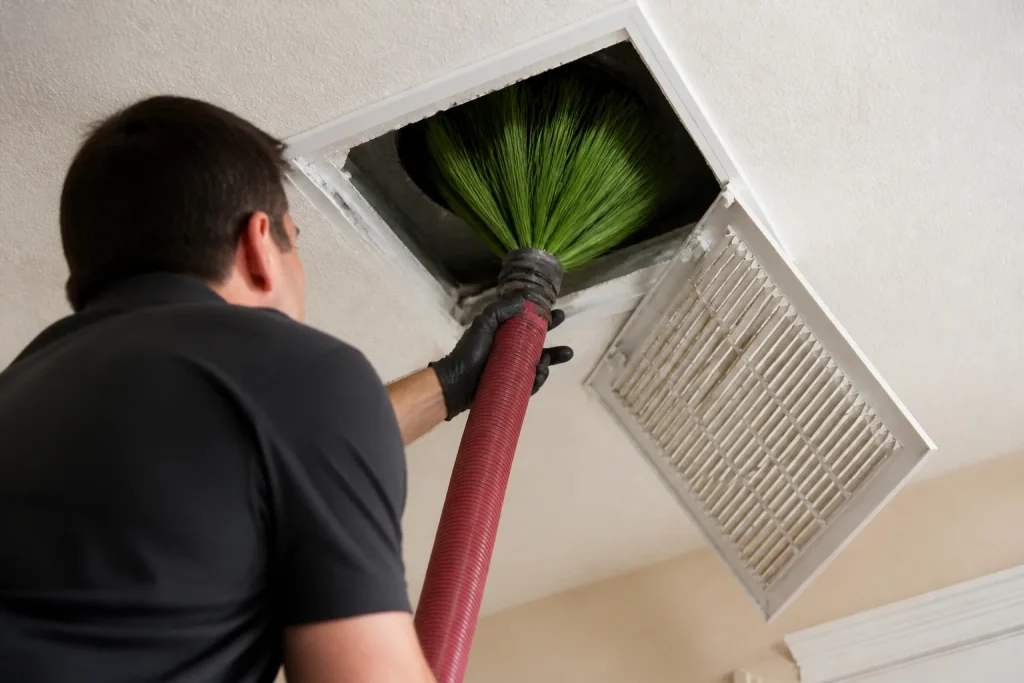
Emergency duct cleaning is a containment operation first and a cleaning job second. Routine work focuses on removing accumulated dust and debris. Emergency work runs a sequence: containment up, hazard captured, mechanical cleaning, sanitizing, and documentation for the claim. Doing the cleaning before containment is backward – it disperses the problem.
A few procedural details differentiate it:
- Containment goes up first. Negative-air machines establish a pressure differential before any brush or vacuum touches the ductwork. Our crews use Abatement Technologies negative-air equipment specifically so dislodged debris is captured, not redistributed into your living space.
- PPE is non-negotiable. Respiratory protection, gloves and eye protection on every crew member – not optional, not a judgment call.
- Documentation is a deliverable. Before photos, during photos, after photos, and a written record of what was found and how it was treated. If you’re filing an insurance claim, that package does the talking for you.
- Sanitizing follows mechanical cleaning, not the other way around. Sanitizing a duct full of debris is useless. The mechanical work has to happen first; then a Guardsman-brand treatment targets biological contaminants left behind. Clean first, treat second.
- Repair and sealing finish the job. If the assessment finds damaged or leaky duct sections, sealing them is part of completing the work – not a note left for another contractor.
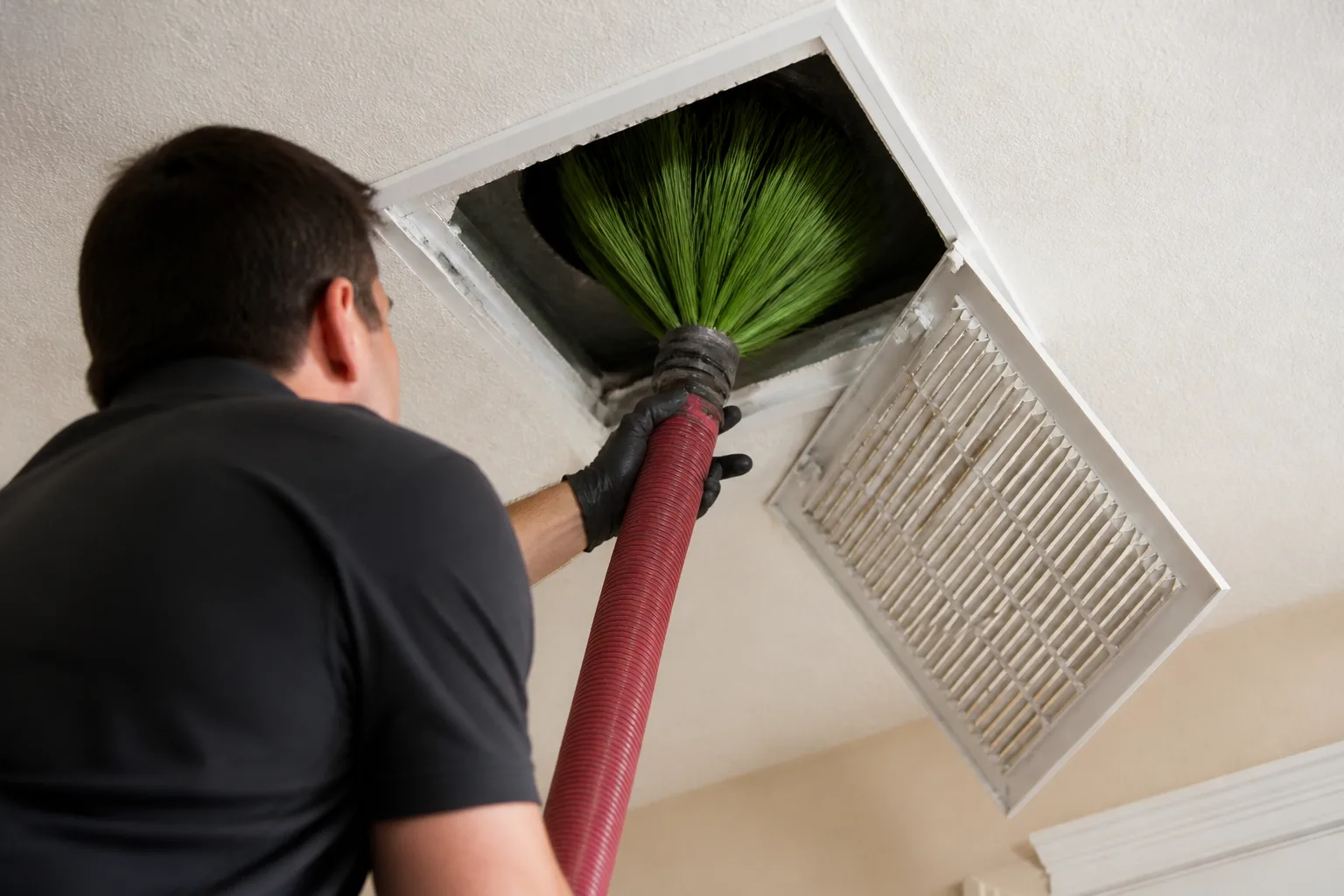
For reference, our air duct cleaning Hamilton Lakes service page lays out the full scope of what a proper job covers, emergency or scheduled. The equipment matters less than the sequence, but it matters. Rotobrush rotary brush systems and Nikro HEPA-rated vacuum units are the professional standard for contact-based cleaning because they actually reach the duct wall. A consumer-grade shop vac doesn’t, and the fine dust they exhaust is part of the problem in a contamination situation.
Related Services in Hamilton Lakes
The picture gets a lot clearer when you look at the full air system rather than just the ducts. If the root cause turns out to be a HVAC cleaning issue – a fouled coil or blower cabinet feeding contamination into the duct path – that’s addressed in the same visit. If the dryer vent is running long alongside a duct problem, dryer vent cleaning handles it without a second contractor. And if the assessment confirms an active leak or a sealed-off section blocked by damage, duct repair and sealing goes in the same job so the cleaning doesn’t just re-open the same gap.
Air duct cleaning, dryer vent cleaning, HVAC cleaning, duct repair and sealing, and air quality and sanitizing – five services that come from one visit. Familiarity with Honeywell and Aprilaire filtration and humidity control means we can also talk through post-cleaning upgrades that make sense for your household, rather than leaving you to figure it out alone. Our technicians have up to 11 years of experience, which is the number we’re comfortable quoting and no more.
What happens when you call
- 1
A real person answersNo phone trees – you reach a local pro.
- 2
You get an upfront price rangeHonest numbers before anyone is dispatched.
- 3
A background-checked tech heads outLicensed & insured, dispatched right away.
- 4
You approve before work beginsNothing starts until you say go.
The Bottom Line
A true duct emergency in Hamilton Lakes comes down to three scenarios: sewage intrusion, post-fire smoke, and active mold with circulating air and symptoms. In every one, the first step is the same – HVAC off at the breaker, registers covered where it’s safe to cover them, and a specialist on the phone with your system layout and hazard type ready. Routine air duct cleaning handles the urgency cases; containment and sequencing handle the emergencies, and the order matters more than the price.
If you’re in Hamilton Lakes and need help, Air Duct Cleaning Hamilton Lakes offers free estimates – call (877) 792-7445. We answer 24/7. Fast dispatch from 7am to 7pm, Sunday through Friday. One flat price per system, agreed before work starts, with before-and-after photos so you can verify the work was actually done. The local pro is licensed and insured as their state requires.
Frequently Asked Questions
Pricing is set per job by a written estimate based on the hazard type, system layout, and containment requirements – there isn’t a single rate that covers a routine cleaning and a sewage-contaminated system. The estimate is free, and the written figure is the price you pay. Call (877) 792-7445 for an exact quote.
Low quotes often skip containment or sanitizing, which is the part of the job that actually matters in a contamination event. If a quote doesn’t include negative-air equipment, PPE, and before-and-after documentation, ask what’s missing before you commit. Call (877) 792-7445 and we’ll walk through the line items with you.
Ask for before, during, and after photos of your own ducts, plus a written summary of the containment setup and treatment used. That package also supports an insurance claim. We provide all three on every emergency job. Call (877) 792-7445 to book an assessment.
An unexplained musty smell with an HVAC running and household members reporting symptoms is worth treating as an urgency, not an emergency – get it assessed promptly, but you don’t need to evacuate the house. Turn the system off if symptoms are escalating and call for an assessment. Call (877) 792-7445. Estimates are free.
Written by the team at Air Duct Cleaning Hamilton Lakes.
Need Air Duct Cleaning Help?
Call Air Duct Cleaning Hamilton Lakes - the local pro we connect you with is licensed and insured, here with fast help in Hamilton Lakes.
(877) 792-7445