
Honeywell Air Duct Cleaning in Hamilton Lakes: A Homeowner’s Guide
A Honeywell F300 electronic air cleaner captures particles down to 0.3 microns. But it only captures what passes through it. Debris already stuck to the duct walls upstream of the filter stays right where it is, no matter how good the filter is downstream. That’s the thing most Hamilton Lakes homeowners miss about owning a Honeywell system: filtration changes how fast your ducts get dirty, not whether they get dirty. We’ve seen homes with excellent filtration that still needed serious cleaning in the blower compartment. If you’d rather not sort through it on your own, call (877) 792-7445.
Key Takeaways
- Whole-home filtration slows duct contamination downstream of the air handler but doesn’t stop it.
- The air handler cabinet and blower compartment are the highest-priority cleaning zone on any Honeywell system.
- Elevated moisture from humidification systems makes Hamilton Lakes a mold-risk climate even for well-filtered homes.
- Clean your ducts before you install a fresh Honeywell filter, not after.
Does a Honeywell Whole-Home Filtration System Replace Duct Cleaning?
No. A Honeywell filtration system reduces how quickly ducts collect debris, but it can’t clean what’s already there.
There are three product families we’re familiar with as part of a complete air quality setup, and each affects duct debris differently:
- Media filters. These trap a high percentage of particles passing through the return, but a filter catches only what reaches it. Dirt that settles in the supply runs or coats the blower wheel never sees the filter media.
- Electronic air cleaners like the F300. Electronic cells charge and capture fine particles efficiently, but the collection cells themselves need regular washing, and a loaded cell loses efficiency. Plenty of Hamilton Lakes homeowners don’t know the cells need attention at all.
- UV systems. UV lamps address biological growth on the coil and in the airstream near the lamp. They do nothing for settled dust in duct runs far from the lamp housing.
The practical takeaway: good filtration buys you more time between cleanings, but it doesn’t let you skip them. In our experience, a Hamilton Lakes home with a well-maintained Honeywell system still benefits from a professional air duct cleaning on a sensible schedule, especially around a renovation, a move-in, or a system that’s been running years without service.
Why the Air Handler and Blower Compartment Matter Most
The air handler cabinet and blower compartment accumulate contamination regardless of downstream filter performance, and that’s why we treat them as the highest-priority cleaning zone on any Honeywell system.
Think about the path air actually takes. Return air carries dust, pet hair, and lint into the cabinet before it’s pushed through the system. Some of that material settles on the blower wheel and the cabinet interior, and once it’s stuck to a spinning blower, the filter downstream can’t do a thing about it. A dirty blower wheel loses balance over time, moves less air, and makes your system work harder for the same comfort.
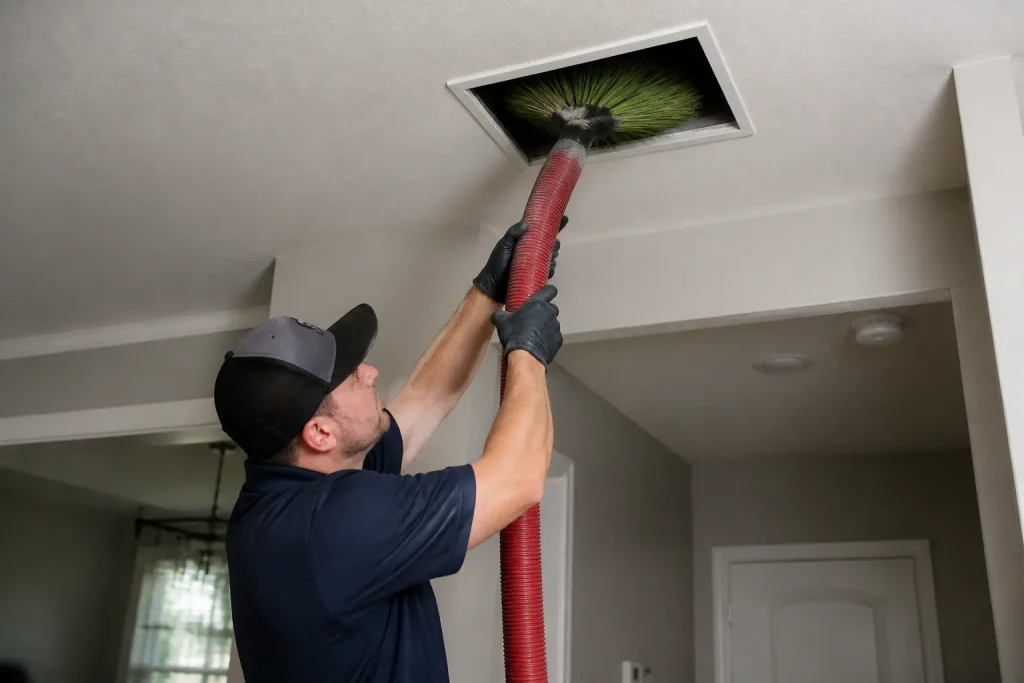
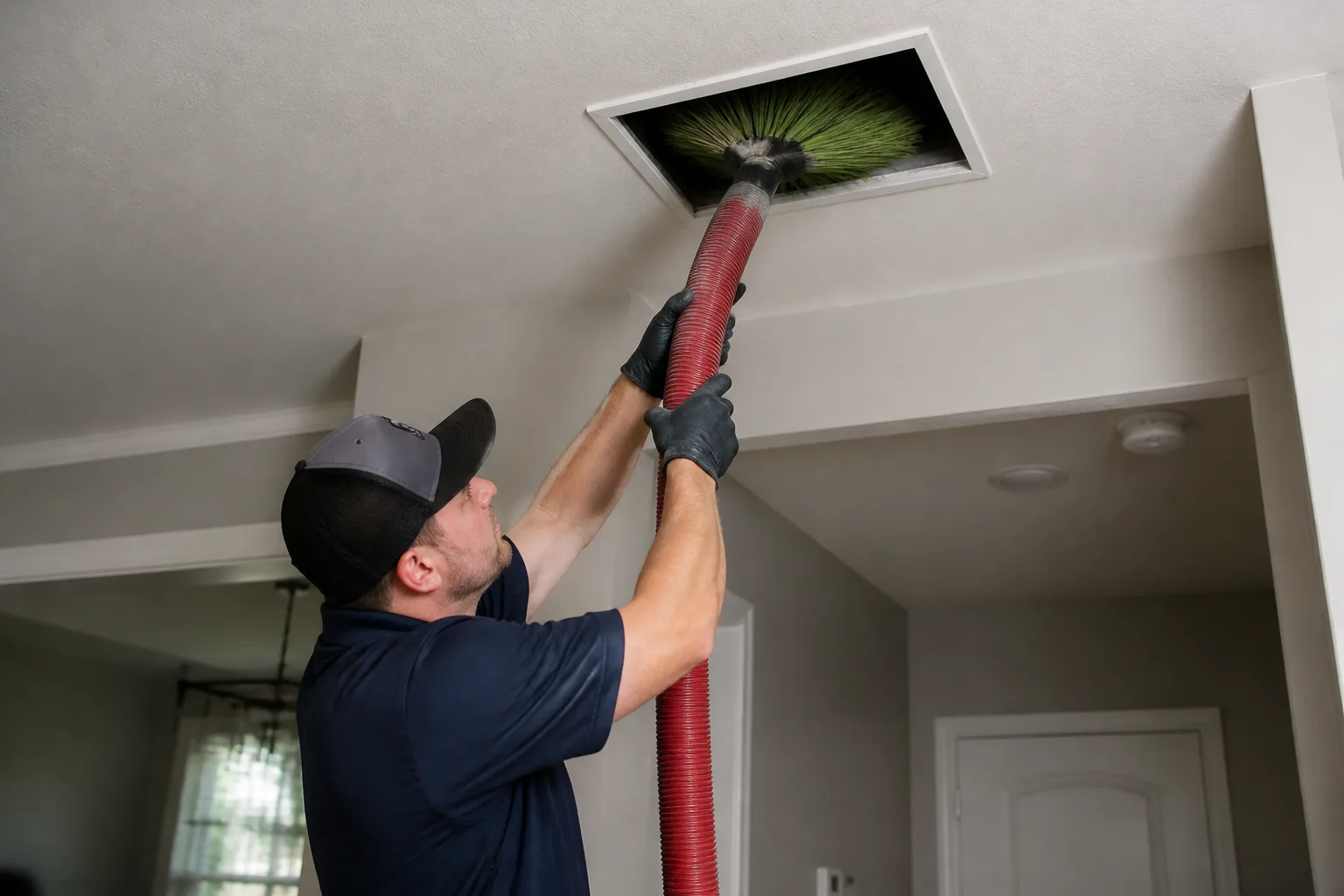
This is exactly why the equipment matters. With Abatement Technologies negative-air machines running, dislodged debris gets captured rather than redistributed into your living space. Rotobrush rotary brush systems give us contact cleaning on duct walls, and Nikro HEPA-rated vacuums hold what comes out. You can look up all three brands and see the kind of work they’re built for. A shop vac can’t do this job, and a cleaning-only company that never opens the air handler cabinet is leaving the dirtiest part of your system untouched.
While the cabinet is open, a technician can also check blower condition and note anything that needs sealing. Our HVAC cleaning covers the coil and components around the air handler so the whole path gets addressed, not just the accessible duct runs.
How Does Hamilton Lakes’ Humid Climate Affect Filtered Ducts?
Humidity is the wildcard in Hamilton Lakes duct systems. A Honeywell bypass humidifier adds moisture to the air by design, and in our region’s humid summers, duct interiors can sit damp enough to support mold growth even in a home with excellent filtration.
Here’s the interaction that matters. Mold needs moisture more than it needs dirt; a clean duct with persistent condensation is still a problem. Sources of that moisture include:
- A bypass humidifier running when it shouldn’t or leaking at the drain line
- Condensation on cold supply runs during humid stretches
- Leaky duct connections pulling humid attic or crawlspace air into the system
That last one points to why duct repair and sealing belongs in the same visit as cleaning. Loose joints and gaps let moisture in and let treated air out. When we find leaks, we seal them then, rather than flagging the problem and leaving you to call someone else. If moisture has been feeding biological growth, a Guardsman-brand sanitizing treatment after mechanical cleaning addresses mold spores and bacteria that brushing alone won’t remove. We don’t just clean the air path; we test, treat, and seal it.
What Should Honeywell System Owners Ask a Technician to Inspect?
Ask specifically about three things: the bypass humidifier drain line, the electronic cell condition, and the UV bulb housing. Those are the Honeywell components most likely to be overlooked on a routine cleaning.
- Bypass humidifier drain line. Ask whether the drain line is clear and discharging properly. A clogged line is a quiet source of moisture problems.
- Electronic cell condition. Ask whether the cells were inspected and whether they need washing or replacement. Ask them to show you the before-and-after condition.
- UV bulb housing. Ask whether the lamp housing is clean and the bulb is actually operating.
It also helps to ask for photos of your own ducts and cabinet before and after the work. If you can’t see what was removed, you have no way to judge whether the job was real. Any vetted local professional we connect you with is licensed and insured as their state requires, and equipment you can verify plus photos of your own system are the two best proof points a homeowner has. A technician who knows the Aprilaire and Honeywell product lines will also be able to talk through filter upgrades or humidity control if your current setup isn’t keeping up.
When Should You Schedule Cleaning Around Filter Replacement?
Schedule the cleaning first, then install the fresh filter. Cleaning a system and then loading a brand-new filter means the new filter starts its life catching leftovers from the cleaning. Doing it in the right order gets you the full service life from the filter instead.
That sequencing pays off in a couple of ways. Mechanical cleaning knocks loose debris from duct walls and the cabinet, and the last of that fine material can migrate toward the return for a short period afterward. Put the new filter in after the ducts are clean, and you’re not spending filter life on cleanup. Second, a technician inspecting your system before the new filter goes in can tell you whether your current filter setup is the right fit for your home or whether a different Honeywell or Aprilaire configuration makes more sense. Same visit, one decision, no second contractor.
If your dryer is taking two cycles to finish a load, that’s worth a look as well. Lint buildup in the vent is a fire risk, not just a performance issue, and we handle dryer vent cleaning alongside the rest of the system. One visit can cover the ducts, the dryer vent, the HVAC components, and any sealing work the system needs.
The Bottom Line
A Honeywell whole-home system is a genuine upgrade for Hamilton Lakes homes, but it works best as part of a complete picture. Filter the air, yes, and keep the filter changed. But the ducts, the blower compartment, the humidifier drain line, and the electronic cells all need attention, too. Cleaning before you install a fresh filter, sealing what’s leaking, and treating what’s growing keeps the whole system working the way it was designed to.
If you’re in Hamilton Lakes and need help, Air Duct Cleaning Hamilton Lakes offers free estimates. Our technicians have up to 11 years of experience and use professional-grade equipment from Rotobrush, Nikro, and Abatement Technologies, not shop-vac shortcuts. Call (877) 792-7445. We answer 24/7. Fast dispatch from 7am to 7pm, Sunday through Friday, and we’re closed Saturday. Our home base page for Air Duct Cleaning Hamilton Lakes has the full overview of what we do.
Frequently Asked Questions
It depends on the size of your home, how many systems you have, and whether sealing or sanitizing is needed, so we set one flat price per system from a written estimate rather than quoting per vent. Estimates are free. Call (877) 792-7445 for an exact quote.
Usually because they’re not doing the same work. A low number often reflects a quick pass with consumer-grade equipment and no air handler cleaning, and the price grows once the technician is on site. One flat price per system, agreed before work starts, is the honest way to buy this job. Call (877) 792-7445 for a free estimate.
Ask for before-and-after photos of your own ducts and the air handler cabinet. Anyone doing real work can show you what came out. We use Rotobrush rotary brush systems, Nikro HEPA-rated vacuums, and Abatement Technologies negative-air machines, and you’re welcome to look those brands up. Call (877) 792-7445.
It varies with the home. A well-filtered Honeywell system stretches the interval, but a recent renovation, pets, allergies, or moisture issues shorten it. A visual inspection tells you more than a calendar. Call (877) 792-7445 for a free estimate.
Written by the team at Air Duct Cleaning Hamilton Lakes.
Need Air Duct Cleaning Help?
Call Air Duct Cleaning Hamilton Lakes - the local pro we connect you with is licensed and insured, here with fast help in Hamilton Lakes.
(877) 792-7445